

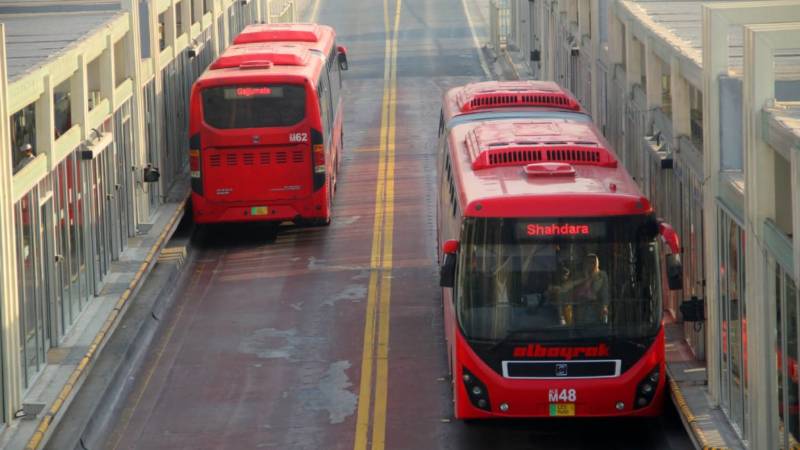
There are stories galore in Lahore. Every vicinity, bazaar, garden, and train and bus station of the megalopolis is brimming with untold anecdotes. Being a Lahorite, the photo book Lahore by Metro by Faizan Ahmad makes me doubt my eyes. I myself have spent considerable time travelling on the Metro Bus. Yet the kind of raw, innocent everyday life and stories the book portrays compel me to go to every bus station again, look closely and innocuously observe and talk to the passengers as they pass by me. That is how evocative and powerful the book is.
Faizan Ahmad is a self-taught visual storyteller who initially came to Lahore to pursue his undergraduate degree at one of the public universities. He benefited from his outgoing nature and spoke to fellow passengers on his way to the university. Some allowed him to have a chit-chat with them, some went further and let him capture them on his camera, and some shared stories of their lives as well. He documented those ordinary, everyday stories and compiled them to present to the world Lahore by Metro.
His second book, Mawakhat: Stories of Resilience and Rebuilding after the 2022 Floods, as the name underscores, is based on human accounts from flood-torn regions of Pakistan and was launched on the cusp of 2025.
From time to time, the wife, herself looking tired, assures her spouse in Punjabi, 'Thak ta nai gy ho? Data sahib anay wala hai' (Are you feeling tired? Don’t worry, we are very close)"
Lahore by Metro opens with a simple yet artistic map of the Metro Bus route, stretched all the way from Gajjumata to Shahdara, with icons of various monuments and buildings that appear on either side of the road. Readers are also apprised at the very beginning that “This book features select interviews from thousands of people who travel on the Metro Bus in Lahore every day.” Some of the interviews or interactions are so heartening and joyous that one cannot help but appreciate the simplicity and unique ways of life. For instance, Faizan asks a group of boys huddled together—wearing kufi and taqiyah caps and holding copies of the Nazara Quran against their chests—one question: “What do you want to be when you grow up?” They unanimously answer, “Hafiz.” Faizan puts the same question to another carefree young boy who is barely into his teens. He grins and responds, “I just want to grow up fast.”
Since the stories and photographs were compiled over a period of five years, the book captures different mausams (seasons) and their impact on the natural surroundings. Autumn is indicated through the leaves of trees around the bus stations losing their colour, people wearing layered clothing and elderly citizens donning caps. Likewise, the season of summer can be observed in people wearing as little clothing as possible and protecting themselves against the merciless rays of the sun.
While some portraits are breathtakingly beautiful and awe-inspiring, some stories are equally poignant. There is unimaginable hustle and bustle on the Data Darbar side of Lahore during the urs celebrations of Saint Syed Ali bin Osman Al-Hajvery, famously known as Data Ganj Bakhsh. The photographs taken during the urs festivities are a feast for the eyes. Related to this is the story of an elderly couple travelling on the bus. From time to time, the wife, herself looking tired, assures her spouse in Punjabi, “Thak ta nai gy ho? Data sahib anay wala hai” (Are you feeling tired? Don’t worry, we are very close to the shrine of Data Sahib).
Staying true to its title, Faizan shows different sides of bus stations across various locations. In one portrait, a couple can be seen standing on the escalators, holding the handrails and moving towards the elevated platform. In another, a station staff boy is seen smoking away his sorrows. The silhouette of a worker inside the ticket booth also silently highlights a pivotal section of the bus station. Each time one looks at the photographs, one’s heart is abuzz with mixed feelings and thoughts.
On warm, cosy winter evenings, reading this book will replenish one’s love for the city. It makes for a touching and comforting read, allowing one to encounter a Lahore one may never have seen before. To top it all, the conversational tone of the language employed in the book makes readers feel as if they themselves are roaming around the bus stations, asking questions of commuters, one-time travellers and devotees of Data Sahib.