

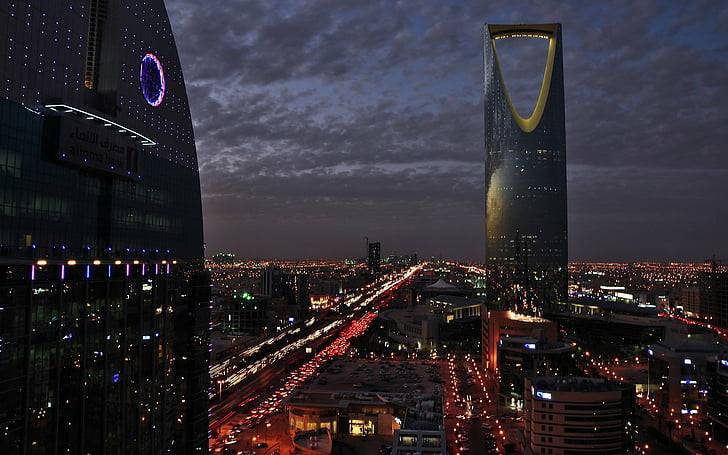
When King Abdulaziz forged a nation out of desert winds and fierce resolve, he vowed that his sons would ride camels at dawn and aeroplanes by dusk. His words became a promise that Arabia would never stand still. Nearly a century later, Crown Prince Mohammed bin Salman revived that pledge and renamed it Vision 2030. Critics once called the plan reckless, doubting that a country built on oil could build a future on ideas. Less than ten years on, the doubt has faded. The numbers—scrutinised by the same markets that once dismissed them—now prove the dream is real.
At the heart of the change is the Public Investment Fund. Once a quiet balance sheet of government holdings, it now commands more than nine hundred billion dollars and invests where private money hesitates. By taking a share in Aramco, backing deep-tech start-ups, and building vast trade routes, the fund has turned state wealth into a powerful engine of daring enterprise.
The wider economy tells the same story. Non-oil income has climbed to forty per cent of government revenue, almost three times the level of 2016. Foreign investors, once cautious, committed twenty-six billion dollars last year, while the Saudi stock market now towers over its regional peers. In plain terms, the kingdom no longer sells only what it pumps from the ground; it also sells knowledge, tourism, and trust.
Social progress has kept pace. Women, once on the edge of the labour market, now make up more than a third of it. Over seventy-eight thousand hold senior posts, and more than half a million run their own businesses. Diversity has moved from slogan to strategy, and the economy is stronger for it.
Young Saudis feel the change most clearly in their homes. A digital platform called Sakani, backed by new mortgage rules, has lifted home ownership above sixty per cent. Lengthy queues have vanished; approvals arrive in minutes. The anxiety of renting has given way to the confidence of owning.
Saudi Arabia reminds the world that geology is not a prison; imagination is a platform
Ambition is visible on the skyline too. NEOM, the vast smart-city project on the Red Sea, is moving ahead in phases. The Line, Oxagon, and Trojena may adjust their timetables, but they have not lost their daring. In Saudi Arabia, even delays are treated as lessons, not defeats.
Air travel follows the same principle of scale. King Salman International Airport, planned for one hundred million passengers a year, and the launch of Riyadh Air are reshaping global routes. A simple message follows every departure board: change planes in Riyadh, and change your view of the kingdom.
Faith and technology now meet without friction. The Nusuk app guides pilgrims through visas, crowd flows, and real-time alerts in ten languages. Smart cards, 5G networks, and AI traffic models keep the rites of Hajj sacred while making them smoother than ever before.
On the diplomatic stage, Riyadh has shifted from taking notes to writing them. It has hosted talks on the Ukraine conflict, offered calm along the Pakistan–India frontier, and urged restraint across the Middle East. Washington now seeks Saudi partnership on artificial intelligence and critical minerals—proof that the kingdom has moved from passive to pivotal.
The Gulf Cooperation Council has advanced as well. From the start of 2025, every Gulf port adopted a single twelve-digit tariff code. Traders call the result “one stamp, six doors,” and early data already show quicker clearances and lower costs.
For Pakistan, and for any country wrestling with youthful energy, tight budgets, and stubborn institutions, Saudi Arabia offers clear lessons. Dreams must carry deadlines and data. Sovereign wealth should back risk, not just safety. Life should move online before concrete is poured. Young citizens become partners when they own homes and shares. Above all, a nation must tell its story with honest numbers—for credibility attracts capital.
Vision 2030 is not an end point; it is a runway. The founder’s camel gave way to the jet of the oil age, and now that jet becomes an AI-guided drone. Saudi Arabia reminds the world that geology is not a prison; imagination is a platform.
Pakistan now stands on the tarmac. The lights are bright, the hour is late, and the falcon already circles high. What remains is a single decision: to lift the soul, fire the imagination, and join the flight.