

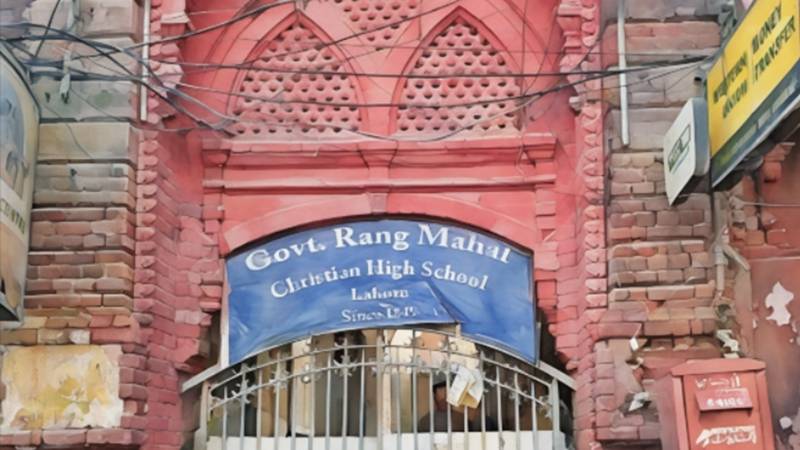
The Christian community in Pakistan, though a religious minority, has played a major role in shaping the country’s educational landscape. From the colonial era to the present day, Christian missionaries, educators, and institutions have contributed significantly to literacy, intellectual development, and social reform. Their efforts have left a mark on Pakistan’s education system, providing quality schooling to generations of students, regardless of religious background.
Christian involvement in education dates back to the 19th century when British colonial rule and missionary activities expanded across the South Asian Subcontinent. Missionaries from various denominations—Catholic, Anglican, Presbyterian, and Methodist—established schools and colleges with the dual aim of spreading Christian teachings and promoting modern education. These institutions were often the first to introduce Western-style education in regions that would later become part of Pakistan. Cities like Lahore, Karachi, Rawalpindi, and Multan became centres of Christian educational activity, with schools offering instruction in English, sciences, and humanities alongside moral and religious education.
One of the most notable contributions of Christian missionaries was their emphasis on education for marginalised groups. At a time when caste and class barriers restricted access to learning, Christian schools welcomed students from all backgrounds, including lower-caste Hindus, Dalits, and economically disadvantaged Muslims. This provided opportunities for upward mobility. Many of Pakistan’s early political leaders, civil servants, and intellectuals received their education in missionary schools, which were known for their disciplined environment and high academic standards.
Convents like the Presentation Convent School in Rawalpindi and St Joseph’s Convent School in Karachi became pioneers in women’s education, offering young girls the same high standards as boys
After the creation of Pakistan in 1947, Christian educational institutions continued to thrive, despite the challenges of being a religious minority in an increasingly Islamic state. The government initially recognised the value of these schools, allowing them to operate with autonomy. Many of Pakistan’s most prestigious schools, such as St Anthony’s High School in Lahore, St Patrick’s High School in Karachi, and Gordon College in Rawalpindi, maintained their reputation for excellence. These institutions produced generations of doctors, engineers, bureaucrats, and military officers who went on to serve the nation.
Christian-run schools were also among the first to promote gender equality in education. At a time when female literacy rates were low, missionary schools actively encouraged the education of girls. Convents like the Presentation Convent School in Rawalpindi and St Joseph’s Convent School in Karachi became pioneers in women’s education, offering young girls the same high standards as boys. This progressive approach had a lasting impact, as many of Pakistan’s leading female professionals, including doctors, teachers, and activists, were educated in these institutions.
Beyond primary and secondary education, Christian contributions extended to higher learning. Forman Christian College in Lahore, founded in 1864 by American Presbyterian missionaries, became one of the region’s premier liberal arts colleges. Even after its nationalisation in 1972 under Zulfikar Ali Bhutto’s socialist policies, the college retained its academic prestige. When it was finally returned to the Christian community in 2003, it reaffirmed its commitment to quality education, now operating as Forman Christian College University. Similarly, Kinnaird College for Women in Lahore, established by Presbyterian missionaries in 1913, remains one of Pakistan’s top institutions for women’s higher education.
The nationalisation of educational institutions in the 1970s came as a great challenge for Christian-administered schools and colleges. The government’s takeover was part of a broader socialist agenda aimed at reducing foreign influence. Many missionary schools struggled under state management, with declining standards and reduced emphasis on their original values. However, after decades of advocacy, some of these institutions were eventually denationalised, allowing Christian organisations to regain control and restore their educational missions.
Despite their contributions, Christian educators and institutions face many ongoing challenges in Pakistan. Rising religious extremism and discriminatory policies have created a hostile environment for minority-run schools. Blasphemy laws and accusations of proselytisation have been used to target Christian teachers and administrators, sometimes leading to violence or forced closures.
Financial constraints are sometimes a significant hurdle, as many Christian schools operate with limited resources, relying on donations and tuition fees to sustain themselves. Additionally, the government’s increasing emphasis on Islamic studies in the national curriculum has marginalised the role of minority faiths in education.
Yet, the Christian community remains committed to its educational mission. Many schools continue to provide for underprivileged students, promote interfaith harmony, and uphold values of tolerance and critical thinking. In rural areas, Christian organisations run literacy programs and vocational training centres, empowering disadvantaged communities. The Catholic Board of Education and the Diocese of Lahore are among the key bodies overseeing Christian schools, ensuring they maintain high standards while adapting to modern educational needs.
Alumni of Christian institutions often speak of the strong ethical foundation and intellectual rigour they received, qualities that have helped them excel in various fields. From pioneering girls’ education to producing some of the nation’s most distinguished professionals, Christian schools and colleges have played a vital role in shaping Pakistan’s intellectual and social fabric. Despite facing political, financial, and religious challenges, these institutions continue to serve as beacons of knowledge and values.
If Pakistan can foster greater tolerance and inclusivity, Christian schools and colleges will be better positioned to contribute to national development.