Just over a month ago, Pakistan cricket seemed to be headed in the right direction. The Pakistan Super League (PSL), in a foreign country, proved to be an over-whelming success, not only in terms of the entertainment value and the interest it garnered but also in terms of the cricket being played and the talent on display.
Due to a plethora of reasons Pakistan had lagged behind other cricketing powers in creating a high-profile domestic T20 league. But now with PSL’s inauguration, it was evident that Pakistan cricket can only head in one direction.
Shahid Afridi
Pakistan are three players short of becoming a world-beating T20 side again
In the following month, though, Pakistani cricket has seen its nadir in T20 cricket. And in a country where patience is always short in supply, there was always going to be a knee-jerk reaction.
Even so, it’s evident that there are glaring shortcomings in the Pakistan team that need to be addressed. Whether a complete overhaul is needed is debatable.
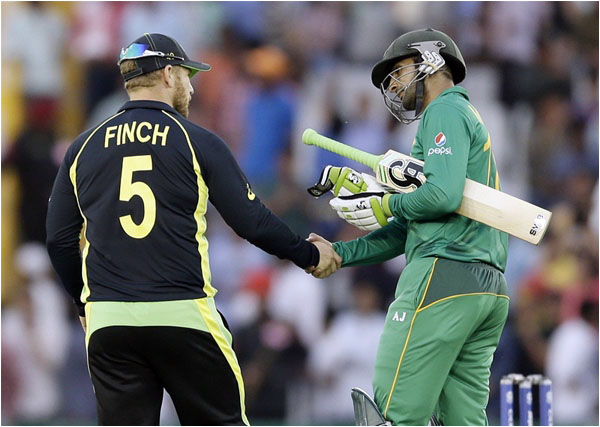
Shoaib Malik with Aaron Finch
Since the PSL, Pakistan have just won three of their eight T20 games. These wins came against UAE, Bangladesh - who had defeated Pakistan in the Asia Cup - and in a dead rubber against Sri Lanka. The five defeats included two against India.
It’s evident that the best T20 teams in the world - like New Zealand, India and Australia - have proven too strong for us. But is the gap so wide that it can only be addressed by starting from scratch?
A close look at the Pakistani team shows that most of the shortcomings were accentuated by the team management’s failure to make the most of what they had.
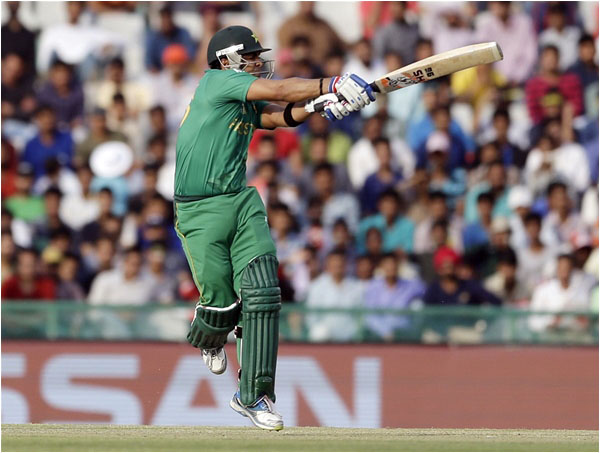
Umar Akmal
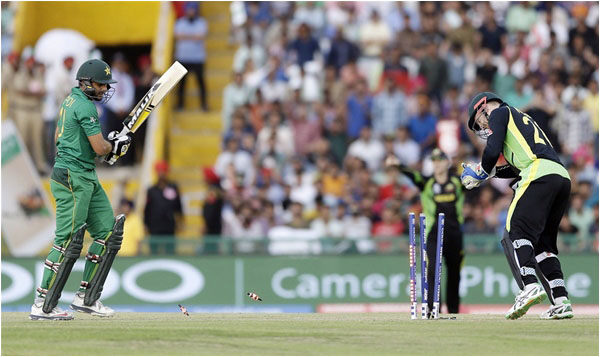
Let’s start from the batting line-up. It’s evident that there are two players who should not get anywhere near the T20 team for the foreseeable future: Ahmed Shehzad and Mohammed Hafeez - both of whom scored runs against the relatively weaker Bangladesh bowling attack. Having Shehzad and Hafeez in the top three batting slots, neither of whom has shown any tendency to accelerate - or perform - in big games, is cricketing masochism. It was Shehzad, shackled by his inability to rotate strike, who soaked up too many balls just when Pakistan looked on course to chase down New Zealand’s total in the group matches. His partner in crime was Umar Akmal, who arguably played the worst innings of his life that night.
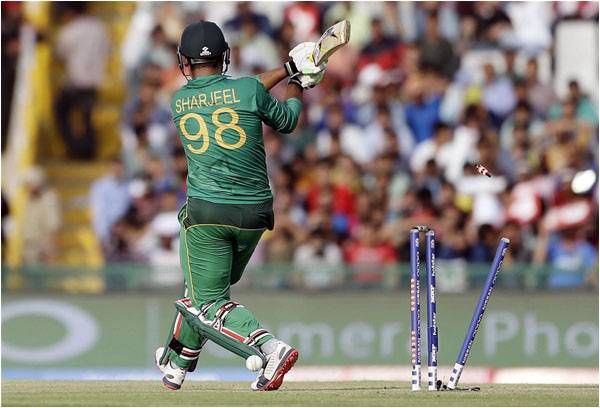
Why Sarfraz Ahmed was wasted at number eight and never asked to open with the impressive Sharjeel Khan, will never be understandable. Pakistan’s top 3 - until we can find better batting talent - should be Sharjeel, Sarfraz and Akmal. Despite the latter being one of the villains of events in India, he is still among Pakistan’s best T20 batsmen.
What is also becoming increasingly evident is that Shoaib Malik’s T20 days might be numbered - unless he is announced as the next captain, of course - if Pakistan are not going to be making use of his bowling. He’s not a big hitter, and in an era where 200 in T20s is often the par score, Malik lacks the big handle needed in the shortest format.
Despite decades of Shahid Afridi’s pretensions, Pakistan lack a genuine all-rounder. And when Anwar Ali and Imad Wasim are the closest that Pakistan have got to a genuine match winner with ball and bat, it’s evident that no one is breaking through from the ranks either. That’s one area where Pakistan are seriously lagging behind in all forms of cricket.
While it’s the batting that historically disappoints, Pakistani bowling has rarely been close to as good as it can be, barring that Mohammed Amir spell against India in the Asia Cup, or Mohammed Sami’s bowling against the same opposition in the World T20. Amir himself, while being good with the new ball, is yet to come to the party at the end. Sami, Wahab Riaz and Irfan have rarely threatened any batting line-up either.
Afridi’s disappointing run with the ball has overlapped with Pakistan lacking a genuine match-winner spinner, following Saeed Ajmal’s ban and the ensuing change of action. As all teams that have progressed to the semifinals have shown, the tournament in India was always going to be decided by the spin-attacks.
For all practical purposes, Pakistan are three players short of becoming a world-beating T20 side again: a finisher, an all-rounder and a world-class spinner. It remains to be seen whether youngsters come and fill those gaps or old names are recalled.