

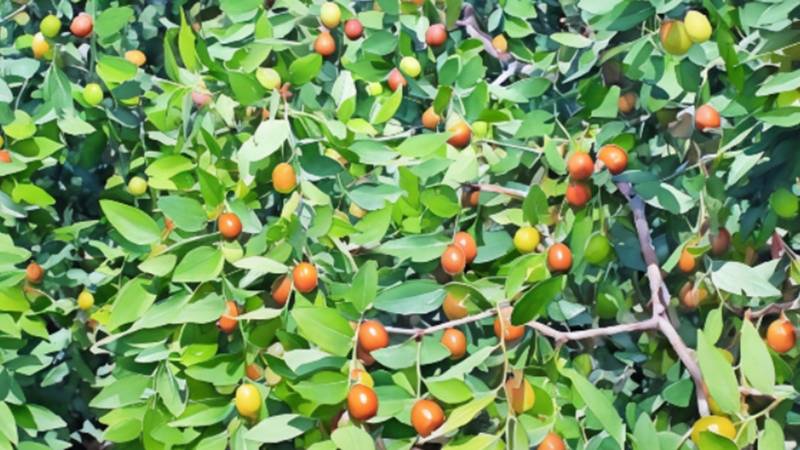
Ber is the fruit of the Ziziphus mauritiana tree, also known as jujube. It is a healthy and affordable fruit, often called the "poor man's apple." It is mainly grown in warm areas and can survive in harsh climates with little water. It is a hardy crop that requires minimal care and can tolerate drought and salty soil, making it suitable for small-scale farming.
Among the different types, Sindhi Ber and Makhan Ber are known for their soft texture and delicious taste. Sufi Ber is small and oval-shaped, with a unique milky white juice inside. Jangri or Chhapru Ber grows in Sindh’s hilly regions, especially in the Kheerthar Mountains and Kohistan. Some Punjab varieties of Ber include Pak-White, Umran, Anokhi, Sufan, Bahawal-SL, and Yazman. The Ber comes in various shapes, including oval, obovate, oblong, and round, with its size depending on the variety.
Dried mountain Ber is used for kidney and stomach pain. It is often eaten fresh and can also be used to make murabba, candy, chutney, squash, or nectar
In Pakistan, Ber ripens between March and April, with some early varieties maturing as early as February. Newer varieties have been introduced that extend the fruiting season from December to April, providing a more extended harvesting period. Despite being cheap, Ber is highly nutritious. The fruit comes in green, red, and yellow colors. It tastes sweet or sour and is eaten as fresh fruit. Ber is sometimes dried in the sun and sold during the off-season. Dried Ber is called “Kokra Ber” in the Sindhi language.
Dried mountain Ber is used for kidney and stomach pain. It is often eaten fresh and can also be used to make murabba, candy, chutney, squash, or nectar. It is low in calories and rich in fiber. It contains powerful antioxidants that protect against damage, boost immunity, and improve sleep. Its vitamin C, A, and B complex supports anticancer properties, while fiber aids digestion. Studies show that 50% of its carbs come from fiber, which benefits gut health. The Ber plant is a great option for feeding animals. Its leaves are full of nutrients and protein, helping animals stay healthy and productive. It grows well in tough climates, making it a reliable and low-cost choice for farmers.
To enhance production, several high-yielding varieties have been developed in Pakistan. Some varieties produce 150-200 kg per plant with excellent flavor and high pulp content, while others yield 100-120 kg per plant, including a seedless variety yielding 60-70 kg. Newer varieties introduced in 2021 are rain-tolerant, high-yielding, and offer nutritious benefits with minimal resource investment. In 2020-21, Pakistan produced 22,895 tonnes of Ber over 4,686 hectares.
Ber is widely grown around the world, with China being the largest producer, known for its hundreds of varieties, including some seedless ones. India also cultivates Ber extensively, particularly in dry regions. In Pakistan, Ber is grown in many areas, mainly in Punjab, Balochistan, and Sindh. Major production areas include Bahawalpur, Faisalabad, Multan, Jhang, and Sargodha in Punjab, while in Sindh, it is cultivated in Tandojam, Hyderabad, Mirpurkhas, Nawabshah, and parts of Karachi like Gadap and Malir. Hyderabad is known for producing high-quality Ber that is exported to the Middle East. However, in Sindh, some rural areas stand out for their unique tradition of freely sharing the fruit with travelers, herders, and the less privileged. Iran values Ber not only as a food source but also for its medicinal properties, using it in traditional remedies. Thailand, on the other hand, focuses on commercial cultivation, producing high-quality Ber for fresh consumption and export. Across these countries, Ber remains an important fruit, contributing to local economies, nutrition, and traditional medicine.
Ber is a less perishable and low-cost product compared to other major fruits. However, due to the lack of an efficient marketing system, growers do not always get a fair profit, and consumers do not always get reasonable prices. A well-planned export policy, especially targeting markets in the Middle East, Iran, and China, could help stabilize prices and benefit both farmers and consumers.
Farmers should plant more Ber trees for commercial purposes. This will bring back greenery, help local people, feed animals, boost exports, and fight climate change.