

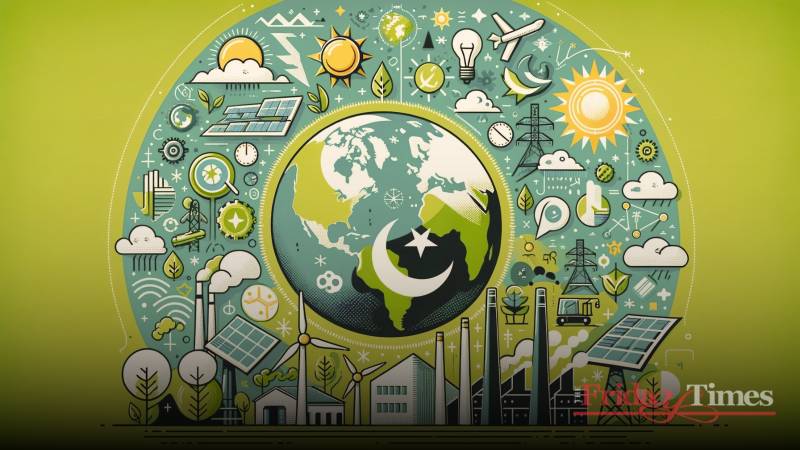
As an environmental specialist invited as a panellist, I attended the National Workshop on the Water-Energy-Food-Environment (WEFE) Nexus held in Islamabad on 18 June 2025. The meeting – backed by the UK’s FCDO and CGIAR – formally launched two science programmes (Policy Innovations and Climate Action) and unveiled three new digital tools for integrated resource planning. IWMI experts presented the Water Productivity Atlas (district-level maps of farm water-use efficiency), the Water Bodies Inventory of Pakistan (a geospatial database of rivers and reservoirs), and a Hydro-Economic Model for the Indus Basin (analysing water-food-energy trade-offs under climate change). These platforms are meant to foster “data-driven decision-making by integrating water, agricultural, energy, and environmental planning” – a welcome move toward breaking down the old policy silos.
In my remarks I stressed that these sectors cannot be addressed in isolation. Pakistan now uses roughly 90% of its available water to irrigate crops, so any decision about water is essentially a decision about farming. Agriculture provides livelihoods for a large portion of our population and also carries a heavy climate footprint: roughly one-fifth of Pakistan’s greenhouse emissions come from agriculture, forestry and land use. This means that the Ministry of Food, Irrigation, Energy and Environment must coordinate their plans – the water needed for crops influences our food security and exports, and farming practices affect both water demand and emissions. As IWMI’s Dr Mohsin Hafeez emphasised, Pakistan must “abandon siloed thinking … [and] recognise the interdependence of water, food, energy, and the environment” – a point I fully agree with.
By aligning WEFE planning with carbon accounting, we can turn climate-smart farming into an economic opportunity
I urged my colleagues to treat the new Water Productivity Atlas as a mandatory planning checklist. The Atlas provides district-level data on how efficiently different crops use water, highlighting where we can achieve “more crop per drop.” Similarly, the Water Bodies Inventory supplies a master map of surface water so that irrigation engineers, hydropower developers and conservation planners can align on reservoir and canal projects. Even Pakistan’s Water Resources Secretary noted that “these tools will help the government make smart decisions about how to use water.” In practice, this means no irrigation, energy or infrastructure project should proceed without first consulting these digital platforms – only then can we manage trade-offs and synergies across sectors.
I also pointed out how these data tools connect to Pakistan’s new carbon market. With carbon trading becoming functional in 2025, the country has a fresh incentive to cut emissions in agriculture. For example, more efficient irrigation or agroforestry techniques (visible through the Atlas and Inventory) could generate carbon credits for farmers. By aligning WEFE planning with carbon accounting, we can turn climate-smart farming into an economic opportunity. In short, integrated resource planning and climate finance need to go hand-in-hand.
The workshop was a strong call to action. Organisers emphasised “enhanced inter-ministerial coordination and long-term investment in evidence-based planning” – and I wholeheartedly support that. The new tools are powerful, but only if ministries use them routinely. If the Atlas, Inventory and Hydro-Economic Model become standard references in project design, Pakistan can better balance food security, water use, energy needs and climate resilience. It was encouraging to see so many stakeholders commit to this integrated approach; I left Islamabad determined to help ensure these digital innovations inform every policy decision moving forward.