

We belong to a generation that witnessed toys evolve from simple plastic figures to battery‑powered gadgets and eventually to remote‑controlled wonders. RC cars arrived in our markets a little later than their invention in 1966, and RC toy planes — those lightweight plastic models we first saw only in Western movies and documentaries began appearing around 1976. At that age, none of us could have imagined that within our own lifetimes, a harmless remote‑controlled toy airplane would transform into one of the deadliest weapons of modern warfare.
From the earliest use of incendiary balloons by Austrian forces in 1849 to the post‑9/11 era when the United States began deploying armed drones extensively, unmanned systems gradually shifted from novelty to necessity. After 2001, drones became central to U.S. counterterrorism operations, especially in Afghanistan, Pakistan, Yemen, and Somalia. They enabled persistent surveillance and highly precise strikes against Al‑Qaeda, ISIS, and other designated hostile entities, and those drone operations were framed as part of broader counterterrorism strategies.
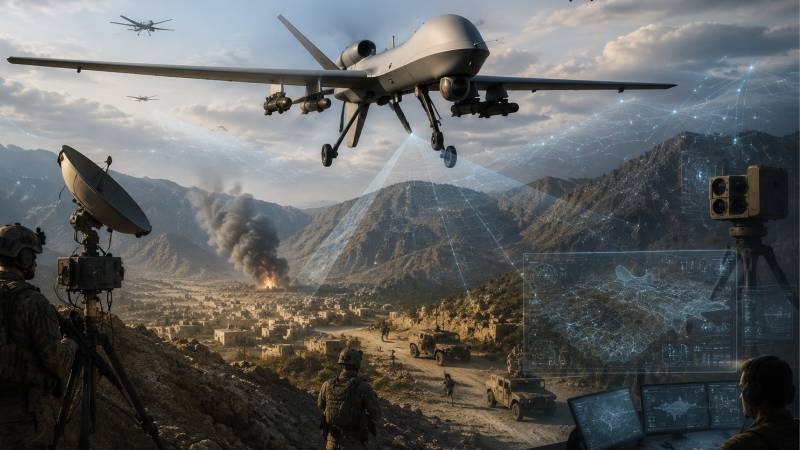
Drones are used effectively in wars today, and modern drone warfare has expanded dramatically. Today’s drones serve functions ranging from precision targeted killings to intelligence, surveillance, reconnaissance, loitering munitions, swarm tactics, and electronic warfare. They are so effective because they carry far lower costs than fighter jets and pose no risk to pilots. Their capabilities improve constantly, as seen in the Ukraine‑Russia conflict and tensions involving Iran and the United States. They now offer high precision with reduced collateral damage, striking targets with remarkable accuracy. Their endurance allows them to loiter for hours or even days. They move with stealthy profiles and small radar signatures, and they provide real‑time intelligence to ground forces.
Drones evolved from balloons in 1849 to radio‑controlled bombs in World War I, reconnaissance platforms in Vietnam, and finally precision strike weapons after 2001. Today, they are central to modern warfare used for killing, surveillance, electronic warfare, and coordinated swarm attacks. The transformation of drones from simple toys to sophisticated military assets reflects a broader truth about technological evolution: innovations rarely remain confined to their original purpose.
What begins as entertainment, experimentation, hobbies, or curiosity often becomes the foundation for strategic tools that reshape global security. In the case of drones, this evolution has been rapid, disruptive, and deeply consequential.
The modern battlefield is no longer defined solely by tanks, jets, or infantry formations. It is increasingly shaped by algorithms, sensors, satellite links, and unmanned platforms that operate with precision and persistence. Drones have democratized certain aspects of warfare; smaller nations and even non‑state actors can now access capabilities once exclusive to major powers. This shift has forced militaries worldwide to rethink doctrines, invest in counter‑drone technologies, and prepare for a future where unmanned systems dominate both offensive and defensive operations.
Yet the rise of drones also raises important ethical, legal, and strategic questions. Their ability to strike targets remotely reduces risk for the operator but can blur accountability. Their affordability makes conflict more accessible, potentially lowering the threshold for escalation. And their use in counterterrorism campaigns has sparked debates about sovereignty, civilian safety, and long‑term geopolitical consequences.
Despite these complexities, one fact is undeniable: drones have permanently altered the landscape of warfare. They have become indispensable tools for surveillance, border security, disaster response, and precision engagement. As technology continues to advance with AI‑driven autonomy, improved stealth, and enhanced swarm coordination — drones will only grow more influential.
For those of us who once played with simple RC toys, this transformation is both astonishing and sobering. It reminds us that the technologies we take lightly today may define the conflicts, strategies, and security frameworks of tomorrow. The drone’s journey from toy to tactical powerhouse is a story of innovation, adaptation, and the ever‑changing nature of human conflict — a story still unfolding before our eyes. The next evolution might be a replacement of ground forces comprised of human soldiers; we could see transformer‑like, AI‑operated robots engaging in hand‑to‑hand combat and face‑to‑face fights.