

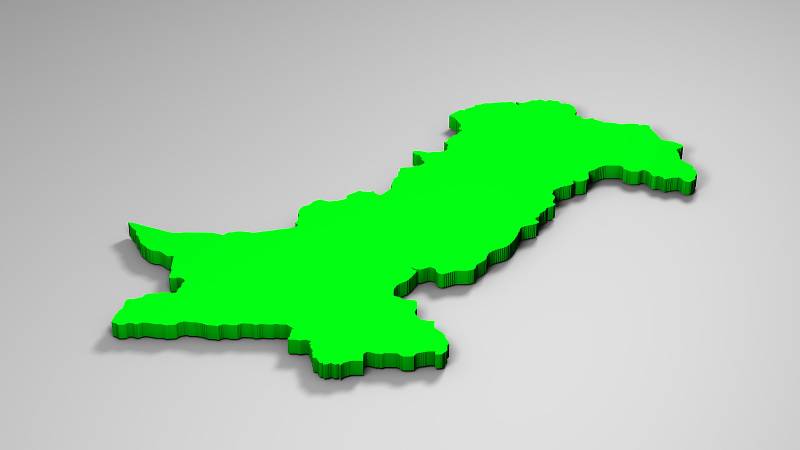
New provinces will not rescue Pakistan; only justice, institutional reform, and an empowered democracy can.
Each time Pakistan slips deeper into crisis, a familiar solution resurfaces. Redraw the map, create new provinces, divide existing ones, and all will be well. It is a tempting idea, offering the illusion that administrative engineering can substitute for the long-overdue task of reforming governance. Yet history and present realities tell us otherwise.
The central crisis of Pakistan has never been the number of provinces. It has been the corrosion of institutions, the absence of the rule of law, and the manipulation of democracy by forces that have never allowed it to mature. In seventy-seven years, no prime minister has completed a full five-year tenure. Civilian governments have been dismissed through palace intrigues or judicial manoeuvres, while military rule has repeatedly interrupted constitutional continuity. In this climate, expecting that multiplying provinces will resolve national malaise is akin to rearranging the furniture in a house whose very foundations are fractured.
Those who support the creation of new provinces often invoke the promise of better representation, more efficient administration, and a fairer share of resources. Yet the real cause of Pakistan’s decline lies not in geography but in governance. Decades of corruption, a lack of accountability, and poor policy choices have eroded the state's strength and resilience. A politicised bureaucracy, millions of pending court cases, and institutions run on patronage rather than merit are what deny citizens justice and basic services. New provincial boundaries will not dismantle this entrenched rot; they will simply multiply it.
History is replete with examples. The One Unit scheme of 1955 merged all of West Pakistan into a single entity under the pretext of equality. It did not unify; it bred resentment, suppressed diversity, and accelerated mistrust. By 1971, Pakistan broke apart not because of provincial lines but because of the denial of genuine federalism and the obsession with centralised control. Decades later, even the renaming of the North-West Frontier Province to Khyber Pakhtunkhwa in 2010 required years of political struggle and compromise, with fierce opposition from certain quarters. Ironically, the same quarters that once saw threats to unity in a mere name change now speak of carving out new provinces as if it were a cure-all. The selective timing exposes that the impulse is not rooted in principle but in expediency and interest.
Pakistan’s crisis is not geographical but moral and institutional, rooted not in the number of provinces but in who controls them and how they are governed
The situation in Balochistan illustrates this vividly. Despite sitting on immense wealth in minerals, gas, and a strategic coastline, it remains one of the poorest and most neglected regions. Its grievances are not about the size of the province but about exploitation, unaccountable governance, and denial of ownership. Local governments have rarely been empowered, chief ministers have been installed or removed by fragile bargains, and assemblies have served more as instruments of control than platforms of representation. A new provincial map cannot erase this record of systematic exclusion.
Karachi too stands as a reminder. A metropolis of over twenty million, generating most of the country’s revenue, it suffers chronic shortages of water, uncollected rubbish, broken transport, and lawlessness. Its plight is not due to a lack of provincial status, but rather the deliberate weakening of local government. Turf wars between parties and provincial elites have denied Karachi an empowered city government. If the state cannot provide governance in its economic hub, how credible is the claim that creating more provinces would suddenly deliver efficiency elsewhere?
The economic reality further exposes the futility of the proposal. Pakistan is struggling under IMF programmes, with inflation crushing households and nearly half its children facing malnutrition and stunted growth. Establishing new provinces means building new bureaucracies, courts, assemblies, and capitals. These costs would consume billions of rupees better spent on schools, hospitals, and clean drinking water. For a country already drowning in debt, this is not reform but extravagance.
The deeper crisis lies in the absence of consistent democratic practices. Each time local governments were introduced, they were either kept toothless or rolled back by provincial elites who viewed them as rivals. Development funds for MNAs and MPAs are routinely used as tools of patronage, rarely for public welfare. Long-term policies are often abandoned whenever a new government takes office. None of this has to do with the number of provinces; it is the result of a system where accountability is absent and public interest is routinely sacrificed.
There is also a political dimension often left unspoken. Creating new provinces multiplies bargaining chips, new assemblies, and fresh power centres. For the establishment, which has historically managed politics from behind the scenes, this offers new entry points and levers of control. A fragmented political elite becomes more dependent on those who wield unelected power. The slogan of reform becomes another means to consolidate influence.
Pakistan’s crisis is not geographical but moral and institutional, rooted not in the number of provinces but in who controls them and how they are governed. Until corruption, constitutional violations, and authoritarian meddling are confronted, new provinces will remain nothing but a mirage. They will not strengthen democracy, improve governance, or deliver justice. They will only tighten the grip of those who benefit from a broken system.
Maps may change, but the destiny of a republic is shaped by justice, governance, and accountability. If Pakistan is to be saved, it will not be through carving new provinces but through building institutions, ending corruption, and allowing democracy to function without interruption.