

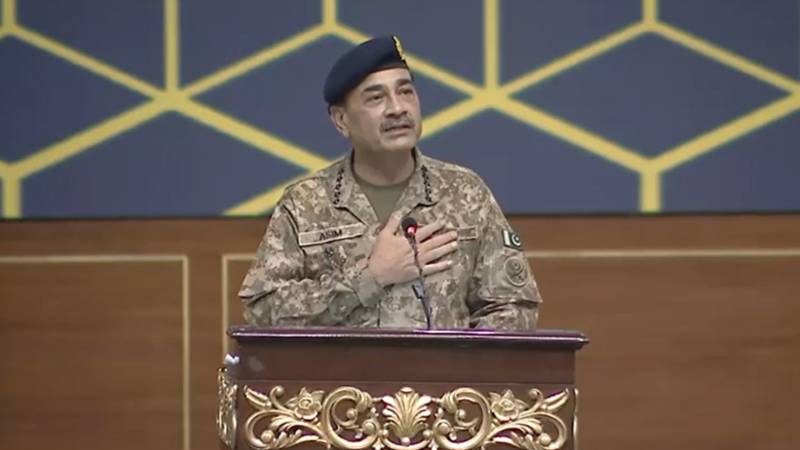
A few days ago, the Chief of the Defence Forces, General Syed Asim Munir, stated in front of Ulama that ‘in an Islamic State, only the State has the authority to declare jihād.’ The remark generated extensive discussion across media platforms and legal forums, as it invoked ‘Islamic constitutional’ principles to define the limits of religious and coercive authority. At its core, the statement reflects an assertion that Islam does not permit the privatisation of coercive power; rather, such authority must remain institutional, regulated, and subject to law.
Once an Islamic principle is invoked to define the scope of state authority, however, it invites a broader inquiry. If Islam determines who may legitimately exercise power, it must also inform how that power is constrained. This raises an unavoidable question: where does the concept of lifetime legal immunity for state officials stand within an ‘Islamic’ conception of the state? This is a structural question about the political, moral, and legal architecture of authority (one that Muslim jurists and political thinkers have examined for centuries).
In most of the Muslim jurisprudence, wilāyah, political authority, is not conceived as an inherent right but as an amānah, a trust. The Qurʾān consistently links authority with justice and accountability, emphasising that governance is a responsibility rather than a privilege. Law precedes power; power does not redefine law. Prophetic practice reinforces this principle. The insistence that no individual is exempt from legal standards, regardless of status, lineage, or office, has long been understood by jurists as a rejection of status-based immunity. Authority exists to uphold justice, not to shield those who wield it.
Classical Islamic political theory developed this idea systematically. Jurists described the ruler as a trustee whose legitimacy depended on the maintenance of justice and public welfare. Persistent injustice was understood to undermine that legitimacy. Notably, no classical jurist articulated a doctrine of permanent legal immunity as a feature of Islamic governance. Indeed, Islamic political thought consistently maintained that authority is conditional. It may be tolerated, constrained, or even removed, but it is never sanctified as legally untouchable.
When citizens perceive that some individuals are permanently beyond judgment, confidence in law diminishes, and the moral authority of the state weakens
Muslim political history offers numerous examples of rulers exercising unchecked power, yet it provides no precedent for codified lifetime immunity. Umayyad ruler al-Walīd II was deposed and killed by members of his own dynasty. Several ʿAbbāsid rulers met violent ends following military defeat or political collapse. Ottoman history records the deposition, humiliation, and execution of Sultan Ibrāhīm I, and the disputed death of Sultan ʿAbd al-ʿAzīz after his removal from power. These episodes were often unlawful and brutal and should not be romanticised. They nonetheless reveal a critical distinction: while Muslim polities frequently tolerated tyranny in practice, they did not transform authority into a permanent legal exemption. Power shielded rulers while it lasted, but it was never converted into a binding promise of lifelong immunity.
Modern lifetime immunity differs fundamentally from historical impunity. It is explicit, prospective, and judicially enforceable. It binds future courts and forecloses accountability regardless of conduct. In effect, it converts authority into a permanent legal exception. Within Pakistan’s constitutional framework, such immunity sits uneasily alongside principles of equality before the law, due process, and conformity with Islamic injunctions. More fundamentally, it conflicts with the Islamic legal premise that law precedes authority. If Islamic principles are invoked to define the limits of coercive power, consistency requires that they also inform the limits of legal privilege.
The institutional consequences of lifetime immunity are not theoretical. When accountability is removed, incentives change. Public office risks becoming a means of protection rather than service. Competition for authority increasingly reflects a search for insulation from scrutiny, not responsibility for governance. Over time, such arrangements erode institutional credibility. When citizens perceive that some individuals are permanently beyond judgment, confidence in law diminishes, and the moral authority of the state weakens.
From the standpoint of Muslim jurisprudence, political theory, and historical experience, lifetime legal immunity finds no support. It contradicts the moral logic of Islamic governance, lacks historical precedent in Muslim political practice, and strains the constitutional principle of equality before the law. If Islam is to serve as a reference point for defining state authority, it cannot be applied selectively. Authority without accountability is not an Islamic principle; it is a departure from it. States do not weaken because the law restrains power. They weaken when power escapes law.