

The people of Sindh, known for their renowned hospitality, have shown remarkable warmth and love in supporting the sit-in protest staged by the legal fraternity of Sindh. This outpouring of support has not only garnered significant attention but has also become a notable example of the province's tradition of welcoming and embracing those who stand for a cause.
Participants at the sit-in, which has been ongoing for the past week, shared heartwarming instances of hospitality demonstrated by people living in nearby localities. The President of the Karachi Bar Association, Amir Nawaz Warraich, during his multiple media talks, has praised the heartwarming hospitality of local people and acknowledged that they had not anticipated such an extraordinary public response.
Around a dozen milk sellers arrived at the protest site and expressed their desire to meet the KBA President, according to Advocate Fayyaz Jarwar. When he arrived to meet them, they offered to donate milk for the morning tea of protesting lawyers and other participants. Initially, Warraich refused to accept their offer, but their spirit of serving those struggling for a cause led him to accept it, Jarwar narrated.
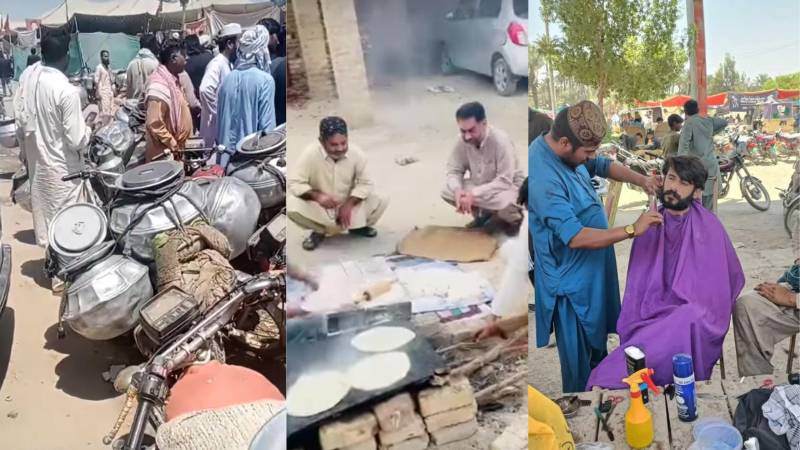
A crew of barbers traveled from Dadu district to offer free services to the protesters. Muhammad Bux Kalhoro, one of the 22 barbers who reached Babarloi bypass, revealed that they had decided to contribute to the greater public cause by serving those leading the movement for the sake of the Indus River. The barbers provided services including haircuts, beard shaping, and facial cleaning.
Rahman Korai, General Secretary of the Karachi Bar Association, said that well-to-do residents of the locality had provided accommodation to lawyers, while many had vacated their houses to accommodate and facilitate female protesters. "Teams of volunteers have been formed to manage breakfast, lunch, and dinner for those who have left everything behind so that the Indus River could thrive," said Advocate Ashar Majeed Khokhar, President of Hyderabad. He added that they were not worried about future expenses because the people of Sindh were with them.
He further said that the supporters who arrived to join the protest also brought traditional Sindhi caps and ajraks as gifts for the lawyers, with the number of these caps and ajraks reaching into the thousands.
A local dry fruit vendor, Amir Bux Sangrani, was seen distributing dates among lawyers and other campaigners, saying, "I want to sacrifice my dates for the brave sons of Sindh." Members of the legal sorority disclosed that they had to hire a godown to store a huge quantity of juices and water bottles donated by local inhabitants. They also mentioned that people from nearby villages would bring cooked bread and curry to serve the protesters.
A lady brought eight chapatis and onions, saying she wanted to share the same food with lawyers that her children had. Owners of ice factories had donated huge blocks of ice, while others had donated sweet syrups. Cattle breeders had also contributed to the cause, donating cattle heads to aid the protesters. President DBA Sujawal said that people from different parts of the province were in contact with them and had pledged their complete support.
Poet Maher Debahi extolled the exemplary dedication of the people of Sindh to the cause of the Indus River, saying that this marked the birth of a new Sind. "The passion of the people of Sind is matchless," he added.