

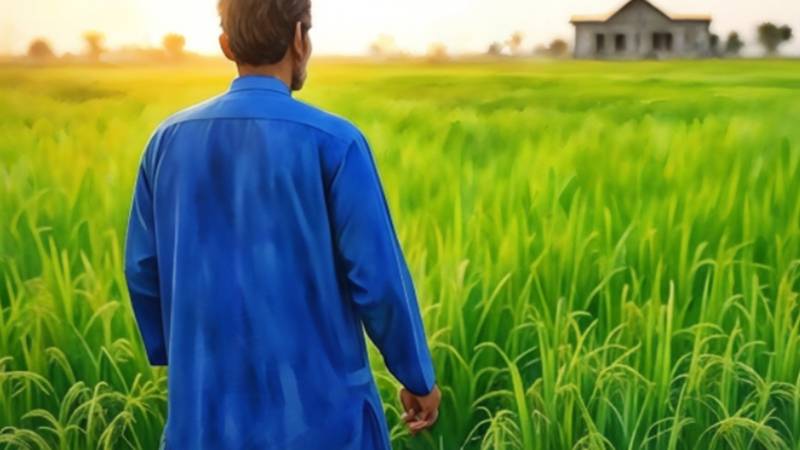
Pakistan’s future hinges on transforming its 150 million rural citizens from suppliers of raw produce into value-adding entrepreneurs. Unless value chains are modernised, youth are skilled, and rural infrastructure catches up, the country will face rising food imports, jobless migration and deeper urban–rural inequality. Agriculture remains the mainstay of Pakistan’s economy, yet it continues to be treated as a second-tier sector. In FY 2024, agriculture contributed about 24% of GDP and grew 6.25% (Economic Survey 2023–24), but that rebound has already proved fragile: preliminary FY 2025 data show growth slowing to around 0.6% (Economic Survey 2024–25). Rural Pakistan home to 61% of the country’s 241.49 million people (PBS 2023) depends on this sector not only for income and food security but also for national stability.
Global food demand is climbing as the world’s population heads toward nine billion by 2050 (UN 2022). Pakistan’s own population, now 241 million, is projected to exceed 300 million by mid-century (PBS 2023). Urbanisation is accelerating: the urban share rose from 28% in 1981 to 37% in 2017 (PBS censuses) and is still climbing; Sindh was already majority-urban at 52% in the 2017 census (PBS 2017, provincial 2023 breakdowns not yet released). If rural production stagnates while cities expand, food producers become food consumers. Imports are already rising fast: Pakistan imported 9.1 billion dollars of food in FY 2022–23 while exporting only 5.6 billion, creating a 3.5 billion dollar deficit (SBP/Trade Stats 2023). Products once exported meat, dairy, fruit and vegetables now appear on import bills alongside palm oil, tea, powdered milk and processed foods.
Agriculture is far more than wheat and rice. Livestock alone makes up about 63.6% of agriculture’s value added and roughly 15% of GDP (Economic Survey 2024–25), sustaining more than eight million rural households. Yet average dairy yield is only about 14 litres per cow per day (VIS Dairy Sector Update 2024) far below potential with better feed, genetics and animal health. Only about three% of fruits and vegetables are processed into value-added products (Pakistan Business Council 2024), so most growers sell raw at low prices while value capture happens in cities. This wasted potential keeps incomes low and wealth flowing away from villages.
Pakistan also faces a youth bulge. More than a quarter of the population is between 15 and 29 years old (PBS/UNDP 2023). Rural literacy still trails urban by around 20%age points roughly 52% versus 74% (Labour Force Survey 2021) and nearly one in three young people is NEET, not in education, employment or training (UNDP 2018; LFS updates). With few skills and little finance, many rural youths migrate to already crowded cities in search of work that often does not exist. Yet this same cohort could become a growth engine if training matched modern markets: animal health, feed management, dairy and meat hygiene, halal and HACCP compliance, crop grading, cold-chain logistics, e-commerce, market intelligence, cooperative management, entrepreneurship and financial literacy could all turn young people from job seekers into value-chain leaders.
The way wealth now moves through agriculture shows why reform is urgent. Farmers are often forced to sell raw produce at throwaway prices while middlemen and exporters capture most profit. Small dairy farmers, lacking chilling tanks, lose quality and income. Pursuit of margin without oversight encourages unsafe chemical use and food adulteration. Only three% of fruits and vegetables are processed; dairy yields stay stagnant; and Pakistan forfeits export premiums that competitors like India and Kenya earn. Behind these gaps are long power cuts, scarce cold storage, weak extension, limited credit and the near-absence of farmer cooperatives. Rural households become raw suppliers while cities dominate processing, branding and retail.
If rural production stagnates while cities expand, food producers become food consumers. Imports are already rising fast: Pakistan imported 9.1 billion dollars of food in FY 2022–23 while exporting only 5.6 billion, creating a 3.5 billion dollar deficit
Livestock shows the pattern clearly. Animals are raised in villages, but peri-urban “milk baras” and city-based fattening farms increasingly control the high-value end of the market. Market surveys in 2023–24 suggest 30–40% of large baras now operate in peri-urban areas, often owned by urban investors. Rural livestock keepers are left with risk but little bargaining power or infrastructure. Cotton farmers fare no better: ginning, fibre grading and price setting remain beyond their control, while climate change erratic rainfall, pest outbreaks and rising temperatures (IPCC 2022; PMD 2022) cuts yields. Weak regulation and malpractice further depress farm-gate prices, so the real wealth creators shoulder the risks of cultivation while others reap the rewards. Across wheat, rice, tomatoes and cotton the story repeats: profitability shrinks, agriculture’s GDP share erodes and young people see little reason to continue their parents’ work.
What little rural households earn is rarely reinvested locally. Families spend on schools, health care and housing in cities because such services are missing at home. The countryside sends wealth and talent away and gets little back. Internal migration alone moves about four to five% of the population over any five-year period, mostly from villages to cities for work and education (PBS/LFS 2021). Internationally, 0.6–0.9 million Pakistanis depart each year for overseas work, producing a net outflow of roughly 400–450 thousand annually (UN DESA 2022; Bureau of Emigration 2023). Each household that migrates removes spending power and human capital, leaving abandoned homes, idle land and frayed rural communities.
Climate disasters make the challenge more urgent. The 2022 floods alone damaged over four million acres of crops and caused 14.9 billion dollars in damages and 15.2 billion in economic losses (Govt/World Bank PDNA 2022). New floods in 2025 have again hit Sindh, Punjab and Balochistan hard, with official loss estimates still being finalised (NDMA/PDMA 2025). Without climate-smart farming, better water management and resilient livelihoods, each shock will push millions deeper into poverty and accelerate migration.
Pakistan’s path forward is clear. Value chains must be modernised by investing in cold storage, milk chilling, testing labs and certification so farmers can earn premium prices. Producer organisations and cooperatives should be built to negotiate better terms and bypass exploitative middlemen. Rural young people need technical and entrepreneurial skills from animal health and food safety compliance to digital marketing and cooperative management along with start-up finance and affordable rural credit to launch services and processing ventures. Women, who provide 40–50% of farm and livestock labour but own under five% of land (FAO 2023), should gain land rights, credit access and leadership roles to lift household income and resilience. Public money must shift from input giveaways to value-adding infrastructure, while agri-marketing laws should be reformed so smallholders can sell directly and keep more of their crop’s value. Rural broadband should be treated as essential infrastructure for price discovery, weather alerts and e-commerce. Small agro-industrial clusters fruit drying, rice processing, dairy chilling should be developed and linked to the China–Pakistan Economic Corridor and export facilitation zones so rural producers can reach domestic and Gulf markets.
When rural opportunity stalls, the nation pays. Stagnant productivity, ballooning food imports, jobless migration and deepening inequality are the predictable result of neglect. By contrast, modernising value chains, empowering youth and women and investing in infrastructure are not acts of charity but strategies for national survival and food security. Agriculture is not old-fashioned; it is the backbone of inclusive growth. Done right, it can absorb Pakistan’s youth, cut the food import bill and turn villages from raw-commodity suppliers into engines of prosperity. The time to invest in agriculture smartly and at scale is now.