

“A nation’s resilience is not measured by the absence of crisis but by its ability to respond—wisely, inclusively, and sustainably.”
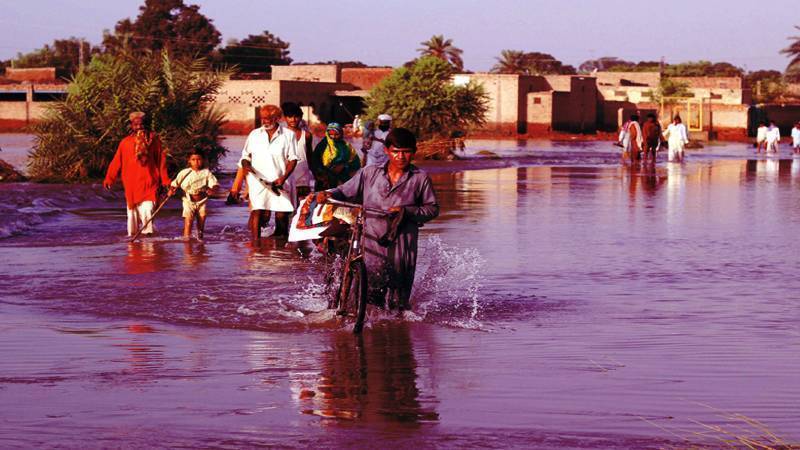
Pakistan stands at the frontlines of a looming water emergency. From prolonged droughts in Balochistan to catastrophic floods in Sindh and glacial lake outburst floods (GLOFs) in Gilgit-Baltistan and KP, the effects of climate change are no longer distant threats—they are unfolding in real time. Our once-predictable hydrological systems are now marked by increasing volatility, scarcity, and extremes.
This urgent need for a new approach was the focus of a recent event hosted by the University of Balochistan on 22 July 2025, where I had the privilege of delivering a talk titled “Climate-Resilient Water Governance in Pakistan through Nature-Based Solutions and Community Participation.” The gathering of academics, policymakers, and civil society leaders called for a decisive shift away from business-as-usual models towards solutions rooted in ecology and community empowerment. Credit is due to Prof. Dr Zahoor Ahmad Bazai, Vice Chancellor of the University, whose thoughtful leadership has opened space for critical conversations on climate resilience in Balochistan.
Despite mounting risks, Pakistan’s water governance remains fragmented, outdated, and overly reliant on engineered infrastructure—dams, canals, and concrete linings that often displace environmental costs downstream. This centralised, top-heavy approach is no longer sustainable. We need a paradigm shift—one that centres Nature-Based Solutions (NbS) and the voices of communities most affected by water insecurity.
NbS are climate-smart, cost-effective interventions that work with natural processes to enhance water security and climate resilience. These include wetland restoration to recharge aquifers and filter pollutants, watershed reforestation to reduce surface runoff and increase infiltration, urban green belts and bioswales for stormwater management, and riparian buffer zones to stabilise riverbanks. Unlike conventional “grey” infrastructure, which can displace problems and degrade ecosystems, NbS regenerate ecosystems while supporting livelihoods and long-term sustainability. Though recognised globally, these solutions remain sidelined in Pakistan—not due to lack of resources, but due to weak governance and an underinvestment in innovation.
Encouragingly, communities across Pakistan are already practising NbS—often with little formal support. In Balochistan, farmers are restoring centuries-old karez systems: subterranean tunnels that transport water while minimising evaporation. In the highlands of KP, villagers have constructed check dams, terraced slopes, and planted vegetative barriers to control erosion and store rainwater. Along the Indus Delta in Sindh, fisherfolk and women-led groups are replanting mangrove forests to buffer storm surges and reduce coastal salinity. In South Punjab, Water User Associations are organising rotational irrigation schedules to improve equity and efficiency. These are not isolated efforts. They are testaments to local knowledge, resilience, and ecological stewardship—but they are often ignored by mainstream policy, unfunded, and technically unsupported.
We can no longer afford to view water solely as a technical issue—it is a deeply ecological, social, and moral concern
Pakistan’s institutional landscape for water management spans multiple ministries—irrigation, climate change, agriculture, environment, and public health—yet coordination among them remains minimal. This fragmentation stifles integrated watershed management, ecosystem monitoring, and the scaling of successful innovations. While national frameworks like the Water Policy (2018) and Water Accord (1991) offer important principles, they rarely embed NbS into planning or budgeting. Even donor-supported NbS pilots in regions like Chitral, Tharparkar, or Gilgit-Baltistan often wither once external funding ends, in the absence of institutional ownership and continuity mechanisms.
The gender dimension is equally critical. Women bear the brunt of water insecurity—walking farther for water, managing household sanitation, and caring for sick children in the wake of waterborne diseases. Yet their voices remain marginalised in water governance. My own field experience across KP and Sindh demonstrates that when women are empowered as forest stewards, health educators, or members of local water committees, both environmental and social outcomes improve significantly. Nature-based approaches must be gender-informed, not gender-neutral. Ignoring this means forfeiting half of society’s resilience potential.
Internationally, compelling case studies offer valuable inspiration. On Sado Island in Japan, the native crested ibis had nearly vanished due to intensive, pesticide-laden rice farming. Rather than abandoning the species, the local community revived traditional Satoyama landscapes—reducing pesticide use, restoring wetlands, and promoting biodiversity-friendly agriculture. Today, the ibis has returned in growing numbers, becoming a symbol of pride for schoolchildren and farmers alike. Their rice, now marketed as “eco-rice,” has become a celebrated export. This integrated model of ecological conservation, agriculture, and cultural revival offers a lesson for Pakistan’s rice-growing belts.
Similarly, in Spain’s Júcar River Basin, unsustainable water use had drained aquifers and collapsed wetlands. Instead of building more dams, local actors restored floodplains, reforested degraded riverbanks, and pioneered groundwater recharge through managed aquifer storage. Community-based water councils ensured local buy-in and accountability. Today, water flows more reliably, biodiversity is thriving, and farmers are respected as stewards of the watershed. This model of inclusive, adaptive governance holds strong potential for replication in Pakistan’s river basins, especially in Balochistan, Sindh and KP.
To truly transition to climate-resilient water governance, Pakistan must move decisively on five fronts. First, NbS must be mainstreamed across all national and provincial policies for water, agriculture, and climate—complete with implementation targets and financing. Second, a dedicated National Taskforce on NbS should be established to drive cross-sector coordination, avoid duplication, and scale up best practices. Third, community innovation should be incentivised through challenge grants for Water User Associations, women’s groups, and local NGOs demonstrating successful NbS. Fourth, extension officers and irrigation staff must be trained in eco-hydrology, landscape management, and traditional knowledge systems. And fifth, water budgeting practices must evolve to recognise and reward the value of ecosystem services—not just the volume of water delivered through canals.
We can no longer afford to view water solely as a technical issue—it is a deeply ecological, social, and moral concern. Nature has always buffered us from disaster—when allowed to function. Communities have always adapted—when empowered. Now, the state must lead with vision, humility, and resolve.
Pakistan stands at a crossroads: to persist with outdated models that exacerbate the crisis, or to embrace nature-based solutions and community resilience as our path to water security. The choice is ours—and the time is now.