

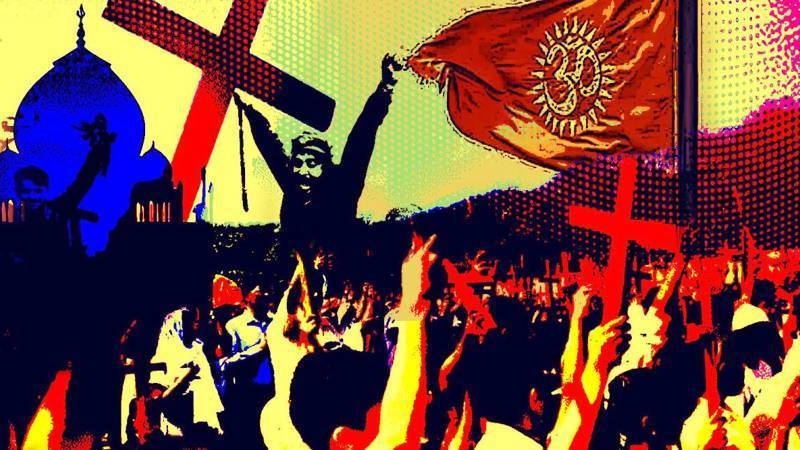
Once upon a time in the misty hills of Malakand, a man in a black turban and flowing beard decided that Pakistan apparently needed saving from itself. Maulana Sufi Muhammad of Tehreek-e-Nifaz-e-Shariat-e-Muhammadi agitated for Islamic courts in Malakand, claiming that the British-era legal system was too slow, too corrupt, and too secular for his spiritual palate. The state, being its usual self, decided to humour him. After all, what harm could a few turbans chanting “Sharia, Sharia” do in the backwaters of Swat?
Plenty, it turns out.
Sufi’s own son-in-law was Maulana Fazlullah, who later led the Tehrik-e-Taliban Pakistan, turning Swat into a gory landscape of decapitated heads and whipped women. Public beheadings and floggings became routine, and the romance of Sharia quickly morphed into a macabre reality show where the audience had no remote to change the channel.
But as they say in this land of strategic depth and shallow foresight: why learn from the past when you can repeat it with more flair?
Enter Tehreek-e-Labbaik Pakistan (TLP), the new messiah of moral policing. Unlike TNSM, which had a Pashtun ethnic undertone and was geographically limited, the TLP carries a far more potent weapon: an emotive religious appeal anchored in the Finality of the Prophethood (peace be upon him). This is not a tribal slogan; it is a national ignition switch. And we have seen the sparks.
From Peshawar to Karachi, the TLP’s “peaceful protests” have involved such harmless acts as torching public property, paralysing cities, lynching policemen, and threatening judges. Several policemen were lynched or shot dead during their rallies. Hundreds of ordinary citizens were injured, and after it had happened, still the state scratched its head, unsure whether it was looking at a protest or a policy tool.
This country cannot progress if mobs dictate policy and violence is rewarded with airtime and influence
Let us not forget November 2017, the Faizabad dharna. A few thousand men held the capital hostage for weeks. Pakistan Army, then under General Qamar Javed Bajwa, diplomatically asked both sides to “exercise restraint”, and a general was even caught on camera handing out cash to the demonstrators as their return tickets. Apparently, this was Pakistan’s version of conflict resolution. State agencies stood by as extremists held the public hostage.
The Supreme Court took notice, and Justice Qazi Faez Isa issued a judgment that, if implemented, would have dismantled the machinery behind such spectacles. Had the Faizabad ruling been enforced, Pakistan might have averted later chaos. But, like most things that matter, the verdict remains a well-written suggestion gathering dust in a cabinet somewhere between apathy and amnesia.
The problem is not that TLP exists. The problem is that it thrives with impunity.
When Justice Jamal Khan Mandokhail ordered a commission to investigate what he called the “Blasphemy Business Group”, many thought it would finally expose the profiteering enterprise that had turned the Divine Reverence into an economic model. A public hearing, which was live-streamed, apparently found individuals, both private citizens and government officials, allegedly involved in framing citizens, manipulating social media, and handing out blasphemy labels like candy on Eid. The TLP even went so far as to threaten Justice Mandokhail himself—inciting violence against the judges who issued the verdict to form an investigation commission.
What was the state’s reaction?
Our state’s law enforcement arm took no action and issued no condemnation. The “institutional respect” does not apparently extend to the judiciary when religious politics are involved.
Now here is the real kicker. Pakistanis—normal, exhausted, bill-paying, law-abiding, inflation-choked citizens—are expected to behave like functional human beings while extremists get to dictate laws and block highways. And while we gasp under the weight of such dysfunction, the architects of this madness sip their evening sharbat in DHA, Cuban cigar in hand, regaling each other with tales of “strategic successes” in areas far and beyond.
While innocent lives, people’s careers, and a nation’s credibility suffer.
We have built too many Frankenstein's and let them loose in the public square. TNSM was one. TTP another. TLP now joins the club—less tribal, more urban, and infinitely more dangerous because its currency is universal: religious emotion. Unlike ethnicity or sect, love for the Prophet (peace be upon him) crosses all lines. Which is why the TLP can hijack Lahore and Hyderabad alike, and still pretend it is doing God’s work.
The question is no longer whether the state will act. It is whether it even can. The silence from those who once played puppet master is telling. Have they finally lost control? Or are they just waiting for the next political inconvenience to once again roll out the same actors under a different flag?
Either way, Pakistan cannot function like a normal society if it refuses to operate as one. This country cannot progress if mobs dictate policy and violence is rewarded with airtime and influence. We need courts that can rule without fear, police that can enforce without being lynched, and streets that are not blockaded in the name of righteousness.
Most of all, Pakistanis need to breathe. And for that to happen, the state must finally draw the line between faith and fanaticism.