

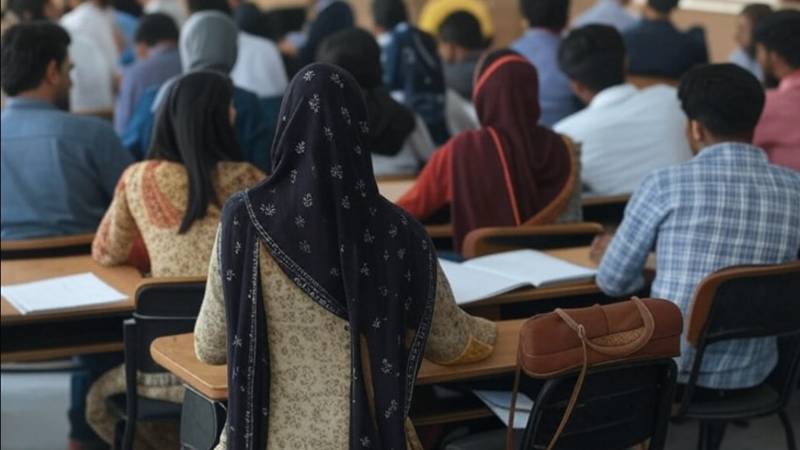
The world of higher education is moving into a strange new decade, one where everything we once trusted about universities is slowly losing its certainty. After reading the global projection report Towards 2035, I realised that this shift is not loud or dramatic. It is subtle, steady and almost quiet. But it is reshaping the future in ways many university leaders still refuse to acknowledge. Twelve years from now, the familiar university model will not survive in its current form.
One of the strongest undercurrents driving this change is demographic. Many Western countries that built the dominant higher education systems of the last century are simply running out of young people. Their school-leaver populations are shrinking. Their enrolments are dropping. Whole programmes are becoming financially unviable. Meanwhile, countries like Pakistan, India, Nigeria and Egypt are growing younger. We will supply a large part of the world’s international students, whether the world is ready or not. This means universities in ageing societies will depend heavily on students from the Global South. But it also means global mobility will become more unpredictable because visas, geopolitics and sudden policy shifts can turn the tap on or off within months.
The financial picture is no less troubling. The report makes it painfully clear that universities cannot rely on the old formula of government funding, tuition fees and research grants. Public funding is inconsistent, research income is cornered by elite institutions, and teaching revenues rise and fall with demographic waves. Universities will have to rethink their financial foundations. They will be pushed to introduce short professional courses, online programmes, joint degrees, industry training and any initiative that brings stability. The uncomfortable truth is that many degrees that have existed for decades will not survive this transition. If a programme does not attract enough students or does not lead to meaningful employment, it will eventually disappear. Sentimentality will not save it.
Technology, especially artificial intelligence, is accelerating this transformation. By 2035, AI will be woven into almost every academic function. It will grade assignments, generate feedback, support student advising and personalise learning. The lecture-driven model that carried universities through the twentieth century will not be enough. Students will demand flexible pathways, hybrid classrooms, digital tools and courses that match the realities of the job market. They will expect universities to teach AI literacy the way previous generations expected English literacy. Faculty will need to rethink their roles, not as dispensers of content but as mentors, facilitators and critical guides in a world where information is abundant and instantly accessible.
The universities that adapt will lead the next era of learning. Those that cling to old habits will fade quietly, not with drama but with irrelevance
The geopolitical shift is equally significant. The dominance of the United States, the United Kingdom and Australia is weakening. They will remain important destinations, but they no longer own the market. New hubs are emerging. The United Arab Emirates, Saudi Arabia, Malaysia, Singapore, India and Turkey are investing aggressively in higher education, importing global faculty, building world-class campuses and offering students alternatives that did not exist twenty years ago. China’s declining youth population will further reshape mobility patterns. Western universities that built their budgets on Chinese enrolments will feel the impact deeply.
Programme optimisation is one of the report’s more practical and uncomfortable insights. Universities will have to evaluate their offerings with hard data rather than tradition. They will need to ask which degrees bring students, which lead to jobs, which generate revenue and which support national priorities. The rest will face closure or consolidation. This is not an attack on academic freedom. It is a reality of survival. No institution can afford to run programmes purely for nostalgia.
Another major shift will be in the field of transnational education. Branch campuses, micro-campuses, joint degrees and online cross-border delivery will grow rapidly. This means Pakistani students will have more choices within the region, not just in the West. It also means competition among global providers will intensify. For Pakistani universities, it is a signal that international collaboration is no longer a luxury. It is a necessity if they want to remain visible in the global academic landscape.
When these trends converge, the university of 2035 begins to take shape. It will not be a single type of institution. It will be many forms at once. Some universities will remain research-driven. Others will focus on employability. Some will offer vocational and skills-based programmes. And some will operate mostly online, teaching thousands of students across continents. The rigid, monolithic idea of the university will dissolve. What will matter is relevance, agility and the ability to respond to student needs rather than bureaucratic traditions.
The next decade will test universities in ways they have not been tested before. Leaders will have to make decisions based on evidence, not sentiment. Policymakers will have to accept that old funding models are collapsing. Faculty will have to adapt to digital tools they once resisted. And students will continue to demand better value, better skills and better futures.
The report does not predict the collapse of higher education. It predicts its reinvention. Painful at times, uneven in its pace, but necessary. The universities that adapt will lead the next era of learning. Those that cling to old habits will fade quietly, not with drama but with irrelevance. By 2035, the old university model will not just be outdated. It will be gone.