

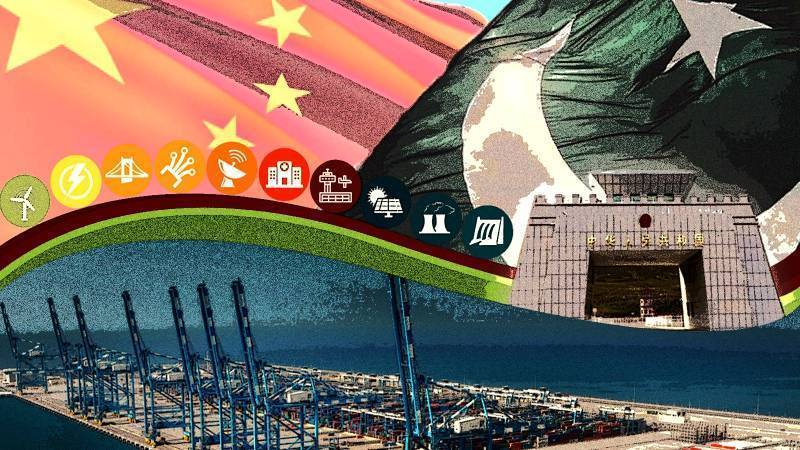
We’ve been hearing about it for more than a decade now. With some labelling it as the 21st-century model of the East India Company and others branding it as a ‘game-changer’ for Pakistan and the wider region, CPEC has a lot of allegations to dispel and even more expectations to live up to. On the face of it, the scepticism is not entirely unjustified. After all, a decade has passed since the project was first launched, and the Chinese have poured billions of dollars into the venture. But while it’s fair to question why CPEC hasn’t delivered as promised, it’s also a bit unreasonable to expect it to succeed despite everything we've failed to do ourselves. If we haven’t done the groundwork to support a project of this scale, then maybe the problem isn’t with the project, but with us.
The truth is, the Chinese can only do so much. It is Pakistan’s domestic handling of CPEC that today acts as the single most important barrier to the realisation of its full potential. Despite being a country that takes pride in its diversity, Pakistan has failed to adopt a conflict- and region-sensitive approach to CPEC in particular, and to development in general. So much so that if the two countries ever have a sit-down on where CPEC went wrong, it’ll make for a classic “it’s not you, it’s me” moment for the Pakistanis.
This lack of sensitivity has led to longstanding and as yet unresolved political and legal issues between the centre and the provinces. As a result, mega-projects face fierce backlash in places like Khyber Pakhtunkhwa and Balochistan, not necessarily because of opposition to economic growth, but due to how that growth is planned, distributed and implemented. The tensions between Islamabad and the provinces have created space for rogue elements to exploit local discontent, turning constitutional grievances into security liabilities.
What’s missing is the political will on the part of the host country (Pakistan) to create a conducive environment that enables the project to thrive. CPEC has been marred by security threats from militants, separatists and groups who see in it not an opportunity, but a symbol of exclusion. They are not entirely wrong to feel that way. When local populations are sidelined in the planning of mega-projects that are literally built on their land, disillusionment becomes inevitable.
At the heart of this problem is the fragmented legal and institutional framework surrounding CPEC. Several laws and institutions – such as the CPEC Authority Act, the Special Economic Zones (SEZs) framework, the Companies Act 2017, and Pakistan’s investment treaties – exist to regulate the inflow of Chinese investment. Yet, when it comes to coordination between the federation and the provinces, the Constitution itself points us towards a solution: the Council of Common Interests (CCI).
Centre-province consultation is perhaps the most important aspect of development in a diverse federation like Pakistan. But instead of being the key platform where the federal government and provinces are supposed to hash out their differences, the CCI has been relegated to the sidelines.
If Pakistan is serious about making CPEC work for itself and for its Chinese partners, it must start by fixing its internal governance
We shoot ourselves in the foot each time we bypass the Constitution. And what’s funny, if it wasn’t so tragic, is that we don’t even realise it until push comes to shove and matters spiral out of control. And by then, we’re left scrambling to fix things that were never supposed to break in the first place.
Provinces have consistently raised concerns about not being consulted on key issues such as project planning, location of SEZs, environmental and social impacts, and most notably, revenue-sharing. Nowhere is this more visible than in the case of Gwadar and the broader province of Balochistan. Often referred to as the “crown jewel” of CPEC, Gwadar’s citizens lack access to necessities such as electricity and clean water. Balochistan produces about 10% of Pakistan’s energy, but consumes only around 4%, over 70% of which goes to the agriculture sector. The provincial government of Balochistan receives no financial share from the Gwadar Port. These are facts that demonstrate the inequitable growth that is associated with CPEC, especially for people in the peripheries.
This growing distrust between the federation and the provinces is fertile ground for destabilisation. Militant groups, separatist movements and other non-state actors have repeatedly exploited provincial grievances – rooted in exclusion from decision-making and unequal development to launch attacks that have killed Chinese personnel and undermined Pakistan’s broader security and investment climate. And yet, the one constitutional forum designed to prevent all this, the CCI, continues to be dysfunctional.
The Constitution requires it to meet at least once every 90 days. That rarely happens. Even when meetings are held, they seldom involve meaningful discussions around projects like CPEC. The provinces remain on the receiving end of policies they didn’t help design, and are expected to implement and defend projects in which they feel no ownership.
If Pakistan is serious about making CPEC work for itself and for its Chinese partners, it must start by fixing its internal governance. This begins with revitalising the CCI. It must become a space where grievances are not just heard but addressed; where provinces are brought in as partners, not afterthoughts.
A functional, empowered, and regularly convening CCI can create the kind of consensus that builds long-term political stability and investor confidence. By giving provinces a genuine stake in the planning and benefits of CPEC, the state can remove the very grievances that rogue actors seek to exploit. It can also send a powerful message to its citizens and its partners that development in Pakistan is not a zero-sum game dictated by Islamabad, but a collaborative process shaped by all federating units.
One can’t help but be reminded of F.S. Aijazuddin’s observation: “The Pakistanis love China for what it can do for them, while the Chinese love Pakistanis despite what they do to themselves.” Of course, no bilateral relationship is entirely unconditional as the quote cheekily suggests, but the latter half of that quote strikes as especially true.
Time and again, China has shown patience and commitment to the relationship, even as Pakistan struggles with the same internal dysfunctions that keep projects like CPEC from reaching their potential. That patience, however, isn’t infinite. Unless Pakistan starts taking responsibility for its side of the equation, that goodwill may not last forever.
Ultimately, upholding the Constitution in both letter and spirit is not just good governance; it is the best long-term security strategy we have for CPEC. Because if development continues to ignore the very people it is supposed to serve, then the “game-changer” may well change the game for the worse.