When I first moved out of my parents’ house and into my current home, Bridgebottom, I refused to hire any domestic help. It seemed wasteful to do that for one person – one symbolic step away from being a feudal apologist. Why would I need to hire anyone? I cleaned my own toilets abroad, why should Lahore be any different? I could shop for groceries and cook and exist in absolute freedom. How had no one thought of this before?
This gleaming fantasy of self sufficiency failed spectacularly after an incident involving a cockroach, a gas canister and some expired moisturizers that I think is best forgotten. I realized quickly that houses here had to be cleaned every day – every day! – if you didn’t want them to resemble abandoned prisons. I also found out that with no help I had to answer all the millions of doorbells myself, which varied widely from milkmen to transgendered women.
My mother, who had warned me Lahore isn’t built for self-service living in older houses, conjured Tariq out of thin air when she saw me beginning to lose my mind.
I remember tearfully telling a Canadian friend on the phone about this change one night, and she chuckled how ‘weird’ it was that I had servants. The word stung me. I knew what she meant, but the term didn’t sit well
Tariq was a large, cheerful one-eyed man that had been hired by the mangers of the billboard that looms over my house to guard it at night (presumably from me). Cruelly, they provided him nothing other than a salary, and so he spent most of his nights on a ratty little charpai outside. In the weeks before I moved in, I often saw him warming his hands on a makeshift fire next to my gate and we became friendly in a tight-lipped grin kind of way. When he heard I was moving into the place full-time, Tariq offered an opportunity: If I could provide him with lodging, he would help me around the house. It worked out to be very reasonable, his cost heavily subsidized by his salary from the billboard, and mutually advantageous.
I realized two things after Tariq’s first few hours with me. First, Tariq had a penchant for near-operatic farts – flatulent symphonies really – loud enough that you could hear them through closed doors no matter where you were in the house. ‘Clangers’ my grandmother uses to call them. Second and vastly more painful, he insisted on cooking but his daal could burn a hole in your stomach. He thought I was mad for the most part, and took my enthusiasm for cleaning the house as a personal insult. He hid the duster for a week once.
Tariq, his remaining eye and I got on quite well for close to a year, at which point he announced he wanted to go back to his hometown because of a family squabble. I remember tearfully telling a Canadian friend on the phone about this change one night, and she chuckled how ‘weird’ it was that I had servants. The word stung me. I knew what she meant, but the term didn’t sit well. In her imagination I was walking down a marble staircase lined with footmen and peacocks as someone prepared a bath of milk for me in a gold cauldron in the East Wig. That Tariq and I had to remove a dead mouse from the broken roof drain after a monsoon shower did nothing to convince her my life wasn’t luxurious. But she was, technically, correct.
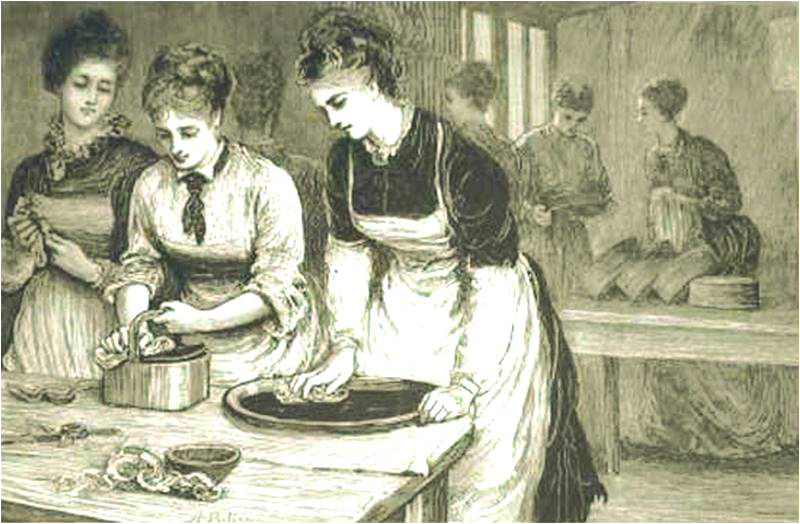
Victorian-era domestic workers
It reminded me how quickly my own attitudes had changed in my first year of living alone. I knew I’d have to hire someone else. The place was too drafty, too dusty, too difficult for one person to manage alone. And there was the question of security: the worry that some errant thief had heard an idiot was pretending to be in New York who had left the front door unlocked.
I went through a string of nearly 17 different people in the next two years. Young, old, thin, fat, one-eyed, one legged and in one case, three fingered. I tried them all. After one of them absconded with a laptop and my favorite cheese two days into the job, I called Tariq as one does an old ex after a new breakup. He seemed in good spirits and sent me the name of another man he knew who was looking for work in a home, which is how I came across my angel with a heart condition called Yameen.
Slowly my life grew, and with it, so did demands for the house. This year Yameen asked me to hire another guy to help him around the house. He knows me well enough that he had already pre-interviewed someone, and a few days ago Imitiaz the cook joined our ranks.
“You have a cook now?!” My friend asked, and I felt that immediate sense of guilt for a second, before remembering the lessons I have learned in the last five years of having domestic help.
My relationship with Tariq or Yameen has more responsibility to it than simple employment. I know that part of my job is to be his support too, to pay for his mother’s surgeries, his wife’s expenses and his kids’ school fees, two of whom are about to go to college to study engineering. These are not kindnesses. They are unwritten rules that govern our bond and are the vestige of an older, crueler time. I honour them not to honour the time, but to honour the man who might otherwise not be able to provide for his family in this way. I know Yameen is working in a home so his children will never have to, and it is both of our responsibilities to make sure they never do. Conversely, Yameen and even Tariq exist in my house in a kind of academic tenure, their position guaranteed in perpetuity until they say otherwise.
Imitiaz the Cook is sweet enough, shy and unassuming. We don’t know each other well but last night I heard him fart from two rooms away.
“Are you related to Tariq?” I asked him the next morning.
“Yes!” He smiled. “He’s my uncle. How did you know?”