

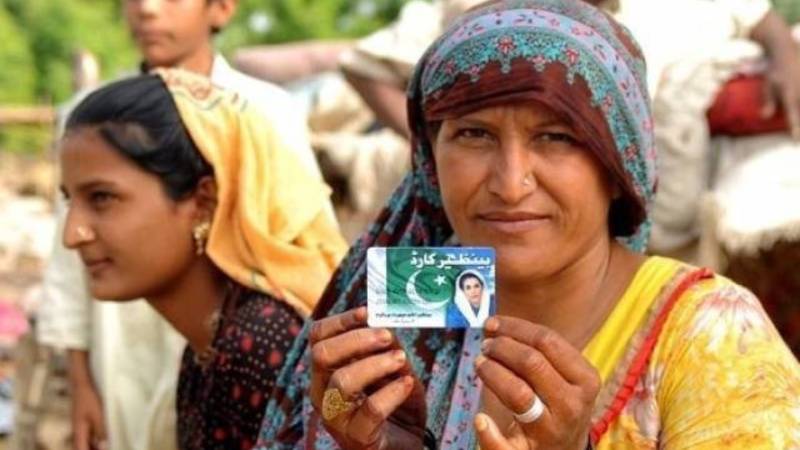
In District Bannu’s remote tehsil Baka Khel, the Benazir Income Support Programme (BISP) was designed to provide immediate support to women from deprived families. As Pakistan’s biggest social safety scheme, BISP was intended to access susceptible females through unconditional cash transfers, identified through the poverty index and a countrywide household survey. Through this initiative, beneficiaries obtain PKR 3,000 every month, and this is an average but necessary assistance that intends to strengthen females, enhancing their discretionary power within the family, and making the household environment more harmonious.
Over the years, the BISP's identification and enrollment mechanism has shifted from house-to-house surveys to desk-based registration hubs, and disbursements are now made through biometric verification tools handled by associated banks. BISP has 4.6 million recipients nationwide, while in Khyber Pakhtunkhwa, there are 885,235 participants, which represents a greater effort on a national scale. Yet, in several large-scale social security programs, gaps emerge not in the plan but in the execution process.
In areas like Ex-FATA and Frontier Regions, these gaps became more prominent. Within ex-FATA alone, 161,010 BISP recipients are registered. But in the tehsil of Baka Khel, SDW, this figure fails to capture the deeper problem: several deserving females do not receive benefits at all due to hurdles in the payment mechanism. Baka Khel utilises the amended BVS (Biometric Verification System) disbursement system, which comprises BVS Point of Sale agents, BVS-licensed branches, and BVS-authorised ATMs. This arrangement aims to reduce scams by verifying participants' identities through fingerprint verification.
In abstract, this is a safe, effective technique to ensure that the deserving person gets their cash. But in practice, females in Baka Khel face two significant hurdles. The first challenge is that the BISP payment points are not located in every village of tehsil Bakakhel. Instead, Women have to travel 15 km, 20 km, or even 2 hours to reach to a point of sale in , which are not located in their respective villages and are hard to access for everyone. So this poses an extra travel cost for families already surviving at the edge. The cost of travelling becomes a significant burden: travelling by public transport costs 800-1000, while travelling by private transport costs 1500-2000, which disappoints participants. When females were interviewed for the study, they identified long distance and travel cost as the major barrier. So a program aimed at helping the poorest ends up imposing extra travel costs on them.
While the other major hurdle comes not from the program itself but from local cultural values. At BISP point-of-sale locations, male staff operate the biometric devices to capture female fingerprints and handle disbursements. In various households, male members don’t encourage male involvement in this process and consider it against cultural norms.While interviewing eligible females who are not taking part in this scheme, I found that, even when the poverty index confirms it, cultural norms prevent their participation. Due to these two main issues, females in Baka Khel Tehsil do not receive the desired benefits. So these barriers combine to create a situation in which a program designed especially for deserving women becomes inaccessible to them
These issues can be managed without building new infrastructure or setting up complex systems. Instead, this policy recommendation is both affordable and culturally appropriate, and it includes “Shift payment responsibilities to female teachers in girls’ schools across Baka Khel”. This offers multiple benefits, such as cost savings, because using existing school buildings avoids the need to construct new centers or sign new franchise agreements. Additionally, it is more culturally acceptable because female teachers serve as payment agents. Finally, it eliminates a major obstacle transportation costs since schools are located within the local neighborhoods in Baka Khel. Implementation would involve obtaining teachers’ consent, training them to operate the BVS device, confining specific days of a week for disbursement to prevent overburden on teachers and providing a specific government allowance to keep motivation and efficiency high. Several girls’ schools in Baka Khel, including GGPS Kotka Gul Qadir Jan Baka Khel, GGPS Sardi Khel Wazir, GGPS Junai Baka Khel, GGPS Zalul Baka Khel, GGPS Gora Baka Khel Sad Ali, GGPS Dari Baka Khel, GGPS Ajab Din Baka Khel and others, can be used to implement this policy. BISP was created to help the poorest women in Pakistan by providing direct financial support and increased authority within their families. However, travel costs and cultural beliefs have become significant barriers to delivering benefits to deserving women in Baka Khel. By transferring disbursement responsibilities to female teachers in local schools, the government can effectively fill this gap. This approach aligns with community norms, reduces costs, ensures BISP benefits reach women who need them most, and can be applied in other culturally sensitive areas.