

Foreign investment is the first step to climbing out of the pit of poverty we have long put ourselves in. But then there are two choices before us. First, we opt to become a rentier state and woo others to take from here whatever is left. Second, we generate business here and expect others to partake of it.
Generating business is a task that requires trust in the team. I have led teams in different projects and trust me that trust is the first causality when you put your boots down. Debates about common interests and building synergies are useless and endless.
Trust is a commodity that we can find in families, that too only hardly. This, perhaps the reason that family businesses thrive the world over. If we opt for foreign investment, the sustainable way to achieve it is to have family businesses up and running. It is populist to object to extended families pulling together.
When we had family businesses before the Bhutto era, we were a leader in the region, attracting foreign investment. When Bhutoo lost it to become popular, he could not succeed in even turning the country into a rentier state. For all his oratory, he could not convince the US to take Gawadar on a long-term basis.
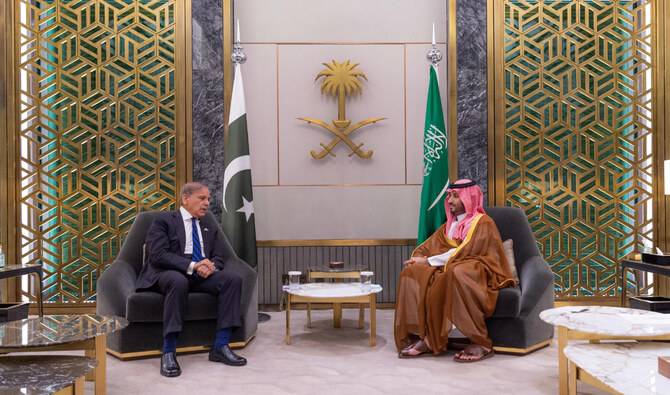
Prime Minister Shehbaz Sharif is on a four-day visit to the Kingdom of Saudi Arabia. His deputy and relative Ishaq Dar, his niece Chief Minister Punjab Maryam Nawaz Sharif, his family fried and Minister for Climate Change Mr. Musadik Malik and National Coordinator SIFC Lt. Gen. Sarfraz Ahmed, and others.
His elder brother Nawaz Sharif and other family members are also there to spend the last days of Ramzan performing religious rituals in Makkah as part of their routine. Nawaz has been following this routine for long. He takes his servants, cooks and others along with him.
Sometimes he even takes journalists with him to perform Umera but the same hacks castigate him back home on big screens. This, perhaps, is requirement of their profession or their nature.
On his Facebook page, the prime minister mentioned "The objective of the visit is to strengthen bilateral ties, enhance economic cooperation, and promote investment between the two countries. The Prime Minister’s visit underscores the deep-rooted historical relations between Pakistan and Saudi Arabia and aims to foster greater mutual understanding on bilateral, regional, and global matters."
This statement is rhetorical and means nothing. Even then it attracted a good number of trolls, which can only be deplored.
Similarly, there is more noise than sound on mainstream media about this visit and the meeting between Crown Prince Mohammed bin Salman and Shehbaz Sharif in Riyadh. We have a variety of self-claimed defense analysts, senior journalists, and politicians who have been subjecting Pak-Saudi relations to their daily shouting matches and bitchy debates.
I remember that Amir Zia, who is from the rarest breed of editor working with whom you can unlearn, would get a serious discussion on the particular issue of Pak-Saudi relations. The only write-ups he made me review, of all my work, were on visits of our military and civil leaders to Riyadh.
These visits always mean business.
Official statement from the Prime Minister's Office mentions in the first line: "Prime Minister Muhammad Shehbaz Sharif met with Saudi Investment Minister HE Khalid Al-Falih and Mohammad Al-Tuwaijri, Head of the Joint Task Force for Economic Engagement, during his official visit to Saudi Arabia. The discussions focused on strengthening economic cooperation, attracting Saudi investments, and expediting joint initiatives in key sectors."
Shehbaz Sharif means business, talks sense, and walks the talk.
The first precondition to understand the ways to attract "Saudi investments" is that we need it but cannot get it until and unless we have thriving Small and Medium-sized Entrepreneurs (SMEs). And we cannot have it until we get free of the bureaucracy that has eaten out the entire fabric of our state. A retired bureaucrat seeking extension is as worse as the one dug deep to his ears in the run-up to next grade.
Extension and grade are the only things they could think about. We cannot leave attracting Saudi investment to them.
Usually, a routine writeup by Pakistani ambassador in Riyadh is carried by Arab News when a state dignitary visits the Kingdom. This time, Arab News has not even carried it. Any editor would have said that what is the point of publishing the same abstract concepts wrapped in flowery language again and again.
Bureaucracy and diplomacy are going back to their origins the world over. Time was when noblemen close to the rulers would serve as ambassadors to foreign lands. Ambassies were set up and diplomacy was conducted with dignity. Then foreign ministries popped up and it all became bureaucratic. Job seekers became diplomats and job protection came before relation building.
Attracting investment is all about building relations.
The problem is Pakistan has not developed industry. It is perhaps the 25th time Pakistan is seeking an IMF loan. There is much talk about enhancing taxes. I have been accustomed to this kind of cure-all recopies. We all know that it will not work. People simply do not do business here because of these taxes. As a result, the black market thrives.
In Islamabad, property tycoons pop up like hemp thicket after monsoon rains. They amass a lot of wealth and produce nothing other than dreams. More than half of the city's population live in rented houses. It is the truth of other cities too, with smaller variations.
In Saudi Arabia, business is dominated by families. It is no strange thing. Francis Fukuyama wrote extensively in his book titled "Trust" about the secret of success of family businesses in Japan. If we look at global scale, we find that family businesses account for about 70-80 percent of the world business.
In the United States (US), family business share is 80 precent. The situation is almost similar in European countries including Italy, Sweden, Germany and the UK. It is the same in the Gulf Cooperation Countries (GCC), which Saudi Arabia is the heart of.
The GCC states were known as rentier states as they heavily relied on petrodollars. But now they have focused on production, gearing up for a post-fossil fuel scenario. The US and European countries attract their investments largely in cost-intensive projects.
But there still is a lot to attract. "The implementation of large-scale and major infrastructure projects, new megacities planned, and mega development in Riyadh city based on public-private partnerships (Al Ula masterplan, NEOM, TROJENA, OXAGON, THE LINE, Diriyah Gate, Qiddiyah, etc.) announced as Saudi Arabia’s USD 900BN development plan," writes Wassim J. Aloulou in one of his research papers.
He is an Associate Professor at the College of Economics and Administrative Sciences at Imam Mohammad Ibn Saudi Islamic University, Riyadh. Pakistani delegation must-read writers like him planning ways to attract Saudi investment.
Family businesses are on the decline here as uncertainty prevails. To attract Saudi investment, we need strong production units of Small and Medium-sized Enterprises (SMEs). Sharifs are a business family. There business has successfully gone down into their third generation.
Shehbaz Sharif is known to deliver results and find out-of-the-box solutions. Family members are in his delegation. I believe that they would go for building relations with business families of Saudi Arabia. This is the sustainable way to attract family business.