

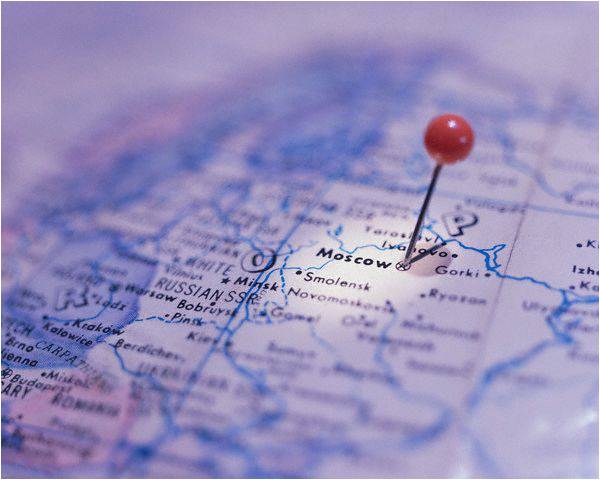
Moscow decided to lift the embargo on selling military hardware and weapons to Islamabad earlier this month. The Russians are also planning on supplying Pakistan with attack helicopters in a move that is a colossal foreign policy shift on Moscow’s part, one that looks set to irk New Delhi as well – at least on paper. Islamabad meanwhile has denied that any arms embargo ever existed in the first place.
Defence analyst Col Farrukh has dubbed this move a part of a ‘global seat adjustment’.
“The Russian manoeuvre is a part of the global seat adjustment wherein all regional and international powers get equitable benefits,” he said. “Russia has been shoring up Iran, China has been eying the economic corridor, while India has been a stakeholder in Afghanistan. While Russia selling arms to Pakistan is a move that might seem to bother India, but if in the bigger picture it facilitates New Delhi’s access to Afghanistan, alarm bells should be ringing in Islamabad.
Col Farrukh urged the government to take geo-strategic decisions carefully and not take other powers’ manoeuvres at their face value.
“I urge the government to revisit its foreign policy book. All strategic decisions should be taken in the National Assembly and should be based on collective wisdom,” he concluded.
Political scientist and military analyst Dr Hasan Askari Rizvi has echoed the popular noise and dubbed Moscow’s move a massive foreign policy shift on the Russians’ part.
“It would be the first time since 1968 that Russia would be supplying arms and helicopters to Pakistan. It is a case of Russia expanding its options and also wooing a lucrative market for weapons and military hardware. Russia is also telling India that if they can find friends among Moscow’s foes – ie the US – Moscow can return the favour,” he said.
On the expected backlash from New Delhi, Rizvi reiterated that the usual criticism is to be expected.
“One can expect usual criticism from the Indian government but they would not be too perturbed. All global eyes are on the NATO withdrawal from Afghanistan and all decisions in the lead up to that would be taken with the focus primarily on Kabul,” he added.
[quote]"It's Islamabad's decision how it might want to use the weapons"[/quote]
The general consensus among Russian defence analysts has been that the Russian move is targeting both Kabul and Islamist militancy in the region that has caused a lot of trouble for both Moscow and Islamabad. Strengthening Pakistan in its fight against Islamist militancy, hence works well for every global and regional power. However, how Islamabad uses its weapons is what might perturb New Delhi in particular.
“Islamabad might use these weapons to counter the Islamist terrorism, but once the weapons are in Pakistan’s possession it’s Islamabad’s decision how it might want to use them. It is true that Islamist militancy is the biggest regional concern as things stand, and Pakistan would want to use its arsenal to target its principal concern,” Rizvi said.
Russian getting closer to Pakistan would also bolster its chances of having more of a say in post-2014 Afghanistan, and it also reflects the verisimilitude of the China-Russia-Pakistan (CRP) axis.
“I think we are getting a little ahead of ourselves,” Rizvi said, when asked about the potential of the CRP axis. “Moscow won’t burn its boats vis-à-vis New Delhi,” he added.
With Beijing’s concern about its Uighur militants’ link to the northwest of Pakistan, the Sino-Russian concerns and interests seem to be overlapping perfectly in Afghanistan. New Delhi’s interests lie in a peaceful Afghanistan as well, which at the end of the day is what the US would want as well. When all regional and global players seem to be reaching consensus over what is in the best interest of everyone, maybe no one would have to burn any boats.
Col Farrukh is a little sceptical.
“The US is eying a ‘combine and rule’ policy along the lines of the British ‘divide and rule’, and this policy is going to create more chaos in the region. There is no possible way that all countries’ interests would meticulously converge and hence, Islamabad needs to gauge its options carefully and ensure that it everyone else’s – most notably India’s – benefit does not come at Pakistan’s expense,” he said.
Love from Russia on its own might be neither a cause for buoyancy nor scepticism, but it is an epoch-making move nonetheless. If Islamabad can play its cards carefully, it can strengthen the much touted and prognosticated CRP axis. A lacklustre play here or there and Pakistan might well see other powers reaping most of the benefits of a peaceful Af-Pak region.
Defence analyst Col Farrukh has dubbed this move a part of a ‘global seat adjustment’.
“The Russian manoeuvre is a part of the global seat adjustment wherein all regional and international powers get equitable benefits,” he said. “Russia has been shoring up Iran, China has been eying the economic corridor, while India has been a stakeholder in Afghanistan. While Russia selling arms to Pakistan is a move that might seem to bother India, but if in the bigger picture it facilitates New Delhi’s access to Afghanistan, alarm bells should be ringing in Islamabad.
Col Farrukh urged the government to take geo-strategic decisions carefully and not take other powers’ manoeuvres at their face value.
“I urge the government to revisit its foreign policy book. All strategic decisions should be taken in the National Assembly and should be based on collective wisdom,” he concluded.
Political scientist and military analyst Dr Hasan Askari Rizvi has echoed the popular noise and dubbed Moscow’s move a massive foreign policy shift on the Russians’ part.
“It would be the first time since 1968 that Russia would be supplying arms and helicopters to Pakistan. It is a case of Russia expanding its options and also wooing a lucrative market for weapons and military hardware. Russia is also telling India that if they can find friends among Moscow’s foes – ie the US – Moscow can return the favour,” he said.
On the expected backlash from New Delhi, Rizvi reiterated that the usual criticism is to be expected.
“One can expect usual criticism from the Indian government but they would not be too perturbed. All global eyes are on the NATO withdrawal from Afghanistan and all decisions in the lead up to that would be taken with the focus primarily on Kabul,” he added.
[quote]"It's Islamabad's decision how it might want to use the weapons"[/quote]
The general consensus among Russian defence analysts has been that the Russian move is targeting both Kabul and Islamist militancy in the region that has caused a lot of trouble for both Moscow and Islamabad. Strengthening Pakistan in its fight against Islamist militancy, hence works well for every global and regional power. However, how Islamabad uses its weapons is what might perturb New Delhi in particular.
“Islamabad might use these weapons to counter the Islamist terrorism, but once the weapons are in Pakistan’s possession it’s Islamabad’s decision how it might want to use them. It is true that Islamist militancy is the biggest regional concern as things stand, and Pakistan would want to use its arsenal to target its principal concern,” Rizvi said.
Russian getting closer to Pakistan would also bolster its chances of having more of a say in post-2014 Afghanistan, and it also reflects the verisimilitude of the China-Russia-Pakistan (CRP) axis.
“I think we are getting a little ahead of ourselves,” Rizvi said, when asked about the potential of the CRP axis. “Moscow won’t burn its boats vis-à-vis New Delhi,” he added.
With Beijing’s concern about its Uighur militants’ link to the northwest of Pakistan, the Sino-Russian concerns and interests seem to be overlapping perfectly in Afghanistan. New Delhi’s interests lie in a peaceful Afghanistan as well, which at the end of the day is what the US would want as well. When all regional and global players seem to be reaching consensus over what is in the best interest of everyone, maybe no one would have to burn any boats.
Col Farrukh is a little sceptical.
“The US is eying a ‘combine and rule’ policy along the lines of the British ‘divide and rule’, and this policy is going to create more chaos in the region. There is no possible way that all countries’ interests would meticulously converge and hence, Islamabad needs to gauge its options carefully and ensure that it everyone else’s – most notably India’s – benefit does not come at Pakistan’s expense,” he said.
Love from Russia on its own might be neither a cause for buoyancy nor scepticism, but it is an epoch-making move nonetheless. If Islamabad can play its cards carefully, it can strengthen the much touted and prognosticated CRP axis. A lacklustre play here or there and Pakistan might well see other powers reaping most of the benefits of a peaceful Af-Pak region.