

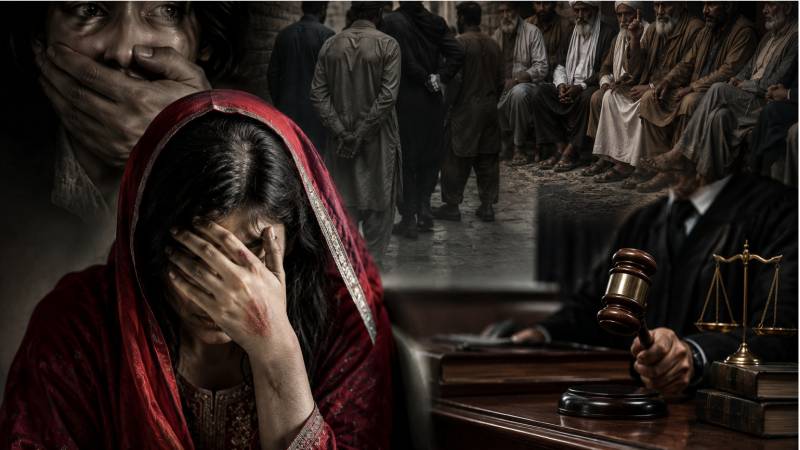
The recent killing of a young woman and a police constable in Upper Kohistan has once again drawn national attention to the brutal reality of so-called honour killings. According to the Human Rights Commission of Pakistan, hundreds of such killings continue to be reported every year, while many more never reach official records. The question is no longer whether Pakistan has laws against honour killings. The real question is why these murders continue despite repeated legal reforms. This is not merely a criminal justice issue. It is a test of our society, our policing, our prosecution system and, ultimately, our commitment to the rule of law.
My own thoughts on this issue go back nearly three decades. In 1999, while serving as a Deputy Superintendent of Police, I appeared before the High Court in connection with another criminal matter. While waiting for my own case, I listened to arguments in a case involving the killing of a young man whose alleged offence was simply maintaining a relationship with a girl. Whether my recollection of the final order is perfect or not is less important than what I witnessed that day: the discussion reflected how deeply the concept of “family honour” had influenced legal and social thinking. In those days, honour was too often viewed as a circumstance deserving sympathy rather than as the motive for a cold-blooded murder.
Pakistan has undoubtedly made progress since then. Parliament amended the law to prevent offenders in honour killing cases from escaping punishment merely because family members forgave them. Those reforms closed a significant loophole. Yet honour killings have not disappeared. The reason is simple: the law has changed faster than the investigation.
Most honour killings occur inside family homes or in isolated places where independent witnesses are absent. The only eyewitnesses are parents, brothers, sisters or close relatives. Immediately after the incident, these witnesses frequently tell the police exactly what happened. Months later, however, when the trial begins, many retract their statements. Some do so out of fear. Others succumb to tribal pressure, social boycott or family loyalty. Once the principal witnesses become hostile, the prosecution weakens and the accused often receives the benefit of the doubt. The central weakness of our present system is therefore no longer the law of compromise alone. It is the failure to produce reliable and independent evidence capable of surviving hostile testimony.
Another painful reality is that many fathers and brothers do not initially wish to kill their daughters. In several rural and tribal communities, however, the pressure of society becomes overwhelming. A man who refuses to “restore” family honour may be ridiculed, ostracised or branded a coward. Such social pressure can never justify murder, but unless we understand this reality, we cannot hope to eliminate it.
A man who refuses to 'restore' family honour may be ridiculed, ostracised or branded a coward. Such social pressure can never justify murder, but unless we understand this reality, we cannot hope to eliminate it.
There is another contradiction that deserves attention. Some offenders proudly surrender immediately after committing an honour killing, publicly claiming that they acted to defend family honour. Yet when the trial begins, many deny the offence altogether. If they genuinely believe their act was morally justified, why do they not have the courage to accept legal responsibility? The answer is obvious: they seek acquittal by exploiting weaknesses in investigation and prosecution rather than by defending their actions before a court of law. The time has come to move beyond symbolic condemnation and adopt practical reforms.
First, Parliament should provide a clear statutory definition of honour killing so that investigations and prosecutions proceed on a uniform legal basis. Cases involving extended family members or other relatives should be examined with particular care to ensure that the most independent and reliable witnesses are identified at the earliest stage.
Second, greater responsibility should rest with the State rather than frightened relatives. Wherever appropriate, the first police officer reaching the crime scene or the Station House Officer should be empowered to act as the complainant. Murder is an offence against the State; justice should not depend entirely upon grieving families who may later face overwhelming pressure to remain silent.
Third, honour killing investigations must become science-driven rather than witness-driven. Prompt post-mortem examinations, preservation of the crime scene, DNA analysis, digital evidence, mobile phone records, CCTV footage and forensic documentation should form the backbone of every investigation. When scientific evidence is strong, the prosecution becomes less vulnerable if family members later change their statements.
Fourth, such cases deserve priority in the criminal justice system. Fast-track courts should hear honour killing cases on a day-to-day basis so that justice is delivered swiftly. Delay weakens evidence, increases opportunities for intimidation and ultimately serves only the offender.
Legal reform alone, however, will never eradicate honour killings. Social reform is equally essential. Education remains the most powerful long-term solution. Every child should grow up understanding that no notion of honour can justify murder. Women must enjoy genuine educational and economic opportunities so that they are not forced into dependence upon those who seek to control their lives through violence.
Religious scholars also have a vital role to play. Islamic teachings recognise the dignity of every human being and require the free consent of a woman in marriage. These principles should be communicated consistently from mosques, seminaries and public platforms so that culture is no longer allowed to masquerade as religion.
Greater economic development and educational exposure in deprived areas can gradually weaken customs that thrive in isolation. Communities that interact with broader society often become more accepting of lawful individual choice while remaining faithful to their cultural and religious values.
The State must also provide practical protection to couples whose lives are threatened because they have lawfully chosen to marry. Safe houses should be available in every district for adults facing genuine risks of honour-based violence. Where two competent adults claim that they have married voluntarily, the police should prioritise their protection and ensure that any criminal allegations are carefully scrutinised under judicial supervision before coercive action is taken. Honour killings are not crimes of honour. They are acts of murder committed under the cover of tradition and social pressure. Every acquittal resulting from defective investigation, intimidated witnesses or delayed justice silently encourages the next killing.
Pakistan has already demonstrated that it can reform its laws. The next challenge is to reform the criminal justice system so that investigations are professional, prosecutions are evidence-based and trials are swift. At the same time, society must reject the belief that family reputation is restored by taking a human life. True honour lies not in revenge but in justice, compassion and respect for the rule of law. Only when both the State and society embrace these principles will honour cease to be an excuse for murder.