

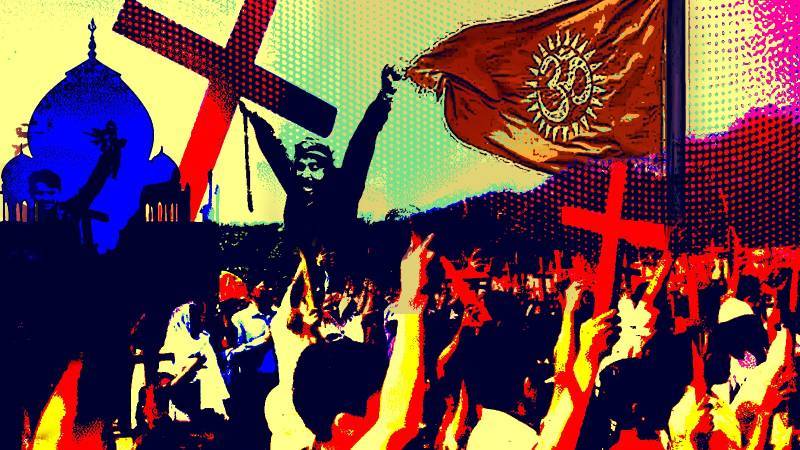
The recent killing of Dr. Mahmood in Sargodha, reportedly on account of his religious identity, is another distressing addition to a long chain of targeted violence that continues to haunt Pakistan’s pluralistic aspirations. A respected academic and professional, Dr. Mahmood was not accused of any crime, nor was there any legal proceeding against him. His only “fault,” it appears, was his adherence to a faith deemed controversial by certain extremist quarters—a tragedy that demands serious national reflection.
Pakistan was not founded on a sectarian or theocratic blueprint. The foundational promise of the state was equality of citizenship, rooted in Muhammad Ali Jinnah’s vision of a nation free from religious persecution and bias. That vision, articulated most clearly in his August 11, 1947 address to the Constituent Assembly, declared: “You are free; you are free to go to your temples, you are free to go to your mosques or to any other place of worship in this State of Pakistan. You may belong to any religion or caste or creed—that has nothing to do with the business of the State.”
These words, often quoted but rarely implemented, encapsulate the operational essence of a secular and democratic republic where religious belief is a private matter—not a basis for exclusion, violence, or fear. Yet in the decades since that speech, Pakistan has increasingly seen a rise in faith-based intolerance, particularly against religious minorities, both constitutionally recognised and otherwise.
Pakistan’s Constitution contains strong theoretical protections. Article 20 guarantees every citizen the right to profess, practice, and propagate their religion, while Article 25 provides for equality before the law. Article 36 obligates the state to safeguard the legitimate rights and interests of minorities. On paper, these provisions reflect the democratic principles that underpin the modern nation-state.
Pakistan is also a signatory to international human rights treaties such as the International Covenant on Civil and Political Rights (ICCPR), which under Article 18 explicitly protects the right to freedom of thought, conscience, and religion. These commitments place a dual legal and moral obligation on the state to ensure that religious belief is not grounds for violence or discrimination.
A reformed and empowered National Commission for Minorities should be granted statutory powers, operational autonomy, and adequate resources to monitor hate crimes, review policies, and recommend reforms.
However, this noble framework often remains unimplemented in spirit and in practice. Weak enforcement, lack of political will, and societal pressure have combined to create a climate where religious minorities—even those nominally protected by law—live with a sense of precariousness and fear.
Any discussion of religiously motivated violence in Pakistan would be incomplete without addressing the country’s blasphemy laws. Initially introduced under colonial rule to prevent communal violence, these laws were expanded in the 1980s through amendments that significantly increased their scope and severity.
Today, under Sections 295 to 298 of the Pakistan Penal Code, accusations of blasphemy can lead to life imprisonment or even the death penalty. In practice, however, these laws are often misused. Accusations are frequently made on weak or fabricated evidence, and the mere suggestion of blasphemy can provoke mob violence, vigilante killings, and social ostracism—even before a case reaches the court.
Notably, the victims of such misuse are often from religious minorities, including Christians, Hindus, Ahmadis, and Shia Muslims. In Dr. Mahmood’s case, while no direct accusation under the blasphemy laws was made, the atmosphere created by decades of doctrinal policing and legal intimidation contributes to the sense that religious difference itself is a threat to be “eliminated.”
There have been high-profile victims of this atmosphere—Salman Taseer, the Governor of Punjab, assassinated by his own bodyguard for defending a Christian woman accused of blasphemy; Shahbaz Bhatti, the Federal Minister for Minorities Affairs, assassinated for similar reasons; and countless lesser-known names who have been killed, jailed, or driven into exile. The killing of Dr. Mahmood may not fall squarely within a legal case of blasphemy, but it is clearly part of this broader culture of fear and ideological enforcement.
To be fair, the state has not been entirely silent or inactive. Over the past two decades, various measures have been introduced to recognise and support minority communities. These include:
- National Minorities Day observed annually on August 11;
- Reserved seats for minorities in national and provincial legislatures;
- The Ministry of Religious Affairs and Interfaith Harmony, which promotes dialogue and manages minority affairs;
- The Kartarpur Corridor, which has won international praise for enabling Sikh pilgrims access to holy sites;
- Judicial activism, including the landmark 2014 Supreme Court judgment that called for the establishment of a special task force to protect places of worship and the formation of a National Council for Minority Rights.
However, these efforts, while commendable, have yet to transform ground realities. Institutional safeguards remain weak, investigations into religiously motivated killings are often inconclusive, and political leaders frequently hesitate to speak forcefully when violence occurs. Legal reform of the blasphemy statutes remains politically fraught, despite calls from within civil society and international watchdogs.
The persistence of faith-based violence is not just a human rights concern—it is a national security issue. The modern concept of national defence includes not only military preparedness but also societal cohesion and internal peace. When citizens live in fear of being attacked for their religious identity, the fabric of national unity begins to unravel. Extremist groups feed off these tensions, using them to recruit, justify violence, and undermine democratic institutions.
A Pakistan where people are killed for their beliefs is a weaker Pakistan. No state can afford such fragility, particularly in an era of economic challenge, regional instability, and geopolitical scrutiny.
To move toward a more inclusive and secure society, Pakistan must undertake legal, institutional, and societal reform in the following areas:
First, legal safeguards: Amendments to the blasphemy laws should be considered to introduce stricter evidentiary standards, penalties for false accusations, and greater judicial oversight. At the very least, procedural reforms must ensure that accusations are subject to preliminary inquiry before an FIR is registered.
Second, community policing and local oversight: Local administrations should develop early warning systems in collaboration with civil society to detect and defuse religious tensions. Community policing units trained in interfaith sensitivity can serve as the first line of prevention.
Third, media regulation: Media—both traditional and digital—must be guided to avoid inflammatory content that targets religious groups. Regulatory bodies should implement and enforce codes of conduct that promote tolerance and accurate reporting.
Fourth, education reform: School curricula should emphasise constitutional values of pluralism, the rule of law, and civic ethics. History and religious studies must be restructured to reflect Pakistan’s diverse social fabric and discourage prejudice.
Fifth, institutional bodies: A reformed and empowered National Commission for Minorities should be granted statutory powers, operational autonomy, and adequate resources to monitor hate crimes, review policies, and recommend reforms.
Sixth, interfaith dialogue: National and provincial governments can institutionalise interfaith forums that meet regularly and include scholars, community leaders, and government officials. Such forums can help diffuse tension and build consensus on policy matters affecting minority communities.
Pakistan today stands at a crossroads. The choice is between reverting further into an exclusionary identity that breeds fear and violence, or embracing the inclusive vision set forth by its founder and enshrined in its Constitution. The killing of Dr. Mahmood is not an isolated incident—it is a signal. A signal that legal protections must be enforced, dangerous precedents must be reversed, and public consciousness must be rebuilt around principles of justice and equality.
If Pakistan is to thrive—economically, politically, and morally—it must ensure that no citizen fears for their life because of their faith. The promise made on August 11, 1947, remains unfulfilled. But it is not beyond reach. With the right intent, courageous leadership, and collective effort, Pakistan can yet reclaim its soul as a nation for all.