

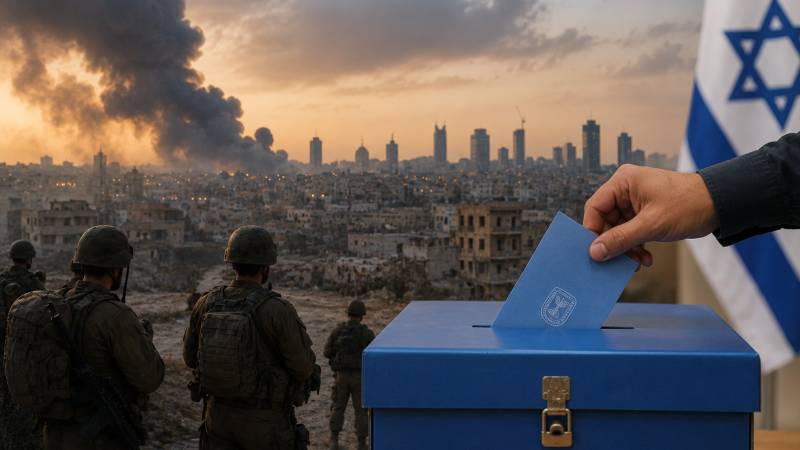
For the first time since Hamas’ October 7, 2023 assault and the multi-front wars that followed in Gaza, Lebanon and Iran, Israelis will go to the polls. Prime Minister Benjamin Netanyahu’s coalition confirmed this week that national legislative elections will be held on October 27, 2026 the date already mandated by law if the current Knesset serves its full term. The vote will determine all 120 seats in the Knesset and comes as successive opinion surveys suggest Netanyahu’s bloc of nationalist and ultra-Orthodox parties could lose its parliamentary majority. With the political landscape still volatile and no clear alternative coalition yet in place, the election is poised to reshape Israel’s domestic trajectory and its approach to unresolved security challenges across the region.
Netanyahu returned to power in December 2022 at the head of what observers described as the most right-wing coalition in Israel’s history, including Likud, Religious Zionist Party, Otzma Yehudit, Shas, United Torah Judaism and Noam. The coalition held 64 of 120 Knesset seats. On October 7, 2023, Hamas launched a surprise attack from Gaza that killed about 1,200 people in Israel and led to the abduction of more than 240 hostages. Israel responded with a military campaign in Gaza, later expanding operations against Hezbollah in Lebanon and engaging in direct strikes with Iran. An emergency unity government was formed in October 2023, with National Unity figures Benny Gantz and Gadi Eizenkot joining a war cabinet.
Under Israeli law, elections are held every four years unless the Knesset is dissolved earlier. The next scheduled date is October 27, 2026. Although parliament voted in May 2026 to begin dissolution proceedings, coalition chairman Ofir Katz told a parliamentary committee on Sunday that the original date “would be kept”. That makes the ballot the first since the October 7 attacks and the ensuing wars in Gaza, Lebanon and Iran.
Israel’s electoral system is nation-wide proportional representation with a 3.25% threshold. Citizens aged 18 and above vote for party lists, not individual candidates, and the 120 Knesset seats are allocated accordingly. A government requires 61 seats for a majority. The election will test public judgment on three interlocking issues: security, governance, and the post-war future of Gaza and the northern border. Netanyahu’s security credentials were “left in tatters” by the October 7 attacks, according to Reuters, and polls show broad dissatisfaction with his management of the subsequent conflicts. A June 9, 2026 survey by the Israel Democracy Institute found 61% of Israelis believe he should not run again.
With the political landscape still volatile and no clear alternative coalition yet in place, the election is poised to reshape Israel’s domestic trajectory.
Current polling suggests no bloc has a clear path to 61 seats without unlikely partnerships. A Channel 12 poll published May 29, 2026 projected Netanyahu’s coalition at 51 seats. Likud led with 23, while a joint “Beyahad” list of former prime ministers Naftali Bennett and Yair Lapid polled at 22. A new “Yashar” party led by Gadi Eisenkot reached 17 seats. Arab parties together held 10 seats, but Bennett and Lapid have said they “will not rely on Arab parties to form a coalition”.
Ultra-Orthodox parties Shas and United Torah Judaism remain key to any Netanyahu-led government, but they have pressed for legislation exempting yeshiva students from military service. Their dissatisfaction nearly triggered an early election in May, when the Knesset began dissolution procedures. Ultimately, the parties concluded elections “will take place as originally scheduled” on October 27.
Opposition leaders have framed the vote as a referendum on the government’s handling of October 7. Yair Golan of the Democrats called them “the October 7 elections… in which the Israeli public will send home the government of negligence”. Netanyahu has shared AI-generated videos casting Bennett and Lapid as Arab lawmakers, signaling that coalition arithmetic and questions of Jewish-Arab political cooperation will be central to the campaign.
The election is being watched closely in Washington, Cairo, and European capitals. U.S. officials have worked with Netanyahu on Iran strategy, but ties have been strained by disagreements over Lebanon and Gaza. Trump told ABC News he was unsure if Netanyahu would run, saying, “I don't know, he's had an amazing career. Does he want to continue?”.
In Gaza, Hamas is holding internal elections and has signaled that Khalil al-Hayya is the front-runner to lead the movement. The group’s officials say they are discussing the “second phase” of a ceasefire that would involve disarmament and reconstruction. How an Israeli government approaches those talks could determine whether the fragile October 2025 truce holds. In Lebanon, Hezbollah’s position has weakened after Israeli strikes, but the northern border remains volatile. Analysts note that Netanyahu’s campaign may seek to present “visible military victories” in Gaza to offset criticism over the October 7 failure.
The war has imposed heavy costs. The 2026 budget, passed in March, is Israel’s largest ever at $270 billion, with defense spending up 20% to $45 billion due to the Iran conflict. Israelis face nightly missile alerts and economic disruption from interrupted oil flows. Domestically, the war coincided with a bitter fight over judicial reform that divided the country in 2023. While that legislation has receded, questions about democratic checks remain. Netanyahu’s ongoing corruption trial continues, and his longevity he is Israel’s longest-serving leader has made the election a test of institutional resilience.
A Netanyahu loss would end the tenure of a leader who has dominated Israeli politics since 2009, with only a brief interruption in 2021-2022. A new government could alter policy on West Bank settlements, the draft of ultra-Orthodox men, and negotiations over Gaza’s future. Yet polls indicate any replacement would struggle to reach 61 seats without Arab parties or defections from the right.
If Netanyahu retains power, he would claim a mandate to continue his security doctrine, but would face pressure to address the commissions of inquiry into October 7 and to advance a post-war plan for Gaza. Regionally, the outcome will influence U.S.-Israel coordination on Iran and the viability of Saudi normalization talks.
The October 27, 2026 election will be Israel’s first since the trauma of October 7, 2023 and the wars that followed in Gaza, Lebanon and Iran. With the ballot date confirmed by the coalition, voters will weigh security failures, wartime leadership, and competing visions for the country’s future. Polls suggest Netanyahu’s coalition faces an uphill battle, but Israel’s fragmented party system means no alternative has a guaranteed path to power. The campaign will unfold against a backdrop of ongoing military operations, economic strain, and unresolved questions about Gaza’s governance. Whatever the result, the election will mark a decisive moment in Israel’s effort to reconcile accountability for the past three years with the demands of a still-uncertain regional order.