


Childhood is meant to be a time of joy, curiosity, and boundless dreams. In Pakistan, children can often be seen playing cricket in narrow lanes, running to school with heavy bags yet light hearts, or celebrating festivals with unbridled laughter. But for some families, this idyllic picture is suddenly shattered. While our pediatric wards are full of stories that prompt deeper solutions for guaranteeing healthy childhood, the journey needs many stakeholders to come together.
September is the month dedicated to childhood cancer awareness and I wish we could lock this month for substantial initiatives across Pakistan to help the situation. It is neither easy nor acceptable to see those eyes that need to laugh fill up with pain.
Parents in Pakistan already struggle with the challenges of limited healthcare access, financial strain, and societal pressures, a childhood cancer diagnosis takes the ground away from beneath their feet.

Yet, despite its seriousness, childhood cancer is often overshadowed in low- and middle-income countries (LMICs), including Pakistan. The overburden of communicable diseases like tuberculosis, malaria, and hepatitis means cancer rarely makes it into control planning at the national level. This neglect contributes to missed opportunities for timely diagnosis and effective management, deepening the suffering for families who are already fighting an uphill battle.
It was against this backdrop that, in September 2018, the World Health Organization (WHO) launched the Global Initiative for Childhood Cancer (GICC). The goal is both bold and compassionate: to reach at least a 60% survival rate for children with cancer by 2030, while reducing their suffering. For countries like Pakistan, this initiative serves as both a lifeline and a challenge - an opportunity to strengthen systems, but also a reminder of the urgent work still to be done.
As part of the WHO-GICC program, countries including Pakistan are now committed to implementing, monitoring, and evaluating capacity-building programs. These efforts are vital for identifying the most effective interventions and generating the data that governments, stakeholders, and the global health community need for cancer control planning.
What offers hope is this: childhood cancer is potentially curable in over 70% of patients - but only if detected early and managed with modern medical treatments and optimal patient care. This is where Pakistan faces its greatest challenge and its greatest opportunity.
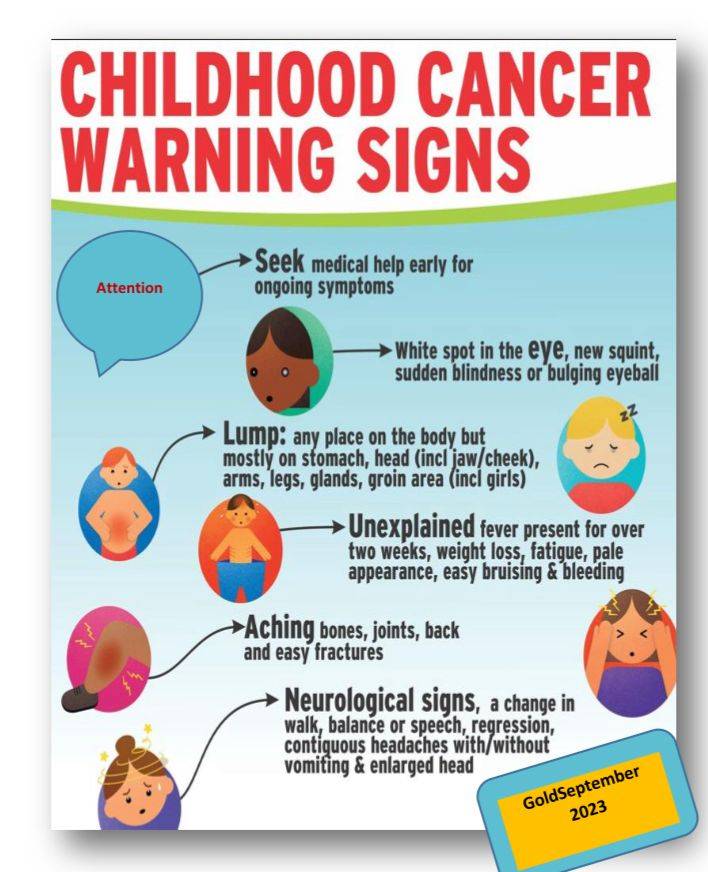
To achieve such cure rates here, the first and foremost prerequisite is early detection and timely access to care. That begins with a high index of suspicion because cancer in children often presents in ways that can be mistaken for less serious illnesses. As experts emphasize, early diagnosis consists of three key components:
Awareness of symptoms by families and primary care providers.
Accurate and timely clinical evaluation, diagnosis, and staging (determining the extent of disease).
Access to prompt treatment without delays caused by logistics, finances, or systemic gaps.
Imagine a father in rural Sindh who notices his daughter’s persistent fever, weight loss, and swollen lymph nodes. At first, he attributes it to malnutrition or infection. By the time he reaches a tertiary care hospital in Karachi, weeks have passed, and the disease has advanced. This story is not uncommon, and it underscores why awareness, and timely action must become national priorities.
September holds particular significance in this journey. It is observed worldwide as Childhood Cancer Awareness Month, a time when the global community pauses to honor children fighting cancer, celebrate survivors, remember those who lost their battles, and appreciate the caregivers and healthcare providers who dedicate their lives to this cause.
In Pakistan, for the past five years, the Child Aid Association has been at the forefront of this mission. Each September, it organizes events that bring together patients, families, doctors, nurses, and advocates under one banner of hope. These gatherings amplify the message that children with cancer deserve attention, resources, and the belief that their disease is curable.
This work, for its medical technicalities, is deeply human. When a child completes chemotherapy and rings the “victory bell,” the entire ward celebrates. When a young patient bravely endures radiotherapy, their resilience becomes a beacon of courage for the family. And when a healthcare worker spends sleepless nights monitoring children, it reminds us that behind every statistic lies a story of sacrifice, perseverance, and love.
But to ensure these stories multiply into thousands of successful recoveries, Pakistan must strengthen its healthcare framework. Governments, institutions, and civil society must come together—to spread awareness, build diagnostic capacity at the primary level, provide affordable treatment options, and offer psychosocial support to families navigating this ordeal. By raising awareness, ensuring early detection, and investing in care, Pakistan can move closer to the WHO-GICC goal and even surpass it.
As a nation, the call is clear: let us join hands with advocacy organizations, healthcare institutions, policymakers, and most importantly, with patients and families. Together, we can strengthen the narrative that childhood cancer is not a death sentence but a curable condition when met with timely action and compassion. So, this September and beyond, let us spread the voice loud and clear: “Childhood Cancer is Curable.”