

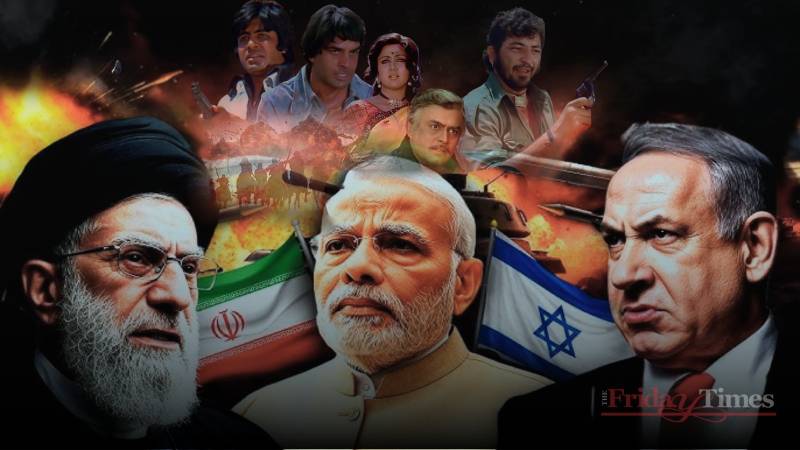
On 16 July 2025, the X (formerly Twitter) account of the Iranian Embassy in Mumbai marked Sholay’s 50th anniversary with a flood of emojis and syrupy nostalgia—an odd flex, considering Israeli jets had just lit up Iran and Delhi hadn’t said a word.
#Sholay Turns 50 And #Iran Still Remembers ???????? ???????? https://t.co/uyUEKkq5s3
— Iran in India (@Iran_in_India) July 16, 2025
Just days earlier, at the Shanghai Cooperation Organisation meeting on 14 June, India refused to condemn Israel’s June 13 strike on Iranian military facilities. Instead of naming Israel, the Indian Foreign Office urged restraint and regional de-escalation. Tehran expressed “disappointment” to New Delhi—no outrage, no protest, just diplomatic mush .
The Sholay salute, critics argue, underscores Iran’s performative diplomacy: thousands of missiles later, Iranian soil still smoulders, but Tehran’s Delhi diplomats tweet Bollywood nostalgia. Meanwhile, New Delhi deepens military and intelligence ties with Tel Aviv—not solidarity, but strategic proximity.
Abandoning all diplomatic decorum, the Embassy’s X account has devolved into a trolling platform, picking petty fights with anonymous users and arbitrarily revoking Iranian citizenship like it’s running a game show.
Some fake channels, under the name of Iran, are attempting to damage Iran-India relations. This account does not belong to Iran.
— Iran in India (@Iran_in_India) July 12, 2025
???????? ???????? https://t.co/wKpc4hdmSt
Some fake channels, under the name of Iran, are attempting to damage Iran-India relations.
— Iran in India (@Iran_in_India) July 12, 2025
These accounts do not belong to Iran.
???????? ???????? pic.twitter.com/XAayYYjCh8
To critics in Pakistan and elsewhere, it reflects a troubling pattern: performative diplomacy masking strategic paralysis. While New Delhi deepens its military and intelligence ties with Tel Aviv, Tehran’s outreach in South Asia increasingly resembles cultural tokenism. Expressions of solidarity must be grounded in political clarity. A tweet, however well-intentioned, cannot substitute for a foreign policy with spine.
Even more concerning is the tone adopted by the Iranian Embassy’s account. Instead of upholding diplomatic decorum, the mission’s X feed has veered into argumentative threads with anonymous users, trading sarcasm, nationalist barbs, and rhetorical flourishes unbecoming of an official channel. In the age of digital diplomacy, message discipline matters. So does the line between engagement and embarrassment.
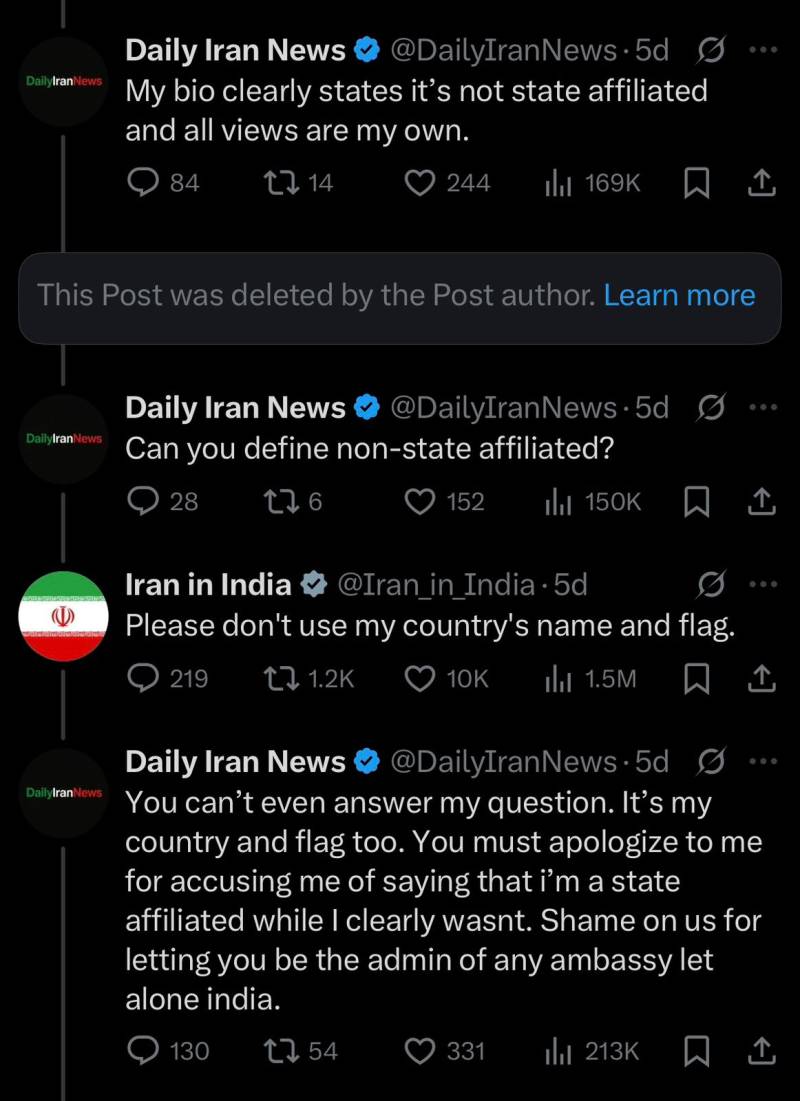
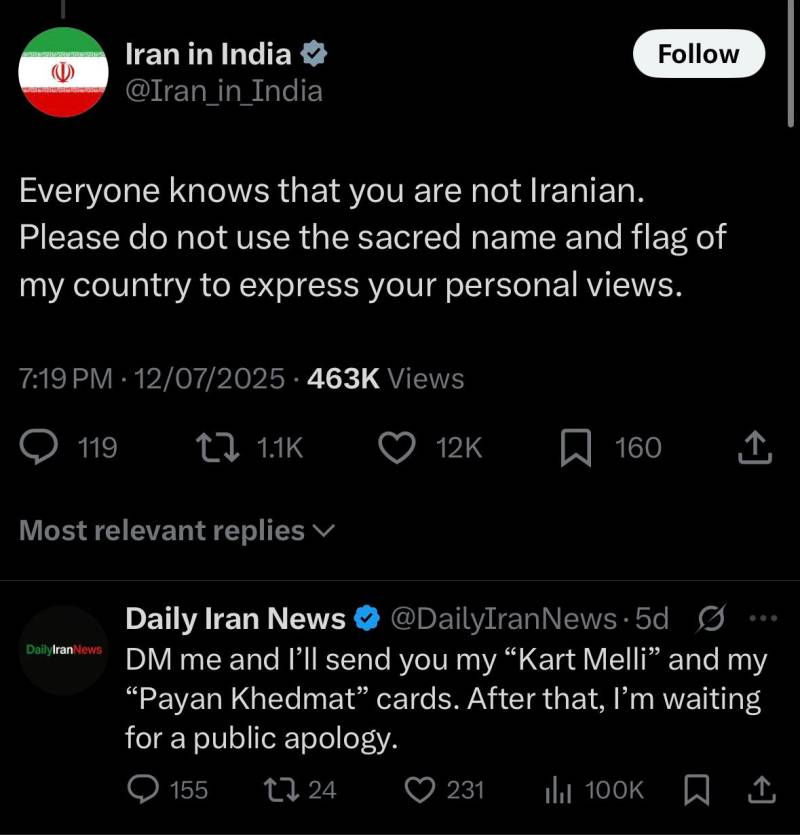
Pakistan, by contrast, took a clear stance—condemning Israel’s aggression, expressing support for Iran’s sovereignty, and avoiding theatrics. The difference is not just in language, but in principle.
Ultimately, the Sholay moment will pass. What remains is the diplomatic dissonance it revealed: a regional power hesitant to confront strategic realities, and a cultural overture that rang hollow amidst political silence. In this geopolitical drama, it’s not just the script that matters, but who chooses to speak at all.