

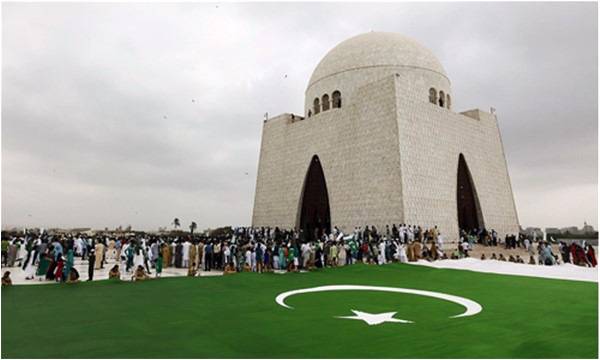
Our country is 70 this week. This is a milestone for any nation, a real signal of survival, but especially so for ours. Our geography and politics have made the last 70 years akin to being at a painfully awkward wedding table seated with all the bitter exes that we cheated on. Still, we are here and Pakistanis at home and abroad have been jubilantly sharing Pride of Pakistan articles, pictures of charming locations and lists of accomplishments in enthusiastic messages of celebration. I’m all for it. Although nationalistic sentiment, like over-spiced street food, usually gives me a stomach ache, I always argue that it’s a good thing when we have cause to celebrate as a nation.
It’s natural on milestone birthdays like ours to cast a fond eye back and make a list of our accomplishments. Given that everybody else has been doing that, I’ll skip the ritual. What I am far more interested in exploring is the question “Were our accomplishments because of or in spite of our country?” I am not being difficult, honestly. It’s a query I and many others from my generation have been wrestling with for a long time, though one hopes we aren’t at the end of our accomplishments quite just yet. (I would hate to think self-loathing and obsessive calorie-counting are the only things I’ve perfected in the course of my life.)
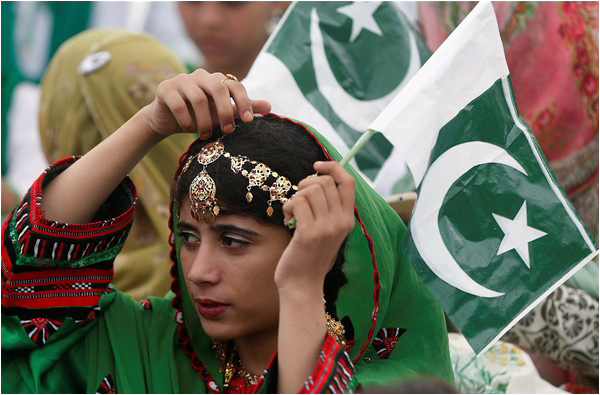
It was a question I thought about a lot when I moved back to Pakistan in 2011 and started writing this column. I moved back because for years so many people had kept “moving abroad” as their main priority and badge of honor. So many families I grew up knowing had moved away during the Zia era and stayed away, settling in the Middle East or England or North America. When they came back they considered Pakistan an exotic holiday destination where they could brush up on their authenticity once a year. Alternatively there were kids who had foreign passports and so knew that if things ever got truly bad, they could leave easily. After spending nearly a decade abroad myself on a Pakistani passport, I initially envied these people their foreign passports, magical documents that allowed them to choose whether they wanted to go back or not. Eventually that envy turned into a measure of irritation, not just at them, but at myself for having concocted a demon in my head of what life in Pakistan would be if I were to start a life there.
The country had changed since when I was a child, this much is, of course, true. But I wasn’t surprised by the changes, like so many of my parents’ generation who waxed on about nightclubs in Karachi or miniskirts in Afghnanistan. I had never known that Pakistan, even when I was a child, and so when reminded of it I mourned its passing as one does a grandparent who died before one was born. What I really felt was anger – anger at the people who would mourn a state of intolerance, corruption and institutional fear that they should have seen coming decades ago.
And so I moved back to conquer my anger but also to conquer my fear of what life in Pakistan meant. It was a conscious decision on my part, one of the few truly existential ones I have made in my life. I had no exit plan, no “safety net” (as so many of my friends had put it) of a PhD program or a job that would get me out again. I had moved back to live and I found that process strangely liberating. It took about a month for the institutionalised negativity and inefficiency of a developing country in crisis to begin to affect how I saw myself there. Indeed, I used this very page to vent about most of those vexes: the power cuts, the corruption, the snobbery of the provincial capital, the bitchiness of high society, the blindness, the terrorism, the bombs, the death threats, the attacks on secularism, tolerance and liberalism, the ignorance, the hate, the heat, the mosquitoes, the uncertainty. In short, the struggle for mere survival. The only way I saw to cope with any of these was through humour and through that I tried to find the universal in what felt like a daily, personal attack.
Moving out of my parents’ house and into my own taught me perhaps the most about what it really means to live in Pakistan. Responsibility does that, no matter where you are. But I managed, and I lived alone fighting the near-daily battles of water-pressure pumps and electricity overcharges until one day, another question began to echo from the pit of my stomach. I didn’t listen to it for a long time, consumed as I was by the inertia of survival, but the universe has a way of forcing you to come to terms with what you avoid. And so it was that when I was very ill my questions appeared: can you live here anymore?
The answer for me was yes, demonstrably I can, and I do! Do you want to? But the act of living, of merely existing as opposed to flourishing, took so much out of me that I knew I no longer could do it, not without giving up something of my own soul. A friend of mine moved away from Pakistan while I was there, and I remember asking her why she was doing it. She said something flippant like how only the very rich or very poor stay in Pakistan while everyone else is trying to get out. At the time I thought it was facetious BS, and still do because I know lots of people who are neither billionaires nor in abject poverty who live in Pakistan and like it. But when I decided to pursue a way to live part of the year outside of Pakistan, I realized that perhaps she was talking about choice. The choice of staying or leaving, and the resentment of coming from a place that requires you make that choice in the first place.
I spend some of my year away from Pakistan. I do this because after half a decade in Pakistan, I decided to overhaul my life so that I could. I have worked very hard to be able to have that choice, and I do not take it or its consequences lightly. The truth is many of the things I hold dear (freedom of self-expression, secular values, security) are no longer self-evident truths in Pakistan. My anger about this is unchanged and I think the same is true for most of my generation. I’m angry that I come from a place that requires me to make a choice to “leave or stay” because no matter what decision you make (God willing, you can make a decision) your heart doesn’t always come with you. But it is home. And always will be. In that, I do not have a choice and nor do I need one.
So on your seventieth birthday Pakistan, I wish you love. May you bloom and grow and find peace.
Write to thekantawala@gmail.com
It’s natural on milestone birthdays like ours to cast a fond eye back and make a list of our accomplishments. Given that everybody else has been doing that, I’ll skip the ritual. What I am far more interested in exploring is the question “Were our accomplishments because of or in spite of our country?” I am not being difficult, honestly. It’s a query I and many others from my generation have been wrestling with for a long time, though one hopes we aren’t at the end of our accomplishments quite just yet. (I would hate to think self-loathing and obsessive calorie-counting are the only things I’ve perfected in the course of my life.)
It was a question I thought about a lot when I moved back to Pakistan in 2011 and started writing this column. I moved back because for years so many people had kept “moving abroad” as their main priority and badge of honor. So many families I grew up knowing had moved away during the Zia era and stayed away, settling in the Middle East or England or North America. When they came back they considered Pakistan an exotic holiday destination where they could brush up on their authenticity once a year. Alternatively there were kids who had foreign passports and so knew that if things ever got truly bad, they could leave easily. After spending nearly a decade abroad myself on a Pakistani passport, I initially envied these people their foreign passports, magical documents that allowed them to choose whether they wanted to go back or not. Eventually that envy turned into a measure of irritation, not just at them, but at myself for having concocted a demon in my head of what life in Pakistan would be if I were to start a life there.
The country had changed since when I was a child, this much is, of course, true. But I wasn’t surprised by the changes, like so many of my parents’ generation who waxed on about nightclubs in Karachi or miniskirts in Afghnanistan. I had never known that Pakistan, even when I was a child, and so when reminded of it I mourned its passing as one does a grandparent who died before one was born. What I really felt was anger – anger at the people who would mourn a state of intolerance, corruption and institutional fear that they should have seen coming decades ago.
And so I moved back to conquer my anger but also to conquer my fear of what life in Pakistan meant. It was a conscious decision on my part, one of the few truly existential ones I have made in my life. I had no exit plan, no “safety net” (as so many of my friends had put it) of a PhD program or a job that would get me out again. I had moved back to live and I found that process strangely liberating. It took about a month for the institutionalised negativity and inefficiency of a developing country in crisis to begin to affect how I saw myself there. Indeed, I used this very page to vent about most of those vexes: the power cuts, the corruption, the snobbery of the provincial capital, the bitchiness of high society, the blindness, the terrorism, the bombs, the death threats, the attacks on secularism, tolerance and liberalism, the ignorance, the hate, the heat, the mosquitoes, the uncertainty. In short, the struggle for mere survival. The only way I saw to cope with any of these was through humour and through that I tried to find the universal in what felt like a daily, personal attack.
Moving out of my parents’ house and into my own taught me perhaps the most about what it really means to live in Pakistan. Responsibility does that, no matter where you are. But I managed, and I lived alone fighting the near-daily battles of water-pressure pumps and electricity overcharges until one day, another question began to echo from the pit of my stomach. I didn’t listen to it for a long time, consumed as I was by the inertia of survival, but the universe has a way of forcing you to come to terms with what you avoid. And so it was that when I was very ill my questions appeared: can you live here anymore?
The answer for me was yes, demonstrably I can, and I do! Do you want to? But the act of living, of merely existing as opposed to flourishing, took so much out of me that I knew I no longer could do it, not without giving up something of my own soul. A friend of mine moved away from Pakistan while I was there, and I remember asking her why she was doing it. She said something flippant like how only the very rich or very poor stay in Pakistan while everyone else is trying to get out. At the time I thought it was facetious BS, and still do because I know lots of people who are neither billionaires nor in abject poverty who live in Pakistan and like it. But when I decided to pursue a way to live part of the year outside of Pakistan, I realized that perhaps she was talking about choice. The choice of staying or leaving, and the resentment of coming from a place that requires you make that choice in the first place.
I spend some of my year away from Pakistan. I do this because after half a decade in Pakistan, I decided to overhaul my life so that I could. I have worked very hard to be able to have that choice, and I do not take it or its consequences lightly. The truth is many of the things I hold dear (freedom of self-expression, secular values, security) are no longer self-evident truths in Pakistan. My anger about this is unchanged and I think the same is true for most of my generation. I’m angry that I come from a place that requires me to make a choice to “leave or stay” because no matter what decision you make (God willing, you can make a decision) your heart doesn’t always come with you. But it is home. And always will be. In that, I do not have a choice and nor do I need one.
So on your seventieth birthday Pakistan, I wish you love. May you bloom and grow and find peace.
Write to thekantawala@gmail.com