

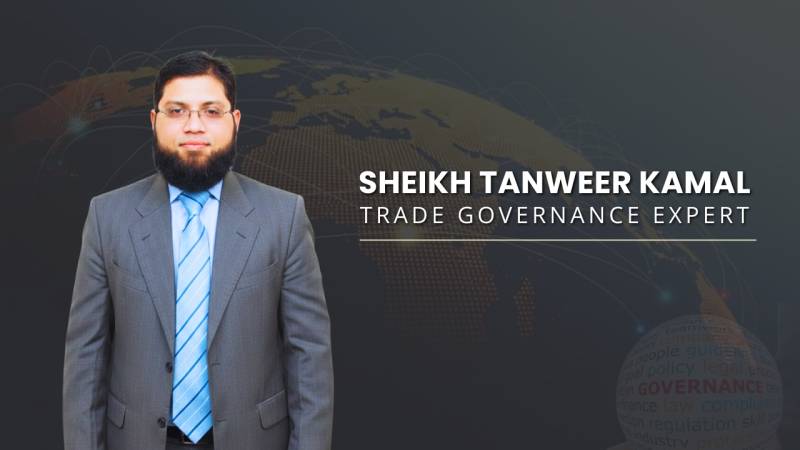
In complex financial systems, innovation is not always visible as a new product or digital interface. Often, it takes the form of control architecture—how risk is identified, how decisions are governed, and how systems are designed to prevent failure before it occurs. Sheikh Tanweer Kamal has built his professional career at this intersection of innovation, governance, and operational leadership. For more than sixteen years, he has led the design and transformation of trade finance controls, embedding discipline into high-risk workflows and reshaping how trade banking functions operate under regulatory pressure.
Tanweer as a Head of Trade Governance & Projects. He is serving in a senior leadership capacity overseeing trade governance, regulatory alignment, and transformation initiatives. His work sits at the most sensitive junction of banking operations: imports, exports, guarantees, trade loans, foreign payments, and cross-border settlements. These activities carry inherent financial, regulatory, and reputational risk. His contribution has been to redesign the frameworks through which they operate—introducing structured workflows, system-enforced controls, and audit-ready discipline that enable scale without sacrificing integrity.
What distinguishes Tanweer’s profile is his focus on preventive design. Rather than relying on post-transaction checks or fragmented compliance interventions, he has consistently built control logic into the front end of trade processes. This includes strengthening first-line governance reviews, formalizing escalation pathways, and integrating red-flag logic that ensures risk is identified early and handled consistently. His approach reflects a strategic understanding of risk management: that sustainable control is achieved through design, not reaction.
A defining feature of his leadership has been system transformation. Recognizing early that manual oversight cannot keep pace with growing trade volumes and regulatory complexity, Tanweer has driven the shift toward technology-enabled governance. He has led initiatives to revamp trade workflows within core banking environments, embed rule-based validations, and automate control checkpoints that previously relied on human memory and discretion. These interventions have reduced variability, improved transparency, and strengthened audit defensibility across trade operations.
His work has also extended into areas of national relevance, including trade digitization, integration with regulatory platforms, and modernization of reporting frameworks. As Pakistan’s trade ecosystem moves toward greater digital integration and regulatory connectivity, Tanweer’s contributions support the development of infrastructure that is both scalable and compliant. This alignment between operational innovation and national systems evolution positions his work beyond institutional impact and into sector-level value creation.
Beyond process architecture, Tanweer has led complex reconciliation and financial integrity initiatives across trade ledgers, internal accounts, and international settlement positions. These controls are fundamental to financial stability yet often overlooked. By strengthening reconciliation discipline and improving data quality frameworks, he has helped eliminate structural weaknesses that can distort reporting, delay settlements, and trigger regulatory concerns. This work reflects a deeper capability: the ability to stabilize systems under complexity.
His leadership also extends into regulatory strategy and reporting governance. He has overseen regulatory submissions, management reporting, and compliance frameworks that support both supervisory engagement and executive decision-making. He has contributed to major regulatory and accounting initiatives, including IFRS-9 related system implementations, where governance quality directly affects financial outcomes. These experiences reinforce his profile as a leader who operates at the convergence of regulation, technology, and financial discipline.
Equally significant is his impact on people and institutional capability. Tanweer has consistently invested in building high-performing governance teams—developing clarity in regulatory interpretation, standardizing decision logic, and strengthening professional judgment. His leadership philosophy is grounded in sustainability: that controls must be understood, not feared; embedded, not enforced. Through structured training, mentoring, and process ownership, he has elevated governance from a compliance function to a leadership discipline.
The common thread across his career is innovation through structure. Tanweer does not innovate by disruption; he innovates by design. By reshaping workflows, embedding control intelligence into systems, and aligning operations with regulatory architecture, he has delivered solutions that are durable, scalable, and nationally relevant. In an era where financial crime risk, regulatory scrutiny, and cross-border complexity are increasing, this form of innovation is both rare and critical.
Sheikh Tanweer Kamal represents a category of leadership that is highly valuable to advanced financial systems: the ability to translate regulatory intent into operational reality, and to convert complex risk environments into controlled, transparent, and resilient structures. His work demonstrates that innovation in financial services is not limited to products or platforms—it is equally about building the governance infrastructure that protects economies, institutions, and public trust.