

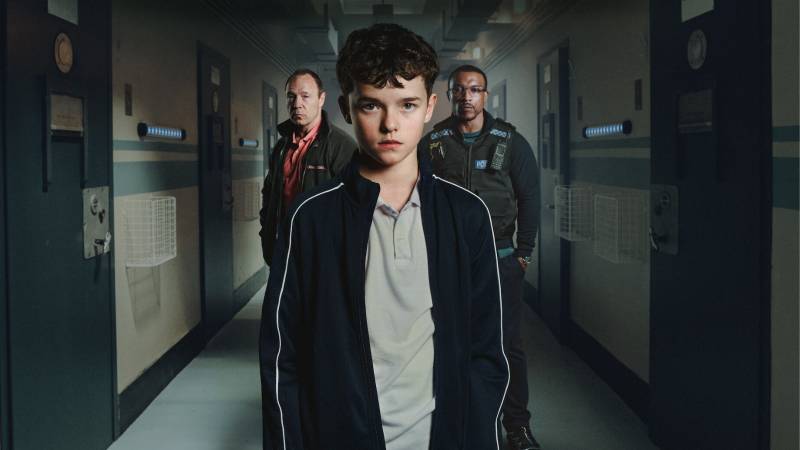
Picture this: a 13-year-old boy, Jamie Miller, sits in a police van, his voice cracking as he begs for his dad. The camera doesn’t blink. It doesn’t cut away. It stays glued to the back of his head, where his dark curls cling to his neck like shadows of innocence slipping away. This is Adolescence, Netflix’s British limited series that doesn’t just tell a story, it grabs you by the collar and drags you into the raw, unfiltered chaos of a family unraveling. For Pakistani youth drowning in the same digital storm, social media pressure, toxic masculinity, and the loneliness of growing up, this show isn’t just entertainment. It’s a mirror held up to a generation screaming into the void, asking, How did we get here?
This four-part series is like a rollercoaster you didn’t know you needed, and it is packed with vibes that hit you right in the chest. It’s the story of a teenage girl’s tragic stabbing and the 13-year-old boy from her school who is arrested for her murder. But it’s more than a crime drama; it’s a wild dive into the chaos of social media, toxic influencers, and the alienation of youth today. The series digs into how a boy like Jamie, played with jaw-dropping intensity by Owen Cooper, could spiral into something so dark. It’s all about the “manosphere” that shady online world where misogynist influencers like Andrew Tate prey on young minds, turning confusion into rage. Meanwhile, Jamie’s dad, Eddie, brought to life by the legendary Stephen Graham, is wrestling with shock and guilt. This isn’t just an incident; it’s a “why-did-this-happen” that’ll keep you glued to your screen, wondering how close this hits home.
The acting? Oh, it’s fire. Owen Cooper, a newcomer, plays Jamie with a terrifying mix of vulnerability and rage. One minute he’s a scared kid crying for his parents; the next, he’s snarling at his therapist, “You think I’m handsome? Rate me.”The dialogue hits like a gut punch: “We couldn’t watch him every minute,” Eddie sobs. But the show’s genius is in asking: Could anyone?
This series isn’t just entertainment, it’s a catalyst for change, urging us to peek beyond the screen and into our own lives
Sure, it’s set in the UK, but the struggles? They’re global. Social media’s a beast in Pakistan too, where one wrong scroll can land you in an echo chamber of hate. The way Adolescence shows Jamie getting sucked into toxic masculinity online? That’s not just a British problem; it’s a Lahore problem, a Karachi problem. Pakistani teens are out here dodging the same digital traps, where influencers can turn “boys will be boys” into something dangerous. This show is like a wake-up call, showing how the internet’s convenience comes with a side of chaos we can’t ignore.
The acting in this series was magical. Owen Cooper is a revelation, playing Jamie like he’s lived it, scared, angry, lost, all at once. You can’t take your eyes off him, wondering how a kid so young can carry that much weight. Then there’s Stephen Graham as Eddie, tearing your heart out with every shaky breath and desperate glance. He’s the dad we all know, trying to hold it together when everything’s falling apart. The rest of the crew, Ashley Walters, Erin Doherty, they’re not just acting; they’re living it, making every scene feel like it’s happening right in front of you. It’s the kind of talent that deserves a standing ovation.
The series’ one-take filming style is a masterstroke. No cuts, no breaks—just relentless, suffocating reality. The dialogue in Adolescence is straight-fire, sharp, punchy, and loaded with truth. Take this gut punch from Eddie: “He was in his room, wasn’t he? We thought he was safe.” It’s the kind of line that makes you pause, thinking about how we assume our kids are okay just because they’re home. In a country where mental health is still a taboo, where parents dismiss “internet addiction” as a phase, Adolescence screams: Wake up. This is happening.
The show’s exploration of parental guilt is a dagger to the heart. Pakistani moms and dads will see themselves in Eddie and Manda, clutching their tasbeehs and wondering, Where did we go wrong? There’s a haunting moment when Eddie admits, “I tried to make him tough. Maybe that broke him.” Sound familiar? How many Pakistani fathers push sons into sports or STEM, dismissing art or emotion as “weak”? How many moms, like Manda, blame themselves for not monitoring their child’s phone? The show doesn’t give easy answers; just the crushing truth that love isn’t always enough.
Adolescence isn’t just doom and gloom. It’s a call to look closer. When Detective Bascombe’s son decodes the emojis Katie used to bully Jamie, it’s a lightbulb moment. This is how they talk now. Pakistani parents, take note: your kids aren’t just “on their phones,” they’re navigating a warzone you can’t see. The show forces you to ask: Do you even speak their language?
As the credits roll on Adolescence, we’re left with more than just a story; we’re left with questions, reflections, and a call to action. This series isn’t just entertainment, it’s a catalyst for change, urging us to peek beyond the screen and into our own lives. Whether you’re a teen scrolling TikTok, a parent trying to keep up, or just someone who loves a good story, this is your next wishlist series. It’s heavy, and it’s got all the vibes of a wake-up call we can’t snooze. So, grab your remote, hit play, and let Adolescence take you on a ride that’s as mind-blowing as it is magical. You won’t just watch it, you’ll feel it, and that’s a journey worth taking.