

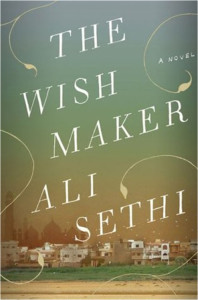
The Wish Maker
Ali Sethi
Riverhead (paperback), 2009
PRs 695
The unforgettable story of a fatherless boy growing up in a household of outspoken women, The Wish Maker is also a tale of sacrifice, betrayal, and indestructible friendship. Zaki Shirazi and his female cousin Samar Api were raised to consider themselves “part of the same litter.” Together they watched American television and memorized dialogue from Bollywood movies, attended dangerous protests, and formed secret friendships. In a household run by Zaki’s crusading political journalist mother and iron-willed grandmother, it was impossible to imagine a future that could hold anything different for either of them.
But adolescence approaches and the cousins’ fates diverge. Samar’s unconventional behavior-in which Zaki has played the role of devoted helper-brings severe consequences for her, while Zaki is sent out to discover the world for himself. It is only after years of separation from Samar that he is forced to confront the true nature of happiness, selfhood, and commitment to those he loves most.
Chronicling world-changing events that have never been so intimately observed in fiction and brimming with unmistakable warmth and humor, The Wish Maker is the powerful account of a family and an era, a story that shows how, even in the most rapidly shifting circumstances, there are bonds that survive the tugs of convention, time, and history.
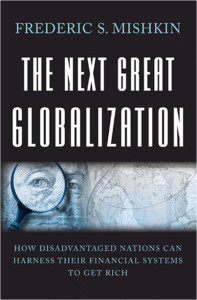
The Next Great Globalization
Frederic S. Mis
Princeton (hardcover), 2006
PRs 3,475
Many prominent critics regard the international financial system as the dark side of globalization, threatening disadvantaged nations near and far. But in The Next Great Globalization, eminent economist Frederic Mishkin argues the opposite: that financial globalization today is essential for poor nations to become rich. Mishkin argues that an effectively managed financial globalization promises benefits on the scale of the hugely successful trade and information globalizations of the nineteenth and twentieth centuries. This financial revolution can lift developing nations out of squalor and increase the wealth and stability of emerging and industrialized nations alike. By presenting an unprecedented picture of the potential benefits of financial globalization, and by showing in clear and hard-headed terms how these gains can be realized, Mishkin provides a hopeful vision of the next phase of globalization.
Mishkin draws on historical examples to caution that mismanagement of financial globalization, often aided and abetted by rich elites, can wreak havoc in developing countries, but he uses these examples to demonstrate how better policies can help poor nations to open up their economies to the benefits of global investment. According to Mishkin, the international community must provide incentives for developing countries to establish effective property rights, banking regulations, accounting practices, and corporate governance—the institutions necessary to attract and manage global investment. And the West must be a partner in integrating the financial systems of rich and poor countries—to the benefit of both.
The Next Great Globalization makes the case that finance will be a driving force in the twenty-first-century economy, and demonstrates how this force can and should be shaped to the benefit of all, especially the disadvantaged nations most in need of growth and prosperity.
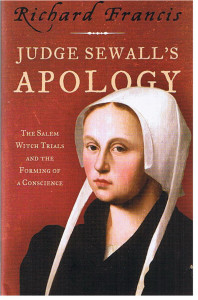
Judge Sewall’s Apology
Richard Francis
Harper (hardcover), 2005
PRs 1,750
The Salem witch hunt has entered our vocabulary as the very essence of injustice. Judge Samuel Sewall presided at these trials, passing harsh judgment on the condemned. But five years later, he publicly recanted his guilty verdicts and begged for forgiveness. This extraordinary act was a turning point not only for Sewall but also for America’s nascent values and mores.
In Judge Sewall’s Apology, Richard Francis draws on the judge’s own diaries, which enables us to see the early colonists not as grim ideologues, but as flesh-and-blood idealists, striving for a new society while coming to terms with the desires and imperfections of ordinary life. Through this unsung hero of the American conscience — a Puritan, an antislavery agitator, a defender of Native American rights, and a Utopian theorist — we are granted a fresh perspective on a familiar drama.
Review
Disquiet about the propriety of the Salem witch trials of 1692 existed even when they were under way, and the affair was quickly terminated when accusations of devilry began to nick the Puritan elite. One of the doubters was Samuel Sewall (1652-1730), a member of the court and a diligent diary keeper. Biographer Francis exploits this primary document to present Sewall as a figure imbued with the Calvinist mentality of the Puritans who shed some of its strictures, at least concerning law; theologically, Sewall remained true. More to the point of reading interest, Francis finds through the diary a genial but psychologically complicated figure who recorded the panoply of daily occurrences, such as his business and legal affairs, harmony and strife in his family, and, after the death of his wife, his courting of widows. Sewall was a remarkable witness to colonial life, but it is his repudiation of his role in the witch trials that centrally engages the author’s curiosity. Evocatively detailed and clearly written, Francis’ biography will be crucial for students of Salem. – Booklist
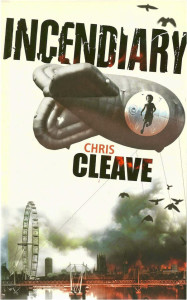
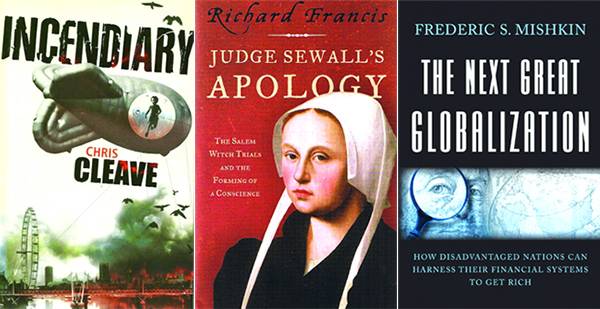
Incendiary
Chris Cleave
Sceptre (paperback), 2005
PRs 1,190
Reviews
Stunning... a haunting work of art. (Newsweek)
Chris Cleave has the ability to create moving and beautiful scenes within a terrifying backdrop. I couldn’t put it down; it’s subversive, thought-provoking and well-written. (Observer, Books of the Year)
Richly sardonic and often disarmingly poignant... How can one fail to be impressed and moved? (Guardian)
Cleave’s heroine is by turns funny, sad, flawed, sympathetic, both damaged and indomitable, and triumphantly convincing. (Sunday Telegraph)
Stunning (New York Times AND International Herald Tribune AND Bookmarks Magazine)
This is a compulsive read, sure to stir the dust (CITY AM)
Searing.. poignant and compelling.. Utterly believable and mesmerizing (Newsday)
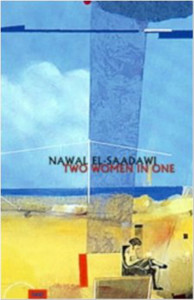
Two Women in One
Nawal El-Saadawi
Saqi Books (paperback), 2005
PRs 1,315
Two Women in One is the story of Bahiah Shaheen, an 18-year-old medical student and daughter of a prominent Egyptian public official. She finds the male students in her class rough, coarse and alien. Her father, too, seems to belong to a race apart, and the young woman has long ceased to be surprised at not being her real self in his presence. But what, she wonders, is this real self? Of one thing she is certain: it is not the hard-working, well-behaved medical student from the comfortable middle-class background familiar to all who know her. One day, while looking at a painting in an exhibition, a stranger engages her in conversation. This proves to be the beginning of Bahiah Shaheen’s road to self-discovery and the start of her realization that fulfilment in life is indeed possible.
Two Women in One is, in fact, the story of countless women in the Third World, and speaks to their quest for emancipation and dignity. It is a reminder to women everywhere that hope must never yield to despair, that the future can hold brighter promise.