

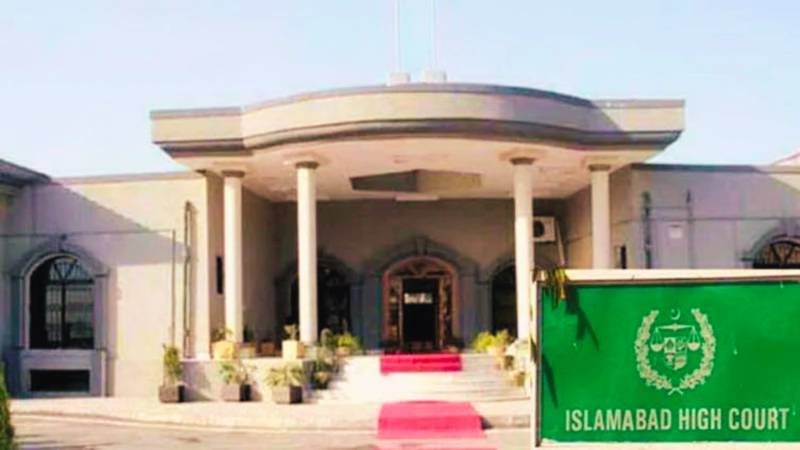
Islamabad: The Islamabad High Court has issued a detailed written verdict in a landmark and historic case concerning the protection and safety of sewerage workers. The judgment was authored by Justice Inaam Ameen Minhas on a petition filed by the Centre for Rule of Law and the Pakistan United Christian Movement.
In its ruling, the court declared that the failure to provide proper safety equipment during sewerage cleaning operations is a clear violation of Article 9 of the Constitution of Pakistan, which guarantees the fundamental right to life. The judgment states that forcing sewerage workers—particularly those belonging to the Christian minority—to work in life-threatening conditions is unconstitutional and against the principles of human dignity.
The court directed federal and provincial governments, along with all relevant authorities, to ensure the provision of complete protective equipment for all sewerage workers. According to the verdict, the use of helmets, protective clothing, gas detectors, ventilation systems, and other essential safety measures during sewerage cleaning has been made mandatory.
The Islamabad High Court also extended these obligations to the private sector, ruling that private contractors and companies engaged in sewerage work are equally bound to adopt and implement strict safety protocols for workers.
The written order revealed alarming statistics, noting that more than 70 Christian sewerage workers have lost their lives during sewerage cleaning operations since 1988. It further stated that over 10 sewerage workers have died since 2019 alone due to the absence of proper safety equipment. According to data cited from the National Commission for Human Rights, approximately 80 percent of sewerage work across the country is carried out by Christian workers.
The court emphasized that the lives of sewerage workers are no less valuable than those of any other citizens. It declared that the state and municipal authorities are constitutionally obligated to protect the lives of every sewerage worker. The judgment categorically stated that the government cannot evade its constitutional responsibilities by citing lack of resources or shifting blame onto contractors.
Furthermore, the court directed the Ministry of Law and Justice to draft and introduce comprehensive legislation for the protection of sewerage workers. The proposed law must include mandatory provisions for insurance coverage, compensation, and enforceable safety measures.
The judgment also called for either a permanent ban on hazardous manual sewerage cleaning or the complete assurance of worker safety through modern and protective mechanisms. The government has been ordered to submit a detailed compliance report to the court within two months.
In strong remarks, the Islamabad High Court observed that silence in the face of violations of fundamental rights is tantamount to betrayal of the Constitution. It reaffirmed that human dignity, equality, and the right to life are guaranteed equally to every citizen, without discrimination.
The verdict is being widely hailed as a milestone in the protection of human rights, labor rights, and minority rights in Pakistan