

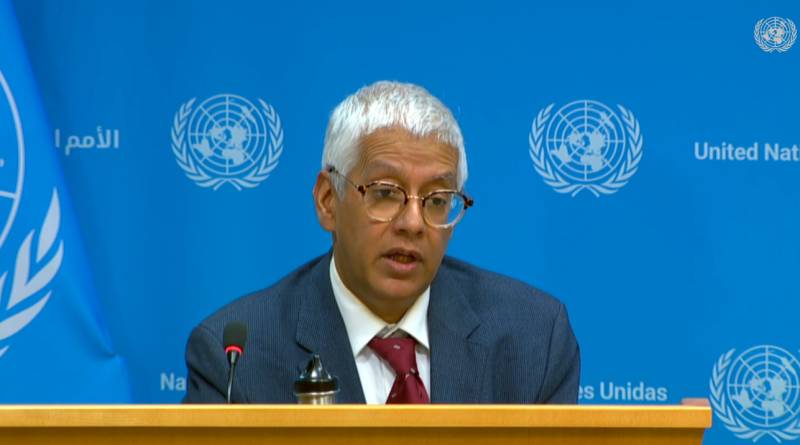
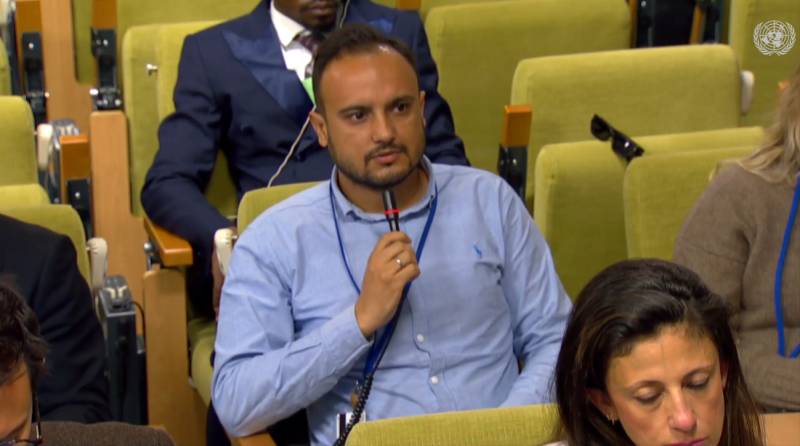
The United Nations has voiced concern over escalating hostilities between Pakistan and Afghanistan following a new wave of cross-border clashes. Responding to a question raised at UN Headquarters in New York, Farhan Haq, Deputy Spokesperson for the Secretary-General, said on Monday: “We are monitoring the situation between Afghanistan and Pakistan with concern. We want to make sure that the two countries are able to work out their differences in a peaceful manner and that further clashes are avoided.”
His remarks came as fresh reports surfaced of intensified shelling, drone activity, and retaliatory fire along multiple sectors of the Durand Line, heightening fears of wider confrontation.
Clashes surged after Taliban authorities claimed responsibility for “retaliatory” strikes on Pakistani military positions over the weekend. Islamabad responded with what security officials described as precision fire using tanks, artillery, and drones. Fighting was reported in Angoor Adda, Bajaur, Kurram, Dir, Chitral, and Baramcha in Balochistan, with additional exchanges in Pishin and Zhob.

Taliban officials said their actions were prompted by alleged Pakistani airstrikes near Kabul and in southeastern provinces late last week. Pakistan has neither confirmed nor denied those claims. Afghan Defense Minister Mohammad Yaqoob Mujahid warned that any future “violation of Afghan territory” would trigger further retaliation.
Pakistani officials countered by accusing Afghan forces of targeting civilian areas. Interior Minister Mohsin Naqvi called the firing “a blatant violation of international laws” and warned that Islamabad would respond with “stones for bricks” if provoked again. Security sources claimed infiltration attempts in Pishin and Zhob were repelled and reported “heavy losses” on the Afghan side, though no official figures have been released.
Residents in Parachinar and Chagai district’s Baramcha area reported several hours of heavy shelling last Saturday. A police official in Kurram confirmed at least two injuries. Local accounts described “shelling from three directions” through the night.
Taliban commanders from Kunar, Nangarhar, Helmand, Paktika, and Khost confirmed simultaneous fighting across several border regions. They described the operations as defensive. Pakistani sources said some cross-border firing continued in remote areas late Sunday.
Regional actors with ties to both countries are stepping in with public warnings.

Qatar’s Foreign Ministry expressed “deep concern” and urged both sides to rely on dialogue and restraint. Saudi Arabia issued a similar statement, calling for de-escalation and offering support for peace efforts between the “brotherly peoples” of Pakistan and Afghanistan.
Iran’s Deputy Foreign Minister Abbas Araghchi also called for calm, emphasizing that stability between Islamabad and Kabul is vital for regional security. In Islamabad, observers noted the timing of Saudi Arabia’s statement, which followed the signing of a new mutual defence agreement with Pakistan.
The fighting coincides with renewed tensions on the diplomatic front. During a visit to India, Afghanistan’s Acting Foreign Minister Amir Khan Muttaqi claimed that no terrorist groups are active on Afghan soil and said regional countries should “solve their own problems.” Pakistan’s Ministry of Foreign Affairs rejected his remarks and summoned the Afghan envoy, accusing Kabul of deflecting responsibility for cross-border militancy.
Islamabad also condemned references to Jammu and Kashmir in the India-Afghanistan joint statement, calling it a violation of UN Security Council resolutions. Pakistan reiterated that it has hosted millions of Afghans for decades but reserves the right to regulate the stay of foreign nationals.
Pakistan accuses Kabul of harboring the Tehreek-e-Taliban Pakistan (TTP) and Baloch separatist groups. Afghan officials deny the charge and insist no militants use Afghan territory to attack Pakistan. Defense Minister Mujahid said recent Taliban actions were defensive and proportional.
Reports of drone activity near Afghan urban centers, including areas close to Kabul, have also inflamed public perception of airspace violations.
As of late Sunday, Afghan officials said their operations “ended at midnight,” while Pakistani sources said some counterstrikes were still underway. Neither side has released casualty figures, but both have claimed the destruction of border posts and militant positions.
Pakistan’s civilian leadership has not issued a formal reaction beyond the interior ministry’s comments. Diplomatic communication with Kabul remains strained. Gulf states, Iran, and other regional actors are attempting to limit fallout, but no mediation initiative has been announced.
Despite calls from the UN and regional governments, neither Islamabad nor Kabul has signaled readiness to de-escalate. The situation along the border remains volatile, and the risk of further confrontation is high.