

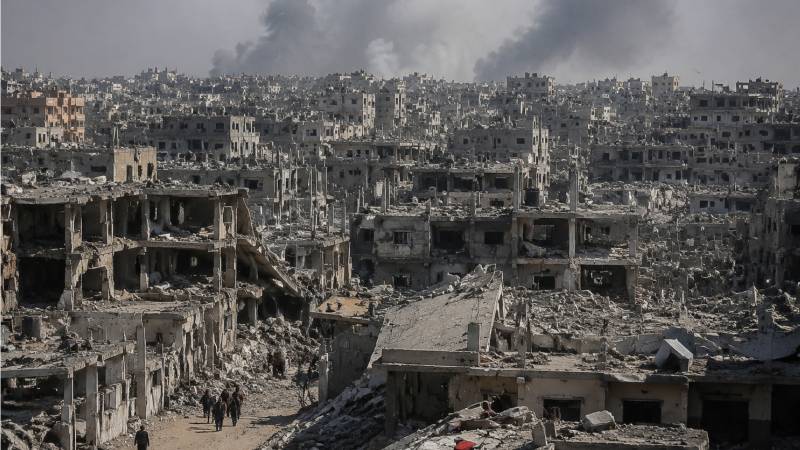
Nine months after a U.S.-brokered agreement halted large-scale combat in the Gaza Strip, the ceasefire declared in October 2025 is fraying. Israeli fire this week killed at least six Palestinians, among them a 9-year-old girl, according to Gaza health officials. The latest casualties bring the Palestinian death toll since the truce took effect to more than 1,070, while Israel says four of its soldiers have died in militant attacks over the same period. As both sides trade blame for violations, Hamas leaders have arrived in Cairo to discuss implementation of the deal’s first phase and the terms of a second phase with Egyptian, Qatari and Turkish mediators. The renewed violence and stalled negotiations underscore the global stakes of a conflict that has already reshaped regional diplomacy, humanitarian aid flows and U.S. foreign policy in the Middle East.
1. Background: From October 2023 War to October 2025 Ceasefire
The current truce followed two years of war that began with Hamas’ October 7, 2023 attacks on southern Israel, which killed 1,200 people according to Israeli tallies, and Israel’s subsequent offensive that Gaza health authorities say left more than 72,500 Palestinians dead. On October 10, 2025, Israel and Hamas agreed to the first phase of a U.S.-brokered ceasefire. The deal, backed by U.N. Security Council Resolution 2803 in November 2025, included a hostage-prisoner exchange, increased humanitarian aid, and an initial Israeli pullback to a demarcation known as the “Yellow Line”. U.S. President Donald Trump declared “the end of the two-year long war” as the last living Israeli hostages were released and nearly 2,000 Palestinian prisoners freed.
2. Terms and Fault Lines of the Ceasefire
Phase one mandated a halt to major hostilities, the entry of “hundreds of trucks per day” of aid, and the creation of a joint control centre under U.S. Central Command to monitor compliance. Phase two, still not implemented, is supposed to see a full Israeli military withdrawal, Hamas disarmament, reconstruction, and the installation of a transitional technocratic governing body for Gaza.
Yet implementation has been uneven. Israeli officials say troops opened fire this week after “suspects had crossed a boundary” of the agreed pullback. The Israeli military says recent strikes targeted Hamas militants planning attacks. Gaza’s health ministry and medics report civilian deaths, including children, in strikes on tents, schools and residential areas.
3. Human Cost and Humanitarian Picture
Despite the truce, violence has persisted. Since October 2025, at least 800 Palestinians had been killed by mid-2026 according to local medics, while Reuters’ July 2026 tally put the figure above 1,060. On Sunday, medics said Israeli gunfire killed 9-year-old Tala Abu Matar at a tent encampment in Al-Bureij. In June, a seven-month-old was killed when Israeli soldiers fired on a vehicle in Tel Rumeida.
Aid agencies say food insecurity remains severe. Every Gazan had reached “crisis” or worse levels of food insecurity, with nearly a third experiencing famine conditions, according to the Integrated Food Security Phase Classification cited in October 2025. UNRWA said it had enough food for the entire population for three months once access improved, but distribution has been slowed by withdrawals, looting and disputes over control lines.
Israel demands Hamas' disarmament before a full withdrawal, while Hamas insists Israel fulfill phase-one commitments on aid, crossings, and troop positions first.
4. Perspectives from Key Stakeholders
Israel: Prime Minister Benjamin Netanyahu has ordered “powerful strikes” in response to what Israel calls violations of the deal, including the return of partial hostage remains and gunfire directed at troops. Defence Minister Israel Katz said Hamas would pay a “heavy price for attacking Israeli soldiers in Gaza and for violating the agreement”. The IDF maintains it targets militants and takes steps to mitigate civilian harm.
Hamas: Spokesperson Hazem Qassem said the Cairo meetings aim to ensure full implementation of phase one ending what he called Israeli violations, reopening crossings and allowing aid before addressing phase two issues such as international forces and disarmament. Hamas officials accuse Israel of expanding control zones beyond the “Yellow Line” and of killing more than 300 Palestinians since the ceasefire began. A second Hamas official said factions “will not accept disarmament under conditions imposed by the occupation”.
United States and Mediators: Trump’s envoy and son-in-law visited Israel in October 2025 as the deal took hold. The U.S. established a Board of Peace to oversee the process. U.N. and Egyptian officials have repeatedly presented revised proposals to bridge gaps on disarmament and withdrawal. Trump’s appointed envoy Nikolay Mladenov said both sides have violated the agreement.
Regional Actors: Egypt has hosted at least five rounds of talks in less than two months. Turkey, Qatar and Egypt are part of a joint task force to locate deceased hostages. The UAE welcomed the October agreement and urged parties to abide by its terms.
5. Complexities and Implications
The core impasse centers on sequencing: Israel demands Hamas disarmament before a full withdrawal, while Hamas insists Israel fulfill phase-one commitments on aid, crossings and troop positions first. The presence of armed groups, the question of who governs Gaza, and Israeli control of more than 60% of the territory complicate movement to phase two.
Regionally, the ceasefire is linked to broader U.S. diplomatic efforts, including a 60-day negotiating framework with Iran aimed at de-escalation. Continued Gaza violence risks undermining those efforts. For Palestinians, the truce has not ended displacement or food insecurity; thousands returned north in October 2025 to ruined homes. For Israelis, the release of hostages brought relief, but four soldiers have since been killed.
The October 2025 ceasefire halted the most intense phase of the Israel-Hamas war and enabled a landmark hostage-prisoner exchange, yet nine months later its foundations remain unsteady. More than 1,070 Palestinians and four Israeli soldiers have been killed amid recurring strikes, disputes over control lines, and unmet aid expectations. In Cairo, Hamas and mediators are again seeking “reasonable and acceptable understandings” on phase two, including governance and disarmament. Whether the truce can transition from a fragile pause to a durable arrangement will depend on bridging the gap between security demands and humanitarian imperatives a balance that, for now, continues to elude both sides.