One of the advantages of being an undergraduate who studies art history is that the gig gets you some cool access to museums. I spent most of my time at the Metropolitan Museum of Art (Met) in New York, which remains one of my favorite museums ever. It is large but inviting, happy yet informative, imposing but never intimidating. I learned early on that the Met only asks for a ‘Suggested Donation’ as a ticket entry; and from then on I would scoff knowingly at the hapless tourists who were counting out $25 in change for a ticket I had just bought for 1 cent. (The trick is to give the one cent coin with the same confidence, flourish, and bravado as if you had flung a gold brick at the cashier’s judging face. The same does not hold true for cashiers at shops, who are altogether unreasonable about the prices being fixed.)
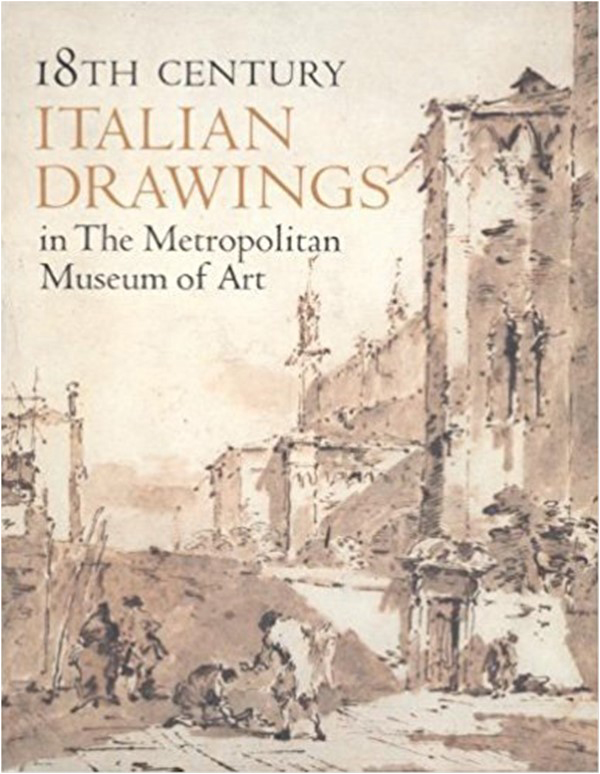
Later, when I was in graduate school, I went with one of my professors to visit the catacombs of the Italian Drawings section. It never occurred to me that there was an entire alternative universe of curator offices and storage facilities tucked away behind public galleries. The other student in the class couldn’t come, so it was just me and the Prof. We waited for the curator of the department to come down (air kisses, they were obvs old friends) and the well-dressed woman led us down various corridors, up a secret elevator and through a series of doors until we got to a nondescript, corporate-looking conference room. On the table she had spread out over a dozen Italian Old Master drawings summoned from the bowels of the Met’s own collection, each carefully wrapped in acid-free paper. The three of us sat down and quite casually she kept handing over to me piece after piece, as if they were newspapers rather than the preparatory drawings of Titian, Veronese and Tintorretto.
Surely there should be organ music playing somewhere, I thought. Or at least a strong spotlight that opened up above my head like a nativity scene while a choir of angels held up my bellowing garments. I was actually holding these pages, seeing the lines and grooves from no more a distance than you are reading this now, perhaps even closer. One of the last pictures she showed me was of a man’s torso as he twisted backwards. It’s a famous image, made by Michelangelo, and as I picked it up I could feel the indentation of the artist’s pencil on the back of the paper.
The Met is home to some of the most priceless works by the old masters
It felt like the hand of the master himself was reaching out to me across the centuries and caressing my finger, and I started to cry. The curator first looked at me affectionately, and then with a measured amount of alarm. When I didn’t stop but began dry heaving in an agonised kind of way, she wrestled the page away from my grip, looking thoroughly frightened. We were rushed out of there pretty quickly after that, and I wasn’t invited back. I wouldn’t change the experience for a thing.
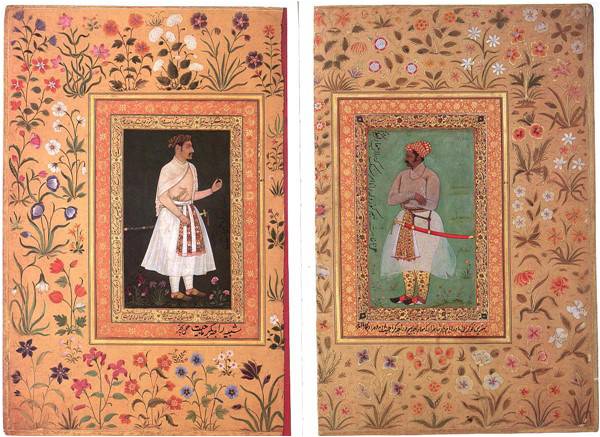
I revisit that day in my mind frequently, and did so most recently when I was listening to a curator from the Met talk about the Mughal Emperor Jehangir in New York this past weekend. As luck would have it she invited someone to come and see the pictures in real life. Hearing this I invited myself along shamelessly, hoping against hope that my short reputation as the Cry Baby of the Met hadn’t spread around. Again we went through a series of corridors and elevators and again I found myself in a small conference room. Except this time there were Imperial Mughal miniatures spread out, with magnifying glasses strewn about for easy viewing. I patted the packet of tissue in my pocket I had taken along just in case, took a deep breath and sat down.
I wish you were there with us. I wish everyone could get the chance to hold these pieces of art in their hands and see them as they were meant to be seen, with the gold leaf glinting in the light as you moved it around, with the time that it would take your eye to find a small peacock among the trees with a magnifying glass and then delight at your discovery. One painting had a note scribbled on it by the Emperor Jehangir himself. Still another had a sentence by Shah Jehan, written in the bold, confident black loops of someone who knew they owned the painting. Again I saw the indentation of the press of their nibs on the paper, and again I felt this visceral, nearly unreal sense of history being alive; I saw images with the most stunning gilded border of flowers and butterflies, pristine as the day they were made. There were studies of royal courts, a vulture couple, the Emperor’s favorite horse; there were portraits of some of the King’s favorites and many of the Emperor himself graciously accepting presents from well-wishing sycophants.
I wish you were there with us, in this small room with these tiny paintings that represent something so infinitely valuable. One of the last ones I saw was a Persian miniature which was based on the idea of Shi’ism as a boat to the divine. In it, there were the faceless, haloed figures of Islam’s most sacred figures, sitting on a large boat being rowed across a turquoise river by a group of men. It was so beautifully painted, so deeply respectful and so reverentially preserved through the centuries that I felt my cold heart soften and my stone eyes go wet. I reached for the tissues and left the room, because my lesson had been learned.