

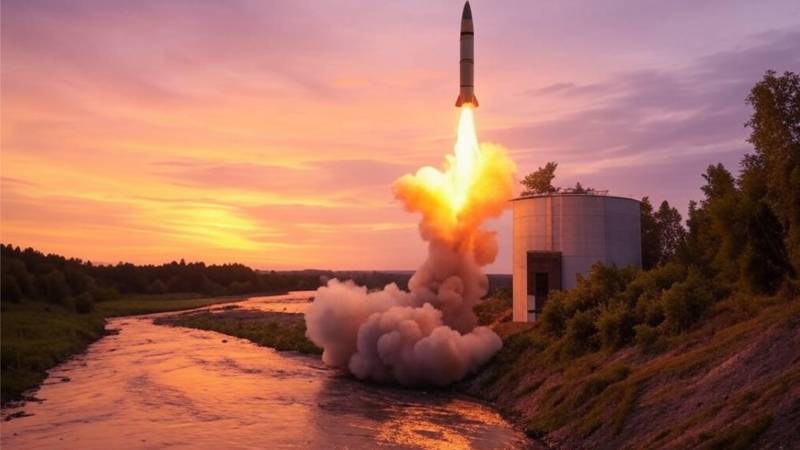
Quietly, the lights went out on the last remaining bilateral arms control treaty between the US and Russia, the New START, on 5 February 2026. This is not just the end of a treaty but an end to an era of arms control.
Is the world today a more dangerous place than it was at the height of the Cold War? Probably yes. While two major powers were competing during the Cold War, today there are multiple poles of power and competition, including Europe, China, Russia, the US, and India.
Nine countries possess nuclear weapons, with complex deterrence dynamics at play. The demise of New START is just part of the story. In fact, it is just the tip of the iceberg. Unfortunately, non-proliferation regimes are unravelling, hastening a new era of arms races and a return to hard power.
The 2010 New START has been in force for 15 years and verifiably limited both countries to no more than 1,550 deployed warheads and no more than 700 deployed long-range missiles and bombers, achieving a thirty per cent reduction compared to the previous bilateral arms control agreements.
However, Russia suspended its participation in New START in February 2023 due to concerns over verification and inspections amid the Ukraine conflict, but did not withdraw from it. Subsequently, the US also suspended participation. Both sides continued to adhere to the numerical limitation despite the suspension.
In September 2025, Russian President Vladimir Putin offered to adhere to the central quantitative restrictions under the New START Treaty for one year after 5 February 2026 if the US did the same.
While US President Donald Trump was questioned about the Russian proposal on 5 October 2025, he said, “Sounds like a good idea to me,” raising hopes for a renewal. However, any hopes for the revival of the treaty were dashed when, in an interview with The New York Times on 14 January 2026, President Trump said, “If it expires, it expires,” further adding that “We’ll just do a better agreement.”
President Trump said in the interview that China, which he alleged has the world’s fastest-growing strategic nuclear force, must be included in a treaty that replaces New START. In response, the Chinese Embassy in Washington deemed it “neither reasonable nor realistic to ask China to join the nuclear disarmament negotiations with the US and Russia.”
The demise of New START, which helped discourage the strategic arms race between the US and Russia for 15 years, is a watershed moment, signifying an era of unchecked competition
China has argued that the US and Russian nuclear arsenals dwarf Chinese nuclear forces. China asserts that it keeps its nuclear arsenal at a minimum level for its national security and never engages in an arms race with anyone.
The expiration of New START means there will be no bilateral arms control arrangement between Russia and the US in over five decades. The US and Russia would be free to deploy an unlimited number of missiles and warheads, creating further instability and fuelling arms races.
The future course depends on whether the US decides to deploy a larger number of weapons exceeding the New START limits. Russia has indicated that it would adhere to the limits if the US does. Some have called it a political handshake. Let us see if the US is willing to extend a handshake in return.
Without this treaty, the world’s two largest nuclear powers, with nearly 90 per cent of the world’s nuclear arsenal, will be left without a single legal instrument to limit their strategic arsenals.
President Trump’s signal to a return to atmospheric testing would not only break the “taboo” against nuclear testing but would trigger a chain reaction of states pursuing nuclear tests. Today, modernisation programmes of major powers fuel a new arms race. Disarmament diplomacy grinds to a halt, and global military spending has reached exponential levels.
The New START is the last in a string of arms control agreements that have fallen apart. Starting from the US abrogation of the Anti-Ballistic Missile Treaty (ABM) in 2002, the demise of the 1987 Intermediate Nuclear Forces (INF) Treaty that banned the placement of intermediate-range ground-launched nuclear missiles in Europe when the US withdrew from it in 2018, the unravelling of the 2015 Joint Comprehensive Plan of Action (JCPOA) agreement with Iran designed to restrict Iran's nuclear programme in exchange for sanctions relief, and the Open Skies Treaty allowing unarmed, short-notice aerial surveillance flights to enhance security by allowing member states to observe military activities directly, ensuring compliance with arms control agreements.
In addition, the Nuclear Non-Proliferation Treaty (NPT) has not made any progress in decades. Initiatives like the Fissile Material Cut-off Treaty (FMCT) have been deadlocked in the Conference on Disarmament (CD) for years due to inequitable proposals. The Comprehensive Test Ban Treaty (CTBT) has little chance of entering into force and has reversed progress with Russia de-ratifying in November 2023, stating that it wanted to be at par with the US, which has signed but not ratified.
The world faces increased challenges due to complexities introduced by emerging disruptive technologies such as cyber threats, military use of Artificial Intelligence, ballistic missile defence, and hypersonic missiles. There is a deepening arms race in outer space that further threatens the survival of humanity.
At a time of heightened threat, what the world needs is more robust and innovative arms control. The demise of New START, which helped discourage the strategic arms race between the US and Russia for 15 years, is a watershed moment, signifying an era of unchecked competition.
The Doomsday Clock, maintained by the Bulletin of the Atomic Scientists, has moved from 89 seconds to 85 seconds to midnight in January 2026, signifying increased global dangers due to the convergence of nuclear brinkmanship and geopolitical conflict, climate threats, misuse of emerging technologies, and a failure of global leadership.
The world must abandon unchecked arms races and step back from the brink of annihilation as the only rational choice moving forward.