

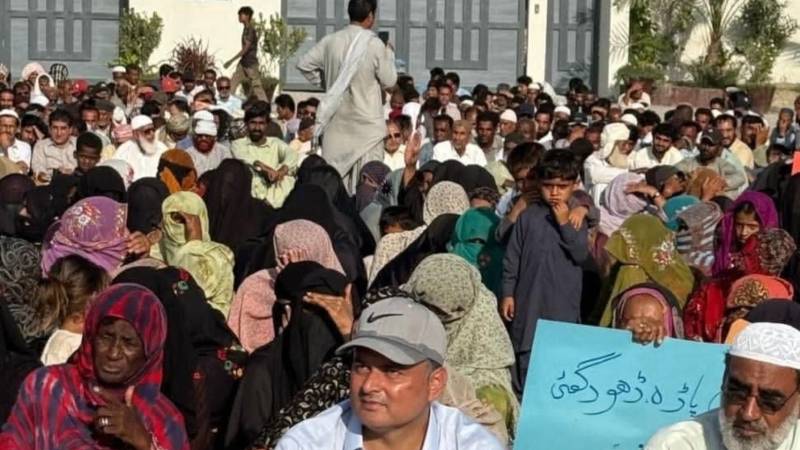
The port city once touted as the linchpin of Pakistan’s economic future is now parched. Gwadar, the heart of the China-Pakistan Economic Corridor (CPEC) and a symbol of promised prosperity, finds its residents on the streets, demanding something as basic as clean drinking water.
While development projects, ports, and highways continue to take shape, locals are left struggling for a drop of water. The crisis, though not new, has reached alarming levels in recent weeks. Water supply has been suspended across several areas, and tanker prices have soared beyond the reach of ordinary citizens. For many, particularly the poor, access to water, a fundamental human right, has become a daily ordeal.
Protesters have set up sit-ins across the city, demanding immediate government action. “Our demand is simple: provide us clean water,” one protester said. Yet, according to locals, the administration’s response has been limited to empty assurances and hollow promises.
“Shouldn’t the benefits of CPEC reach the local people?” residents ask. “We are not asking for charity, only for our rights, clean water, dignity, and equal development.”
Majid Sohrabi, a local citizen, rejected government claims that 1.5 million gallons of water are being supplied to the city daily. “If that were true, we wouldn’t be on the streets,” he said. “It must be investigated where this water is actually going. We are desperate; the authorities must take responsibility.”
The Gwadar Development Authority (GDA), in response, announced that a dedicated water section has been established to deal with the crisis on an emergency basis. The section, equipped with all available resources and manpower, will oversee water distribution and system repairs.
However, protesters remain dissatisfied with both the GDA and elected representatives, accusing them of negligence and mismanagement.
Gwadar’s natural conditions have worsened the problem. The city’s underground water is saline, forcing reliance on rainfall and nearby dams such as Sawad and Akkada, both of which have dried up due to prolonged drought. Experts say the only sustainable solution lies in seawater desalination, a technology that could turn Gwadar’s vast coastline into a source of life rather than despair.
For now, the city that once symbolised Pakistan’s future stands as a stark reminder of its unfulfilled promises, a port of progress, left thirsty.