

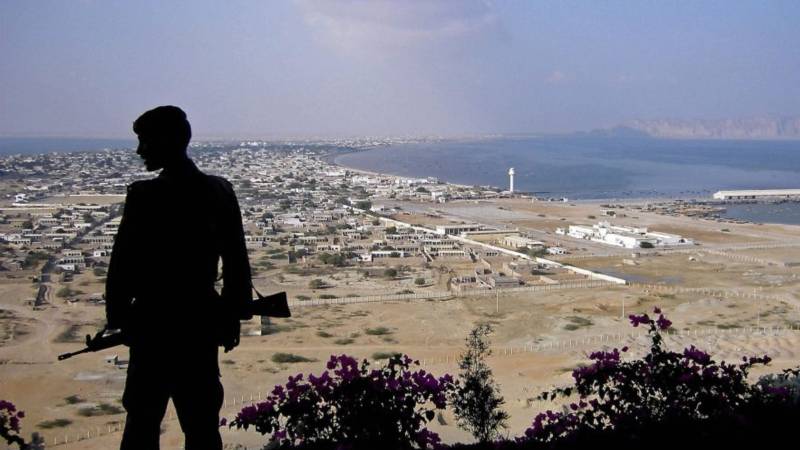
In Khuzdar, Balochistan, the dust from February’s protests still clung to the streets when I met Attaullah Jattak. His daughter Asma, seventeen, had been forced into a pickup truck by armed men after rejecting a marriage proposal. “They were not soldiers,” he told me, fingers shaking around a worn photograph. “They wore the same fatigues as the so-called freedom fighters who tax our shops.” His account, later corroborated in testimony before the Balochistan Assembly, reveals the moral collapse now underlying the province’s insurgency. Once romanticised as a struggle for autonomy, it has metastasised into racketeering and fear, where militants barricade highways to extort livestock transporters, burn schools that educate girls, and collect “revolutionary taxes” that dwarf official development budgets.
Yet from this bleak reality emerges a surprising counter-narrative. Farmers in remote valleys have quietly formed militias to resist insurgents. University students march through Quetta holding placards demanding books rather than bullets. The stubborn resolve of these communities points to an alternative strategy for peace, grounded not in drone strikes or militarised campaigns, but in the ancient calculus of goats, rangelands, and a model of pastoral transformation adapted from Australia’s vast interior.
Long before Pakistan’s creation, power among Baloch tribes was tallied in hoofprints. The Marri measured wealth in sheep; the Bugti prized drought-resistant camels. That pastoral logic remains embedded in the province’s economic structure. Livestock now accounts for over half of Balochistan’s agricultural GDP, the highest proportion in Asia, and supports nearly seventy percent of rural households. Official data shows the province maintains roughly 12.8 million sheep—nearly half of Pakistan’s total—alongside 11.78 million goats and camel herds whose genetic resilience is known from Muscat to Multan.
Yet beneath these figures lies a slow ecological and economic collapse. Roughly ninety-three percent of Balochistan’s rangelands, an expanse larger than Greece, have been degraded to between sixty and seventy percent of their productive capacity. The resulting annual forage deficit of more than fourteen million metric tonnes forces herders into predatory debt arrangements, which in turn strengthens insurgent leverage. Militants extract an estimated twelve billion rupees every year through illegal checkpoints and revolutionary taxes on livestock routes—a sum that equals almost forty percent of the province’s entire development budget.
Redirecting thirty percent of mining royalties, including proceeds from Reko Diq’s gold reserves, into blockchain-secured community trusts would ensure revenues reach the villages most affected by displacement and environmental degradation
Australia faced a comparable crisis in the twentieth century, when overgrazing, drought and market failure drove pastoral economies toward collapse. Its recovery hinged on combining indigenous rotational grazing patterns with technology: satellite-monitored herds, soil moisture sensors, and mobile abattoirs powered by solar energy. At Wimmera Woody Meadows in Victoria, native saltbush was replanted across millions of hectares, boosting carrying capacity by forty percent. Blockchain systems trace halal certification from field to export market, capturing premium prices in the Gulf and East Asia. Perhaps most significantly, Australia’s Outback now generates tens of millions of dollars annually by selling carbon credits earned through rangeland restoration, proving that ecological stewardship can finance itself.
A similarly structured investment in Balochistan, projected at roughly twenty-eight billion rupees over five years, could have transformative economic and social consequences. Economists suggest livestock’s share of Pakistan’s national GDP could climb from its current 11.4 percent to twenty-five percent by 2030. Halal meat and wool export revenues might quadruple from 120 million dollars to half a billion dollars, while direct and indirect employment in the sector could rise from 4.2 million to nearly 6.8 million. Rangeland productivity, now languishing at thirty-eight percent, could feasibly double.
The mechanisms are straightforward but historically neglected. Smart collars fitted to herds could use GPS and artificial intelligence to direct livestock to the most sustainable grazing grounds. Deep-rooted Cenchrus ciliaris grasses, proven to sequester nearly five tonnes of carbon dioxide per hectare annually, could restore degraded lands while generating tradable carbon credits under United Nations frameworks. Mobile processing facilities would allow small-scale producers to sell directly to exporters, bypassing the networks of middlemen whose monopoly has kept pastoral incomes low.
Yet numbers alone do not convey the full weight of potential change. Carbon credit revenues could fund thousands of new schools in communities where militants have burned existing ones. Every one million dollars invested in livestock creates more than three hundred jobs, significantly outperforming capital-intensive mining projects. In purely financial terms, it is both cheaper and more inclusive.
This economic shift must coincide with a political recalibration. The China-Pakistan Economic Corridor, anchored at Gwadar Port, remains an emblem of promise denied. Despite official quotas, less than fifteen percent of port jobs go to local Baloch workers. By mandating that at least half of all new CPEC positions employ local residents, verified by biometric payroll systems, the government could immediately reverse perceptions of exclusion. Redirecting thirty percent of mining royalties, including proceeds from Reko Diq’s gold reserves, into blockchain-secured community trusts would ensure revenues reach the villages most affected by displacement and environmental degradation. The Army’s Special Investment Facilitation Council, already tasked with overseeing large projects, could apply artificial intelligence to audit local hiring compliance and royalty transfers.
Pakistan’s existing counterinsurgency doctrine, summarised as “Clear, Hold, Destroy,” has failed demonstrably: internal intelligence reports admit that nearly ninety-nine percent of districts declared “cleared” relapse into violence within eighteen months. A shift from military to pastoral logic is overdue. Training ten thousand Baloch youth as rangeland guards, equipped with biometric registries to track herds and prevent theft, would provide both employment and security. Two hundred mobile veterinary units, staffed partly by reformed insurgents, could rebuild trust where uniformed forces are seen only as occupiers. Meadow Peace Corridors, negotiated grazing routes crossing tribal boundaries, could reduce conflict over scarce resources during drought.
Sustainable peace will never come from force alone, but from the prosperity and dignity rooted in the land itself
Education remains the most potent long-term weapon. At the Turbat Literature Festival earlier this year, students bought 3.5 million rupees’ worth of books in seventy-two hours, a per capita figure surpassing major cities. Enrolment at Balochistan University of IT and Management Sciences has increased sevenfold since 2018. Redirecting even twenty percent of mining royalties to vocational institutes and coding academies could accelerate this trend. Strategic partnerships, such as with Texas A&M University for desert agriculture diplomas, would connect local youth to global research networks.
Legal reforms are equally necessary. Hybrid special tribal courts, blending rawaj customary norms with judicial oversight, could adjudicate land disputes and weaken the insurgents’ parallel justice systems. Blockchain-based land registries would reduce forgery and fraud, a major driver of clan conflicts. Granting land titles to women-led pastoral cooperatives would correct generations of economic exclusion.
Underlying all these interventions is a data deficit so severe that policymakers are effectively blind. There are currently no accredited livestock research centres in the entire province. Animal disease surveillance covers fewer than twelve percent of herds, and more than eighty percent of herders lack access to basic weather forecasts. A modest investment in eighteen satellite-linked livestock hubs could reduce lamb mortality from thirty-three percent to nine percent, increase wool yields by forty percent, and produce hundreds of thousands of real-time data points to guide policy.
Balochistan’s youth demographic is another underappreciated asset. Among the province’s 4.3 million citizens aged fifteen to twenty-four, over eighty percent express a preference for entrepreneurship over government employment. In Quetta, the survival rate for start-ups already surpasses Karachi’s. Yet fewer than eleven percent of Baloch youth have access to coding bootcamps, compared to thirty-seven percent in Khyber Pakhtunkhwa. A Marshall Plan for meadows—combining native grass reseeding, Internet of Things herd management, and youth pastoral academies—could, within five years, turn pastoralism into a twenty-first-century growth engine.
In the ruins of a former militant camp near Kech, I watched children tending goats where gun emplacements once stood. Their teacher, himself a former combatant, recited an old Brahui saying: the desert remembers three things—hoofprints, stars and promises kept. Pakistan has broken countless promises to Balochistan since independence. Yet these pastures still offer redemption. When a herder from Awaran can export organic mutton to Dubai without paying insurgent tolls, when a student from Panjgur studies rangeland ecology on a Reko Diq scholarship, when helicopters deliver vaccines instead of missiles, the promise becomes real.
After seventy-five years of bloodshed, the lesson written across these deserts is unmistakable. Sustainable peace will never come from force alone, but from the prosperity and dignity rooted in the land itself. The hoofprints are already there. The promise, long deferred, is ready to be kept.