

Nandipur should not be treated as another power-sector embarrassment to be filed away under "lessons learned." It is part of a wider failure: a state that can announce large projects, negotiate contracts, arrange financing and stage ceremonies, but repeatedly fails at the one task that matters most - execution. The same weakness runs through Nandipur and Neelum-Jhelum. One was a thermal power project delayed by administrative paralysis and then damaged by hurried revival. The other was a flagship hydropower project that took far longer than planned, cost far more than originally envisaged and then suffered serious tunnel problems after commissioning. Different technologies, different sites, same disease.
Nandipur was supposed to add urgently needed electricity to the grid. It had approvals, a contractor and financing arrangements. What it did not have was timely decision-making. A required legal opinion for financing was not issued for years. The consequences were predictable: cost escalation, contractor claims, remobilisation costs, financing costs and lost generation. This was not an earthquake, a war or a global commodity shock. It was a file stuck inside government. That is what makes Nandipur so damaging. A power project can fail at site because of poor engineering. Nandipur began failing in Islamabad, inside the machinery of clearance, vetting and inter-ministerial hesitation. In this case, a file became more expensive than a faulty turbine.
The legal and administrative machinery bears principal responsibility for the early delay. But the sponsoring power-sector authorities cannot be treated as innocent bystanders. If a nationally important project remains stuck for months, the matter should be escalated immediately. If it remains stuck for years, the failure is no longer procedural; it is institutional negligence. In Pakistan, however, delay is nobody's property. Files move, reminders are sent, meetings are held and everyone behaves as if activity is the same thing as decision. Then came the second failure: revival without discipline. Once Nandipur was restarted, it became a symbol of quick delivery. That created pressure to show generation before the project had fully achieved technical and commercial readiness. At one stage, power was produced at an extremely high cost because the plant was run on an unsuitable interim fuel. That was not project management. It was optics dressed up as delivery.
Neelum-Jhelum tells us what happens when a flagship project is delivered late at enormous cost, and then cannot deliver reliable output because underlying engineering and oversight failures are not adequately controlled.
A power plant is not a ribbon-cutting backdrop. It is an industrial asset. It requires commissioning discipline, proper fuel arrangements, verified technical systems, competent operations and maintenance planning, and strict internal controls. When these are subordinated to political theatre or bureaucratic box-ticking, the result is expensive electricity, damaged credibility and avoidable technical risk.
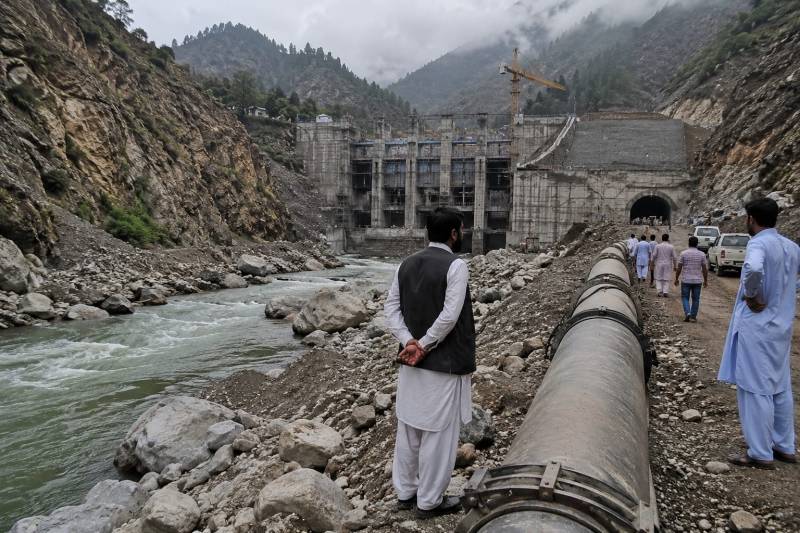
Neelum-Jhelum provides the larger and more dangerous comparison. It was presented for years as a strategic national asset and a clean-energy achievement. On paper, the project had obvious merit: 969 MW of installed capacity, large annual generation potential and strategic importance in the Neelum-Jhelum basin. But a project is not judged by its brochure. It is judged by whether it is delivered on time, within a defensible cost, and operated reliably after commissioning. On that test, Neelum-Jhelum is another warning. It took years longer than planned, its cost escalated massively, and after commissioning it suffered major tunnel problems. The plant was shut in 2022 because of tunnel damage, returned only after repairs, and then again faced serious headrace tunnel problems in 2024 that halted generation. A tunnel-dependent hydropower project whose tunnels cannot be trusted is not a triumph. It is a national asset trapped inside a national defect.
The comparison matters because it removes the excuse of uniqueness. Nandipur was not a one-off administrative mishap. Neelum-Jhelum was not a one-off geological misfortune. Together they show a repeated pattern: weak preparation, poor risk allocation, inadequate technical scrutiny, delayed escalation, cost overruns, premature celebration and post-facto inquiries.
The standard defence is that these projects eventually produce electricity. That argument is thin. A project that eventually runs after years of avoidable delay, cost escalation, technical problems and repeated shutdowns is not automatically a success. Survival is not vindication. Completion is not efficiency. Commissioning is not reliability.
The deeper problem is that Pakistan's public-sector project system treats time and money as elastic. If a project is delayed, the taxpayer absorbs the escalation. If the cost increases, consumers pay through tariffs, surcharges or public debt. If design or execution is flawed, another committee is formed. If responsibility is unclear, the matter is referred elsewhere. If the asset underperforms, the public is told to be patient because the project is of "national importance." That phrase has become a shelter for weak execution.
No private investor operating under real discipline could survive this way. But public projects in Pakistan live in a protected world. Losses are socialised. Credit is personalised. Responsibility is dissolved into institutional fog. The IPP experience is the private-sector version of the same disease. Contracts that began as emergency solutions to shortages became a system of guaranteed returns, capacity payments and risk transfer to the public. The largesse did not remain confined to investors. It created an ecosystem around tariff approvals, sovereign guarantees, fuel supply, renegotiations, boards, consultancies and regulatory forbearance. The political and bureaucratic elite learned a damaging lesson: electricity is not only a public service; it can also become a pipeline for guaranteed money.
Nandipur and Neelum-Jhelum are the public-sector cousins of that model. They did not need private capacity payments to burden the public. The same logic operated through sovereign-backed obligations, consumer-funded levies, cost overruns, contractor claims and tariff recovery. In each case, risk travelled downward to consumers while discretion, credit and influence remained upward with the state and its favoured circles. This is where the absence of real energy markets becomes central. Pakistan still runs much of its power and gas system through administered prices, sovereign-backed contracts, cost pass-throughs, centralised purchasing and political allocation. There is no serious market discipline in which generators compete transparently, buyers contract directly, bad projects lose revenue, inefficient plants are punished by dispatch, and prices reveal the real cost of location, congestion, fuel and reliability.
Without a market, failure is not priced. It is transferred. Nandipur becomes a tariff problem rather than a management failure. Neelum-Jhelum becomes a consumer-funded national monument rather than a commercially tested asset. IPP liabilities sit on bills whether or not the system actually needs the power. The public pays because the system has no mechanism to say no.
These cases also expose the hollowness of our accountability culture. We are excellent at post-mortems and poor at prevention. Inquiries are launched, reports are submitted, losses are estimated, and blame circulates between ministries, companies, boards, contractors and consultants. Then the system resets itself and moves to the next project. The lesson is never absorbed because the institutions responsible for weak execution rarely face consequences proportionate to the loss imposed on the public.
The reform agenda is not complicated, but it does require upsetting the comfortable architecture that protects failure. Every major public project must have a single empowered owner with clear legal responsibility. Inter-ministerial clearances must have binding timelines. Delays beyond those timelines must trigger automatic escalation. Cost escalation caused by administrative inaction must be publicly disclosed. Technical audits must precede commissioning, not follow breakdowns. Operations and maintenance arrangements must be settled before inauguration. Boards must be staffed for competence, not convenience. Fuel procurement, measurement systems and data controls must be independently monitored.
Above all, Pakistan must build real energy markets. That means open access to networks, credible wheeling, bilateral contracting, competitive wholesale trading, transparent merit-order dispatch, locational and congestion signals, and the separation of wires from supply. A project should earn its place in the system. It should not be protected by a tariff shelter after it has already failed the public. Nandipur tells us what happens when legal and administrative paralysis delays implementation and political haste then distorts revival. Neelum-Jhelum tells us what happens when a flagship project is delivered late, at enormous cost, and then cannot deliver reliable output because underlying engineering and oversight failures were not adequately controlled. Together, they are not merely power-sector stories. They are evidence of a state execution crisis.
Pakistan does not only need more investment. It needs a government machinery capable of converting investment into functioning assets, and an energy market capable of exposing bad assets before their costs are dumped on consumers. It does not only need more megawatts. It needs discipline, accountability and competence in the way those megawatts are planned, contracted, built, dispatched and paid for. Until that happens, the country will keep producing the same miserable sequence: ambitious announcement, delayed execution, inflated cost, hurried inauguration, technical fault, inquiry, silence, repeat.
Nandipur and Neelum-Jhelum are not exceptions. They are mirrors. And what they show is not flattering: a state that can imagine projects but still cannot execute them without bleeding the public purse.