

“If justice is blind, must it also be outdated?”
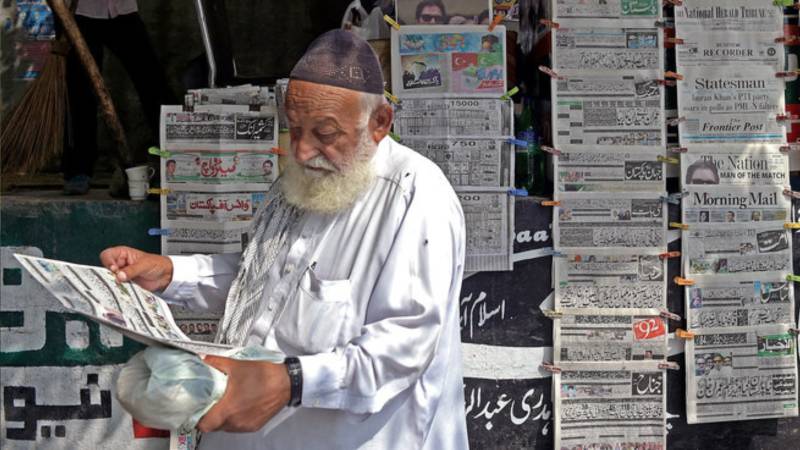
Imagine your valuable rights being infringed just because your summons was published in a newspaper you have never heard of — Al-Khabbar, Tez Akhbar, or some equally obscure publication. In an era where a message can reach anyone in seconds, no matter how far they are, is it still reasonable for courts in Pakistan to rely on printed newspaper ads as a substitute for personal service of summons? For many legal practitioners in Pakistan, the answer is a resounding “No”.
From the perspective of a practising lawyer, one can say with conviction that the impact of these advertisements is virtually non-existent. Despite being embedded in court procedure under the label of “publication”, this method rarely, if ever, succeeds in its stated purpose: ensuring the presence of a party who is allegedly avoiding court proceedings. In over two years of active litigation, I have not once encountered a case where someone appeared in court after seeing their name in such an advertisement.
The law governing this area is the Code of Civil Procedure (CPC) 1908. Under the CPC, Order 5 Rule 1 establishes the right of every defendant to be duly served summons before they are expected to answer a claim – a principle rooted in natural justice. However, when a defendant is evasive or cannot be found, courts are permitted to resort to “substituted service” under Order 5 Rule 20. This includes options such as affixing a notice on the defendant’s house, using electronic means, courier service, beating a drum in the area (yes, still in the rule book), and publication in newspapers.
While the legislation has offered a wide array of options to ensure service “quickly and efficiently”, courts continue to mechanically choose newspaper publication even when more direct, effective, and environmentally conscious alternatives exist. The continued use of this practice seems to contradict the very soul of the rule.
The environmental cost of paper production, from deforestation to water consumption and chemical pollution, is staggering, and yet our institutions behave as though the consequences are invisible
Consider the absurdity: we accept WhatsApp messages as service of summons in some jurisdictions, allow video conferencing as valid evidence recording, and even recognise digital affidavits. Yet for substituted service, lower courts still revert to an archaic method from the days of post offices and PCOs. The environmental cost of this medieval procedure is also worth noting. The Supreme Court of Pakistan has, on multiple occasions, stressed environmentally friendly judicial policies, but lower courts pay no practical heed and continue ordering paper-based summons that clutter newspapers and offer virtually no practical benefit. This lack of alignment between the vision of the superior judiciary and the practice at the lower courts deserves scrutiny.
Furthermore, if one examines Order 5 Rule 25 of the CPC, which deals with service outside Pakistan, it is clearly impractical. If a defendant is outside Pakistan and has no local agent, this rule allows for newspaper publication in leading dailies like Dawn or The Nation. But even if published, how realistic is the possibility that someone in Dubai, London, or Toronto will read the legal notices section of a Pakistani newspaper to learn about their summons? It is difficult to digest this ritual of procedure for a young professional, or indeed for any reasonable person. It is no longer merely outdated – it is useless and wasteful.
I begin to question further when I consider how, in an age where Pakistan has committed itself to international climate-related obligations and aspires to be an eco-friendly nation, we still insist on paper-based processes that are outdated. Every unnecessary file, printed notice, and redundant form is not just a bureaucratic inconvenience but a direct blow to our forests, our air quality, and our already fragile ecosystems. The environmental cost of paper production, from deforestation to water consumption and chemical pollution, is staggering, and yet our institutions behave as though the consequences are invisible.
These medieval procedures need to be updated, and courts need to move towards digital notices via verified emails, social media, or even SMS as primary modes of substituted service. Not only are these methods faster, but they can be easily tracked and verified. The judiciary and government should work collaboratively to invest in digital literacy and legal technology so that systems used in other developed nations can be mirrored or adapted here in Pakistan.
Finally, if due service is a fundamental right, why do we rely on methods that serve only as a tick-box formality? Are we serving justice, or simply following ghosts of the past?
This topic may seem like a tiny cog in the machine, but even a single broken cog can halt the delivery of justice. It is high time we look at our procedures not with reverence, but with reason.