

One core reason why Pakistan People’s Party (PPP) became the first government to complete its constitutional term in a democratic dispensation was that they did not interference in the matters that mattered.
The case of Pakistan Muslim League-Nawaz (PML-N) is completely different. Critics said a civil-military standoff was imminent during Nawaz Sharif’s third term. But they could not predict it would occur so soon. The PML-N has not completed its first year in power yet.
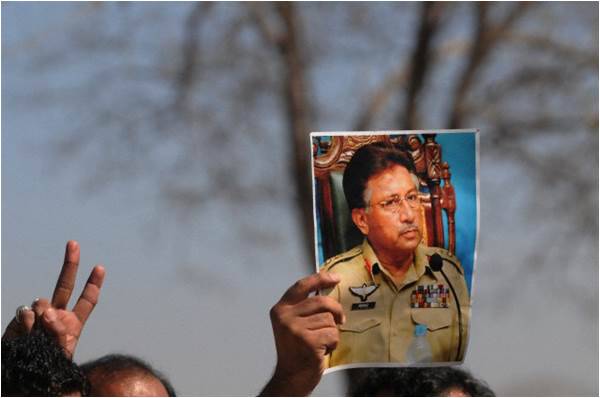
The recent civil-military tensions began to aggravate after the PML-N government took a strong stance on the treason trial of General (r) Pervez Musharraf. It peaked after Geo News channel accused the ISI chief of plotting to assassinate a senior anchor.
According to rumors in Islamabad, the crisis will either dissipate after the announcement of the federal budget or it will worsen to a dangerous extent.
[quote]The PTI chairman is getting impatient[/quote]
“I am very disappointed the way things occurred one after another,” said AVM (r) Shahzad Chaudhry, an analyst. “I was not at all expecting civil-military tensions to arise so quickly.” He said it seemed Prime Minister Nawaz Sharif had not learnt anything from his past mistakes. But he ruled out the possibility of another martial law in the country. “The tension simmered, but has now subsided. The prime minister needs to take a few more visible steps to reduce it further. The tension exists, but has not and will not cross the danger level.”
Air Marshal (r) Shahid Latif disagrees. He said the situation might take an ugly turn if the PML-N government did not change its policies. He said the armed forces were engaged in its most difficult war and the attitude of the federal government had hurt their morale.
Defense Minister Khawaja Asif, whose verbosity initially annoyed the military, has now been doing damage control. He moved the Pakistan Electronic Media Regulatory Authority (PEMRA) to ban Geo News, saying it was his responsibility to protect “the most prestigious institution” of Pakistan. Khawaja Asif asserted there were no issues between the army and the government. “All the rumors of tension between these two are completely baseless,” he told reporters after the Yaum-e-Shuhada ceremony held at the military headquarters.
The prime minister also contributed to repairing the relations. He hailed a statement by the chief of army staff that the constitution was supreme. Some weeks ago, the army chief had created ripples when he said his institution would preserve its dignity at all costs.
The issue of the former dictator lingers on. Despite his doctors’ recommendation, the government did not allow him to proceed abroad for treatment, arguing that the Supreme Court had told it to place the retired general on the Exit Control List.
Meanwhile, several opportunists jumped into the fray to take advantage of the civil-military tussle. Prominent among them are Imran Khan, Tahirul Qadri and Sirajul Haq. Starting on May 11, they are staging countrywide protests against alleged rigging in the 2013 general elections.
Imran Khan believed his mandate was stolen by the PML-N in connivance with then chief justice Iftikhar Chaudhry. He accused the former chief justice of “match fixing”. The former chief justice said he would not dignify the allegations with a response.
The PTI chairman accused the returning officers of massive rigging, which turned the situation in the PML-N’s favor. He said Justice Iftikhar Chaudhry was responsible for that. But Justice Chaudhry said “the returning officers were appointed by the Election Commission and working under it”.
Imran Khan said the aim of his protest campaign was not to destabilize the government or derail democracy. “We want electoral reforms,” he said.
His critics are skeptical because of the timing of the movement. They say the experiment of forming a provincial government in Khyber Pakhtunkhwa had not been politically productive. It is Punjab that holds the key to the Prime Minister’s House. With his party’s popularity dwindling, the PTI chairman is getting impatient.
The possibility of mid-term elections is rather remote, but cannot be rejected outright. It depends how well the prime minister will play his cards. He must learn from the best of political gamblers – Asif Zardari.
Shahzad Raza is a journalist based in Islamabad.
Twitter: @shahzadrez
The case of Pakistan Muslim League-Nawaz (PML-N) is completely different. Critics said a civil-military standoff was imminent during Nawaz Sharif’s third term. But they could not predict it would occur so soon. The PML-N has not completed its first year in power yet.
The recent civil-military tensions began to aggravate after the PML-N government took a strong stance on the treason trial of General (r) Pervez Musharraf. It peaked after Geo News channel accused the ISI chief of plotting to assassinate a senior anchor.
According to rumors in Islamabad, the crisis will either dissipate after the announcement of the federal budget or it will worsen to a dangerous extent.
[quote]The PTI chairman is getting impatient[/quote]
“I am very disappointed the way things occurred one after another,” said AVM (r) Shahzad Chaudhry, an analyst. “I was not at all expecting civil-military tensions to arise so quickly.” He said it seemed Prime Minister Nawaz Sharif had not learnt anything from his past mistakes. But he ruled out the possibility of another martial law in the country. “The tension simmered, but has now subsided. The prime minister needs to take a few more visible steps to reduce it further. The tension exists, but has not and will not cross the danger level.”
Air Marshal (r) Shahid Latif disagrees. He said the situation might take an ugly turn if the PML-N government did not change its policies. He said the armed forces were engaged in its most difficult war and the attitude of the federal government had hurt their morale.
Defense Minister Khawaja Asif, whose verbosity initially annoyed the military, has now been doing damage control. He moved the Pakistan Electronic Media Regulatory Authority (PEMRA) to ban Geo News, saying it was his responsibility to protect “the most prestigious institution” of Pakistan. Khawaja Asif asserted there were no issues between the army and the government. “All the rumors of tension between these two are completely baseless,” he told reporters after the Yaum-e-Shuhada ceremony held at the military headquarters.
The prime minister also contributed to repairing the relations. He hailed a statement by the chief of army staff that the constitution was supreme. Some weeks ago, the army chief had created ripples when he said his institution would preserve its dignity at all costs.
The issue of the former dictator lingers on. Despite his doctors’ recommendation, the government did not allow him to proceed abroad for treatment, arguing that the Supreme Court had told it to place the retired general on the Exit Control List.
Meanwhile, several opportunists jumped into the fray to take advantage of the civil-military tussle. Prominent among them are Imran Khan, Tahirul Qadri and Sirajul Haq. Starting on May 11, they are staging countrywide protests against alleged rigging in the 2013 general elections.
Imran Khan believed his mandate was stolen by the PML-N in connivance with then chief justice Iftikhar Chaudhry. He accused the former chief justice of “match fixing”. The former chief justice said he would not dignify the allegations with a response.
The PTI chairman accused the returning officers of massive rigging, which turned the situation in the PML-N’s favor. He said Justice Iftikhar Chaudhry was responsible for that. But Justice Chaudhry said “the returning officers were appointed by the Election Commission and working under it”.
Imran Khan said the aim of his protest campaign was not to destabilize the government or derail democracy. “We want electoral reforms,” he said.
His critics are skeptical because of the timing of the movement. They say the experiment of forming a provincial government in Khyber Pakhtunkhwa had not been politically productive. It is Punjab that holds the key to the Prime Minister’s House. With his party’s popularity dwindling, the PTI chairman is getting impatient.
The possibility of mid-term elections is rather remote, but cannot be rejected outright. It depends how well the prime minister will play his cards. He must learn from the best of political gamblers – Asif Zardari.
Shahzad Raza is a journalist based in Islamabad.
Twitter: @shahzadrez