

With a precarious two-week ceasefire just days old, senior American and Iranian officials are due to converge on Pakistan’s capital this weekend for direct negotiations aimed at ending the conflict that has convulsed the Middle East.
The talks, scheduled to begin on Saturday, 11 April at Islamabad’s Serena Hotel, mark the most significant diplomatic effort since US and Israeli strikes on Iran triggered a wider war in late February. Pakistan has played a central mediating role, stepping in at the last minute to avert what US President Donald Trump had threatened would be the destruction of “a whole civilisation”.
The ceasefire was announced by President Trump in the early hours of Wednesday, barely two hours before his self-imposed deadline expired. It followed intense back-channel diplomacy led by Pakistani Prime Minister Shehbaz Sharif and Army chief Field Marshal Asim Munir. Under the initial agreement, the US and Israel halted attacks on Iran in exchange for Tehran agreeing to reopen the Strait of Hormuz — the vital waterway through which around one-fifth of global oil and gas passes.
Both sides have since traded competing proposals. President Trump described Iran’s 10-point plan as “a workable basis on which to negotiate”, while Iranian officials have referred to a US 15-point document. Leaked versions suggest wide differences, particularly over Iran’s nuclear programme, regional proxies, and oversight of the Strait.
Who will be at the table?
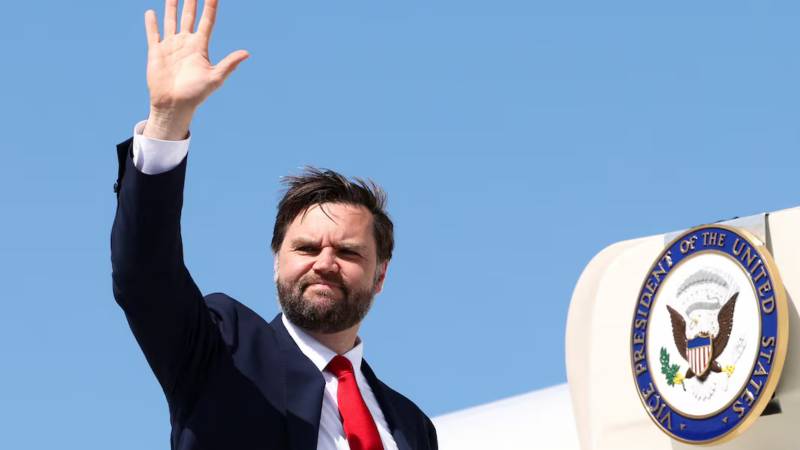
The US delegation will be led by Vice President JD Vance, signalling the importance Washington attaches to the process. Mr Vance, a former Marine who once criticised extensive US military engagements abroad, has emerged as a relatively credible figure in Iranian eyes compared with other Trump associates. He will be accompanied by Steve Witkoff, the US Special Envoy to the Middle East, and Jared Kushner, Mr Trump’s son-in-law and a veteran of previous Middle East negotiations — though the latter holds no formal government post.
Iran has expressed reservations about Mr Witkoff and Mr Kushner, citing earlier talks that collapsed into military action. Tehran is said to view Mr Vance as more likely to honour commitments, partly due to his past scepticism of prolonged overseas conflicts.
On the Iranian side, the delegation is expected to be headed by Parliament Speaker Mohammad Bagher Ghalibaf and Foreign Minister Abbas Araghchi. Mr Ghalibaf, a former IRGC commander and close ally of Supreme Leader Ayatollah Ali Khamenei (who was reportedly killed in earlier strikes), brings significant influence within Iran’s security establishment. Mr Araghchi, a seasoned diplomat and chief nuclear negotiator during the 2015 JCPOA talks, is regarded as a pragmatic operator skilled in tough bargaining.
Pakistani officials have stressed that attendance is not yet set in stone until the delegations physically arrive.
Pakistan’s pivotal role
Islamabad’s involvement is no coincidence. Pakistan shares a long border with Iran, hosts the world’s second-largest Shia population, and maintains working relations with both Washington and Tehran without hosting US military bases. Field Marshal Munir has been in regular contact with both sides, while Mr Sharif has shuttled messages and formally invited the delegations.
Security in the capital has been dramatically tightened. The Red Zone has been sealed, pavements painted, and public holidays declared for non-essential staff. The Serena Hotel, located near the Foreign Ministry, has been cleared of other guests to accommodate the talks. International media have submitted dozens of visa requests.
Deep divisions and flashpoints
Negotiations are expected to proceed indirectly at first, with Pakistani facilitators carrying messages between the two sides. Core issues include:
- Iran’s nuclear activities and its stock of enriched uranium (a key US demand)
- Reopening and future governance of the Strait of Hormuz
- Withdrawal of US forces from the region
- The role and activities of Iran-aligned armed groups
- Sanctions relief
A major stumbling block is Lebanon. Israel has continued intense strikes there, killing hundreds in recent days, actions that Iran insists violate the ceasefire. Tehran has warned it could walk away if the attacks persist, while the US and Israel maintain that Lebanon falls outside the truce terms. Iranian officials have accused Israel of deliberately trying to sabotage the process.
Mistrust runs deep. Iranian diplomats have pointed to past rounds of talks that were followed by military escalation, and both sides are entering the talks with maximalist public positions.
Analysts describe the atmosphere as cautious at best. A comprehensive peace deal in the coming days or even weeks appears unlikely, but even limited progress — such as a mutual understanding on the nuclear issue or secure passage through the Strait — could provide breathing space.
Former Pakistani ambassador Masoud Khalid noted that fatigue on both sides might encourage compromise, though any lasting agreement would likely need broader international backing, possibly including a UN Security Council resolution and involvement from regional powers.