

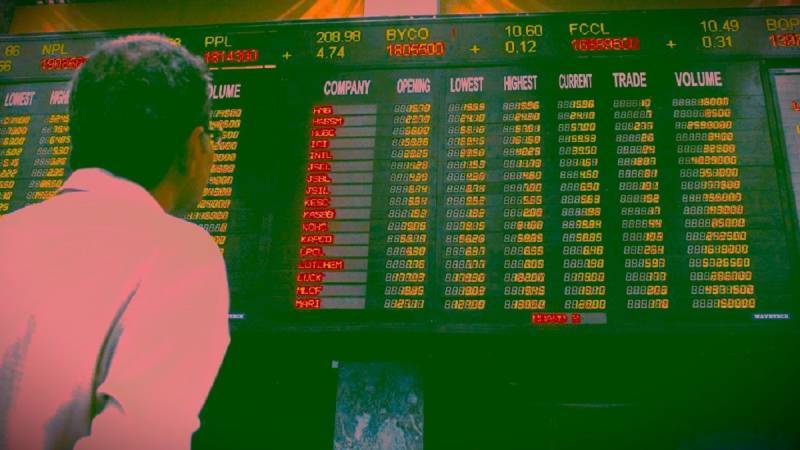
Pakistan’s economy is quietly laying the groundwork for a major market rally. Beneath the noise and turbulence of daily headlines, something significant is taking shape, and if history is any guide, the Pakistan Stock Exchange (PSX) is about to reward the investors who can see the gap before everyone else does.
I say this not as a casual observer, but as someone who manages capital in this market on a daily basis. I am directly involved in the daily workings of this market, constantly analysing data, sentiment, and shifts in policy and business fundamentals. The signs are becoming increasingly difficult to ignore.
For the better part of the last two years, Pakistan has faced a combination of high interest rates, inflationary pressures, currency depreciation, and political uncertainty. These headwinds kept investors cautious and capital locked up, while businesses struggled with tighter margins, rising input costs, and reduced access to financing. The mood was defensive, risk appetite was low, and capital markets reflected that.
However, tides in macroeconomics often change faster than most people expect. In our case, the State Bank of Pakistan appears to be reaching the end of its monetary tightening cycle. After aggressive rate hikes aimed at taming inflation and stabilising the rupee, the groundwork is now being laid for rate cuts. As inflation eases and external account pressures moderate, monetary easing is not only likely, it is inevitable.
This is a critical factor. Falling interest rates historically have a powerful impact on equity markets. When rates decline, liquidity flows back into the system. Credit becomes cheaper and more accessible. Businesses expand, consumer spending rises, and investment increases across sectors. At the same time, the relative appeal of equities compared to fixed-income assets strengthens. Cash starts moving from the sidelines into stocks.
Rates alone do not tell the whole story. Pakistan’s journey over the past few years has also included a painful but necessary stabilisation process. Stabilisation always comes before growth. The IMF programme, while politically unpopular, has re-established some critical fiscal and monetary discipline. Structural reforms have been initiated, difficult decisions have been taken, and the worst-case scenario of sovereign default has been averted. That chapter is now closed.
As earnings grow, the rupee stabilises, and international capital returns, the market can not only recover lost ground but also reach new heights
There was a man who appealed to foreign powers to allow our nation to default — fortunately, that leadership is behind us. With renewed engagement from the IMF and support from friendly countries like Saudi Arabia, the UAE, and China, our external accounts are stabilising. The panic of 2022–2023, when investors feared the worst, is now being replaced with optimism.
While macro indicators are just beginning to show signs of life, something remarkable has been happening at the micro level, within the companies themselves. Even amid a difficult environment, many listed companies have not only survived, they have thrived. Corporates, particularly in banking, energy, fertilisers, and export-driven sectors such as textiles and technology, have delivered strong, in some cases, record-breaking profits. Cost optimisation, smart capital allocation, and a relentless focus on operational efficiency have allowed these firms to build resilience.
Yet, despite this strength, the market has not fully rewarded them. Share prices have lagged earnings growth, resulting in some of the lowest price-to-earnings (P/E) ratios in the region. In fact, when compared with other emerging markets, the PSX appears grossly undervalued. We are effectively selling profitable, well-managed, dividend-paying blue-chip companies at “fire-sale” prices.
This discrepancy will not last forever. Valuations are mean-reverting over time, especially when fundamentals remain strong. Once foreign capital begins to re-enter the market (and it will), these mispricings will be corrected quickly. The adjustment can be sudden and sharp. Markets, by their very nature, are anticipatory. They do not wait for certainty; they price in the future before it becomes obvious. And that is why the smartest money tends to move early.
By the time the average investor notices that “things are getting better”, a substantial portion of the rally is already behind us. This is why waiting for perfect conditions is often a losing strategy.
Even though the KSE-100 Index has reached new highs in local currency terms, we must consider the broader context. In US dollar terms, the market is still well below its 2017 peak, largely due to currency depreciation over the years. But this gap between current valuations and historical highs represents more than just lost ground. This represents potential. As earnings grow, the rupee stabilises, and international capital returns, the market can not only recover lost ground but also reach new heights.
We are also witnessing a major shift in replacement costs. Inflation, supply chain changes, and currency dynamics have increased the cost of building new capacity in almost every sector. This makes existing listed companies, which already own productive assets, even more valuable. In many cases, their market valuations are now significantly below the cost it would take to replicate their businesses from scratch. That disconnect is not sustainable in an efficient market.
The case for a PSX resurgence becomes even stronger when viewed through the lens of political and geopolitical stability. While risks remain, as they always do, recent developments suggest improving clarity and direction. A stable government, improved foreign relations, and a return to institutional dialogue create an environment where investor confidence can return. Pakistan does not need perfection, it just needs progress and predictability.
That brings us to the central thesis.
For investors willing to look beyond the noise, the setup is extraordinary. Several positive factors are coming together right now: monetary easing, fiscal stabilisation, corporate strength, and political stability. Any one of these factors would support a rally. Together, they create the conditions for a generational bull market.
Of course, there will be volatility. There always is. Yet those who wait for every risk to disappear will also miss the most rewarding part of the cycle. As confidence returns, liquidity follows. Once that happens, the PSX has absolute potential to regain its previous US dollar highs, and surpass them.
Each market cycle reaches a point where caution gives way to conviction. I believe that moment is now. The golden years of the PSX may be closer than most people think.