

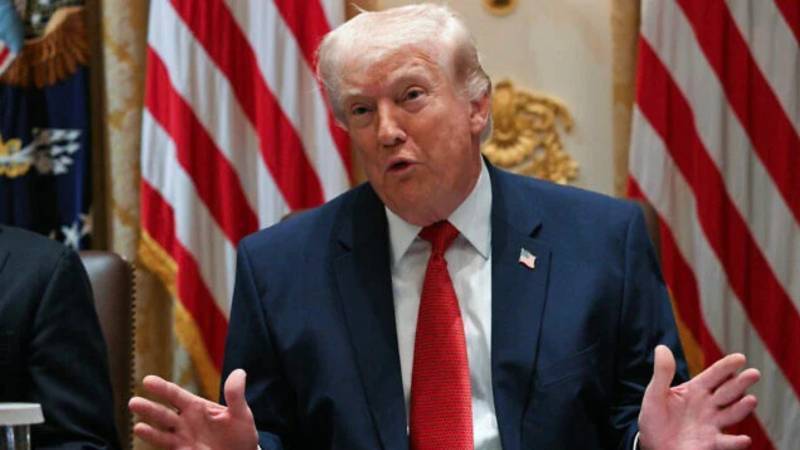
“Though this be madness, yet there is method in it,” wrote William Shakespeare in Hamlet. Another ancient warning cautions, “Whom the gods would destroy, they first make mad.” These seemingly contradictory ideas together capture the paradox at the heart of Donald Trump's foreign policy: is it calculated unpredictability—or a descent into disorder?
Trump himself has leaned into the ambiguity. “I may do it. I may not do it. Nobody knows what I'm going to do,” he once remarked. What might appear to be an inconsistency has, in his hands, become a deliberate political instrument. Unpredictability is not merely a byproduct of his personality; it has been elevated to the level of doctrine. The question is whether this doctrine strengthens American power or steadily erodes it.
Political scientists have long described this approach as the ‘Madman Theory’—a strategy in which a leader cultivates an image of irrationality to coerce adversaries into concessions. The logic is simple: if opponents believe a leader is capable of extreme, even reckless actions, they may choose compromise over confrontation. During the Cold War, Richard Nixon famously instructed his national security adviser, Henry Kissinger, to signal to North Vietnam that he might act unpredictably, even dangerously, to force a negotiated settlement.
Trump has revived—and personalised—this tactic. As Michael Desch notes, the essence of the Madman Theory lies in persuading adversaries that “you don't know what he's going to do.” Trump appears to have internalised this logic not just as a strategy, but as a governing style. From Iran to NATO allies, Washington's signals have often been deliberately erratic, leaving both foes and friends guessing.
Yet the effectiveness of this approach depends on a delicate balance: unpredictability must be perceived as controlled rather than chaotic. Once doubt shifts from strategic ambiguity to genuine instability, the credibility of commitments begins to collapse. Here lies the central concern raised by critics. According to Professor Trubowitz, Trump’s conduct has “raised serious doubts” about the reliability of American international commitments. Alliances, once anchored in predictability and trust, risk becoming fragile under the weight of uncertainty.
Erratic policy shifts, public contradictions, and provocative rhetoric may generate short-term leverage, but they also create long-term uncertainty that weakens institutional trust
Domestically, this unease is reflected in public opinion. Approval ratings have dipped significantly, while disapproval has surged to record levels. Recent Ipsos polls by ABC News/Washington Post suggest that a substantial majority of Americans believe the country is heading in the wrong direction. More strikingly, concerns about Trump’s temperament are no longer confined to partisan opponents. They echo across retired generals, diplomats, and even segments of his former political base.
The language used by critics is unusually stark. Prominent Democrats such as Chuck Schumer and Hakeem Jeffries have described the president as “unhinged” and “out of control,” while Ted Lieu has been even more blunt. Calls to invoke the Twenty-Fifth Amendment—once considered politically unthinkable—have re-emerged in mainstream discourse. Meanwhile, surveys indicate that a majority of Americans perceive Trump as increasingly erratic with age.
Trump’s defenders, however, reject the narrative of instability. To them, what appears as chaos is in fact calculated disruption. They argue that traditional diplomacy—predictable, cautious, and consensus-driven—has often failed to deliver results. By contrast, Trump’s willingness to defy norms and inject uncertainty into global politics forces adversaries to rethink their assumptions. As Trump himself reportedly told Nikki Haley, “Make them think I’m crazy.” In another moment of candour, he described the secret of an effective message as containing “just the right amount of crazy.”
This raises a critical distinction: is Trump “crazy like a fox,” employing unpredictability as a cunning strategy, or is he simply unpredictable in a way that undermines governance? The answer has profound implications for the future of American power.
There is growing evidence that the costs may outweigh the benefits. Credibility—the cornerstone of international leadership—is difficult to rebuild once damaged. Allies depend on consistency; adversaries test weakness when signals are mixed.
Erratic policy shifts, public contradictions, and provocative rhetoric may generate short-term leverage, but they also create long-term uncertainty that weakens institutional trust. In a system where power is not only military or economic but also reputational, perception matters as much as capability.
Moreover, personalising foreign policy around one leader's temperament risks hollowing out institutional processes. When unpredictability becomes the norm, it ceases to be a strategic tool and instead becomes structural volatility. The line between calculated ambiguity and genuine disorder blurs—often irreversibly.
Ultimately, the debate over Trump's approach is not merely about one presidency; it is about the resilience of the American political system itself. Can longstanding institutions absorb and correct such disruptions, or will they be fundamentally altered by them? The coming years will test whether the United States can recalibrate its global role or continue down a path of diminished influence.
For now, the world watches—and waits. Is there method in this madness, or is it simply madness unfolding in real time? The answer will shape not only Trump's legacy but the trajectory of American power in the twenty-first century.