

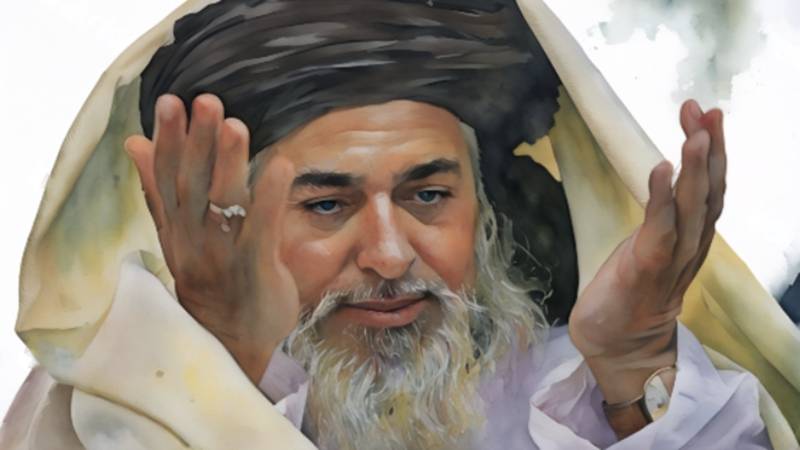
The late Khadim Rizvi was noted for his solution to Pakistan’s debt crisis. In a video, he says:
“I am giving a solution to our debt problem. And I’m giving it for free […] Tell the whole world that interest is prohibited in Islam, so we won’t be paying any interest on loans. […] We will return the principal amount but only when Pakistan’s economic situation improves. […] And if someone attacks us for non-payment, we should be prepared for retaliation.”
Many take this line of thought humorously. But deeper reflection suggests he may not be all that off on the issue.
Noted economic anthropologist and a proponent of degrowth, Jason Hickel, argues in his book, The Divide (2018), that global poverty can be eradicated in one swoop by cancelling debt payments. He notes that the key reason for the debt burden is compound interest, as developing countries are stuck chipping away at ever growing compound interest (pp 167-168). He reiterates that the debt burden is nothing but piles of interest and that the citizens of developing countries never agreed to such loans in the first place (pp 244-245).
While rejecting Rizvi’s incitement to violence, it is intellectually honest to acknowledge that his views on economic ethics align with serious critiques of the global financial system
Referencing Thomas Sankara, the president of Burkina Faso from the 1980s, he quotes that lenders will not die if we don’t repay the debt, but we surely will die if we repay. Hickel argues that Sankara was assassinated in a coup, which many believe to have been backed by erstwhile colonial master, France. This murder was for threatening to default on debt and for attempting to galvanise a pan African debt-resistance movement (pp 169-170).
Hickel adds that many loans in the global South were taken by unelected dictators without consulting their people and that the principal on these loans has already been paid three to four folds (p 171). He argues for abolishing the debt burden of the global South, which would remove the power of rich countries over poor countries and allow economic sovereignty in the latter. It would free developing countries from plundering their resources and exploiting their people just to repay debt (p 276).
Similarly, in a chapter on Modern Monetary Theory (MMT), distinguished economist Michael Hudson argues that debt expands by compound interest beyond the ability of the debtor to pay back and therefore foreign loans that violate constitutional principles of the poor nation should be cancelled.
Hudson clearly states that every country has the right to put the wellbeing of its citizens before foreign creditors. He adds that a nation should not be forced to impose austerity or privatize public assets, and if it cannot repay foreign loans based on export earnings then the loans should be written off with the risk borne by creditors. He reiterates that compounding interest should not be permitted and that if creditors provide a loan without realistic expectation on repayment, the loan should be deemed as predatory and cancelled (pp 310-311).
Rizvi may not have anticipated the arguments of the degrowth or MMT proponents, but he seemed well versed with economic ethics. One should absolutely reject his politicisation of blasphemy laws and incitement to violence through fiery speeches. However, instead of taking a black and white approach as he would, we can show grace for our adversary by acknowledging that human beings are complex and may possess some truth even when their general worldview is incredibly warped.