


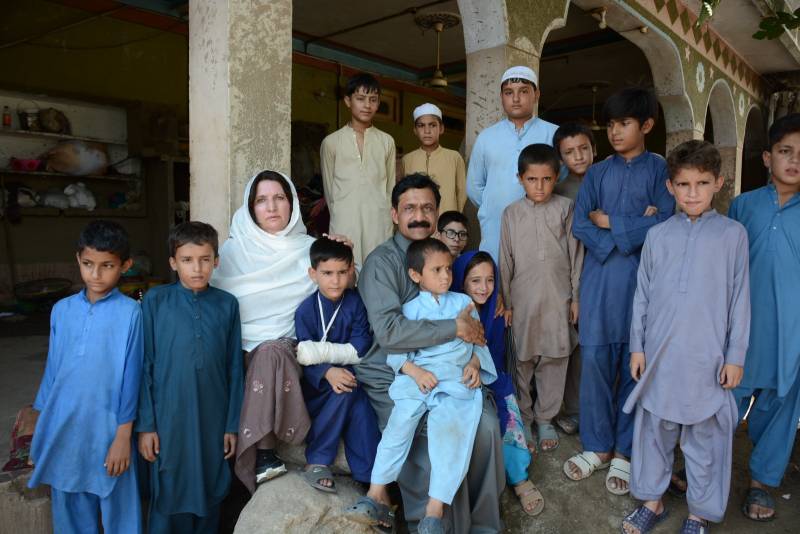
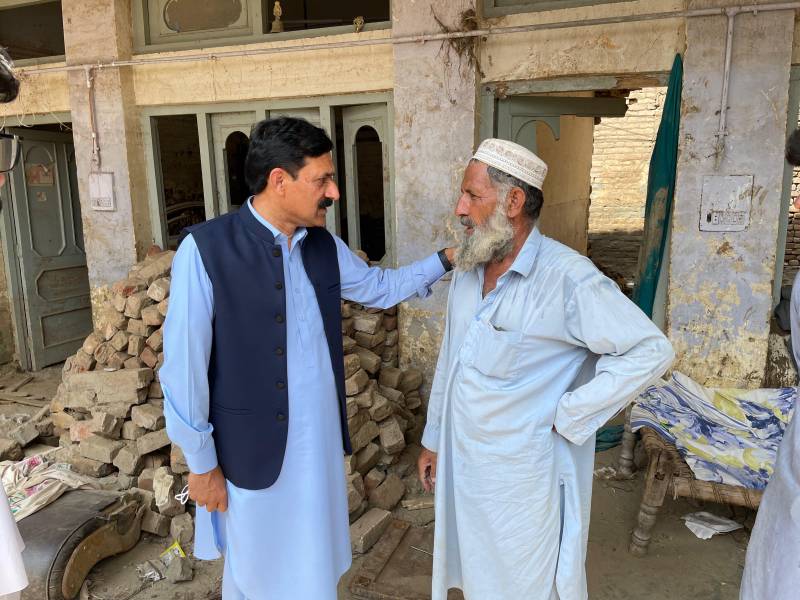
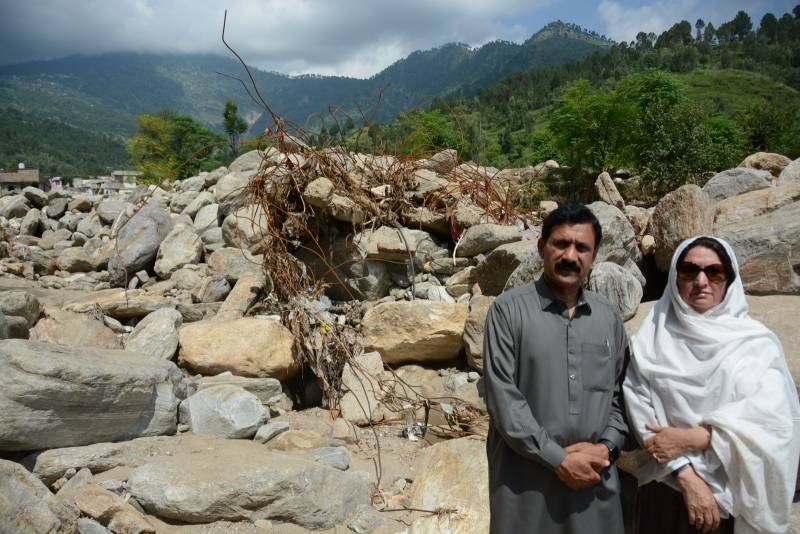
Malala Yousafzai’s parents, Ziauddin and Toor Pekai Yousafzai, visited flood-ravaged districts of Khyber Pakhtunkhwa this week, including Buner, Shangla and Swat, where more than 300 people have lost their lives and over 200 remain missing.
Speaking to reporters in Buner, Malala Fund co-founder Ziauddin Yousafzai said, “We stand with our people in this moment of grief. These floods have washed away homes and dreams, but we wanted to be here to remind survivors that they are not forgotten.”

During their visit, the Yousafzais met survivors in Mohallah Landikas and Mohallah Bangladesh in Mingora, Swat, as well as Pir Baba and Pishoni villages in Buner—one of the worst-hit areas where more than 250 deaths have been reported. They also met with relief workers and volunteers engaged in clearing flood debris, providing food and medicine to flood victims, and supporting displaced families.

Accompanying them was Malala Fund CEO Nishat Riaz, who underscored the organization’s role in education recovery. “We are not a relief organization, but we are an education movement,” she said. “In times like these, schools are often the first to close and the last to reopen. We will do everything we can to help children return to classrooms and restore the educational lifeline that has been disrupted.”

The delegation also held discussions with teachers, members of the Private School Management Association, civil society organizations, doctors, students, and journalists to assess community needs and explore ways to direct resources more effectively. Calls for urgent support to rebuild damaged schools and restore learning were echoed throughout these meetings.
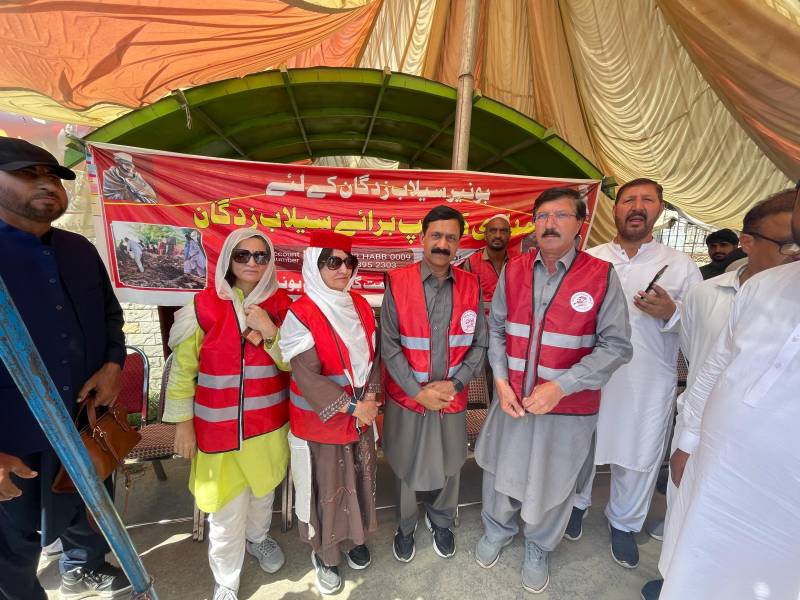
As the Yousafzais concluded their visit with an event held at Swat to honor the relief workers, Ziauddin Yousafzai stressed the need for stronger environmental safeguards, calling on the government to stop constructions near riverbanks and urging the international community to adopt climate-resilient policies. “Yes, natural calamities come from God, but God has also given us a brain. We must use it wisely. These floods are not only natural, they are man-made, and we have the power to prevent such devastation if we change our actions,” he said.