

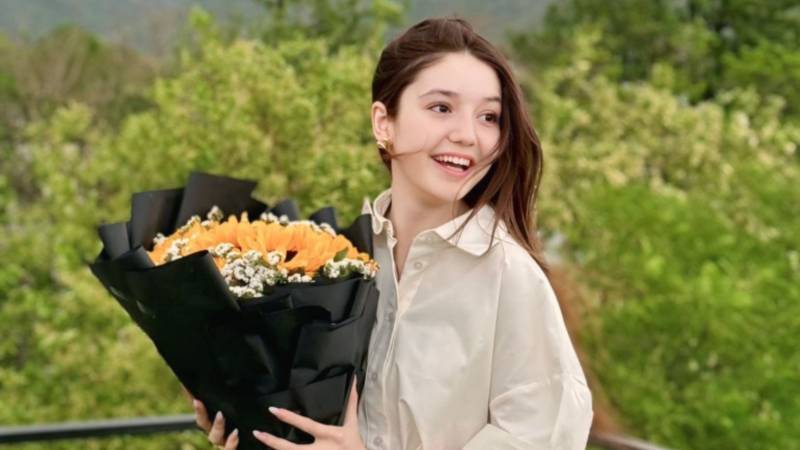
We recently buried 17-year-old Sana Yousaf, and almost at once, her murderer Umar Hayat was overshadowed by the whispers about her. Pakistani news outlets eagerly called her “TikTok star Sana Yousaf”, as if to suggest that her online presence somehow owed blood. That label, TikToker, narrowed her identity to a digital avatar and implied that her popularity was culpable.
From the first headlines to the comments on social media, the framing was clear: it had to be something about her, not the man who shot her at home.
But she didn’t die because she filmed TikTok videos. She died because a man couldn’t stand that she said no. In other words, Sana was slain not by technology or culture, but by entitlement.
A jilted suitor, we now know an unemployed young man, felt rejected by her refusal, and responded with a pistol. The real motive in this crime was heartbreak turned violent, a refusal of boundaries that patriarchal upbringing too often grants a lethal license to challenge.
Tragically, the killing was followed immediately by a second crime: the familiar campaign of victim‐blaming. This is precisely what patriarchy does best: it “demands silence from the victim and attempts to ‘understand’ the perpetrator”. Social media erupted with horror at her death, yes, but also with ugly celebrations of the murderer’s deed. Some users even praised the murder, and in ruthless coldness, others blamed Sana for being online.
All this is part of the age-old hypocrisy. We have failed women not only by letting violence happen, but by joining the chorus that blames them for it.
In a world that coddles male entitlement and questions female agency, he knew the silence after the gunshot would still ask, what had she done to deserve it?
This is not an isolated incident. In Khadija Siddiqi’s case in 2016, a law student from Lahore was stabbed 23 times by a rejected friend, Shah Hussain. She survived, but the aftermath was identical: her attacker’s lawyers accused her of hounding him, of writing a letter saying she wanted the case to go “high-profile”. Khadija told journalists that she and other women are being “undermined by a patriarchal system” where “the onus is on the woman to prove she is the victim”. As she clearly summarized, women in court become “targets of character assassination,” forced to prove their own innocence while a killer’s guilt is taken for granted.
In shorthand: she survived the blade, only to be tried all over again in public opinion.
Noor Mukadam’s name is another stain on this pattern. In 2021, the diplomat’s daughter was brutally murdered by Zahir Jaffer inside her home. The country’s outrage was sincere, but the undercurrent of commentary was cruel: even after her death, she faced mansplaining and victim‑blaming, whispers about her imaginary “illicit relations” with her murderer. Social media was clogged with smug jokes that liberal Noor had paid for her freedom with her life. Institutions too tacitly colluded: headlines speculated about honour, as if the real motive might have been anything but a man’s refusal to accept “no.” Only when the Islamabad High Court finally put sanity before slander did justice stride forward.
But the damage, the collective shaming of a girl who is never here to defend herself, had already been done.
We see the same hideous attitude in every murder of an autonomous woman. We slip into victim‑blaming almost reflexively. An Atlantic Council analysis notes that political discourse in our region is “deeply misguided” about gendered violence, “often leading to systematic victim‑blaming which…helps the perpetrators”. In the days after Sana’s murder, some commentators lectured women to be more careful, or hinted that girls with online followings were making life “dangerous” for themselves. As if a 17‑year‑old’s confident presence on social media were a crime.
Media outlets, too, bear responsibility. By leading their stories with “TikTok star” or “social media influencer,” they turned Sana into a cautionary tale against modernity, rather than a human being. They flattened her life into a clickbait label, effectively asking: Did her social media presence kill her?
That is the wrong question. The right one is: why did we imagine it could?
Again, as one columnist writes, “social media didn’t kill Sana. Our analogue misogyny did”. The technology was just scenery. The true culprit is generations of taught entitlement: the belief that a refusal is itself a grave offense.
And the system lets this cycle continue. Even as courts condemn assailants, as in Noor’s case, the woman’s name is dragged through the mud long after.
Every police briefing, every hashtag, every news clip must resist the urge to pry into who the girl was, rather than why the man pulled the trigger.
In a functioning justice system, we would break that habit. But in our society, the default is still to blame the victim. Sana’s case threatens to settle into a pattern: “honour killing” headlines, scrolled halfheartedly through newspaper columns before we move on.
To judge the dead is the final insult of a society that has already failed the living. And if we do not learn to speak differently, more honestly, more justly, then we are not simply bystanders. We are accomplices.
With every comment that blames the girl, with every headline that sensationalizes her life, with every shrug that reduces murder to morality, we sharpen the next weapon.
Sana Yousaf was not a lesson. She was a girl, full of life, laughter, and a future. Her existence owed us nothing, least of all an explanation. She did not deserve to be remembered through the lens of her murderer’s ego or society’s suspicion. She deserved to live.
Let this be the last time we draft an obituary steeped in scrutiny.
Let it be the last time we eulogize a girl only to dissect her choices. Let it be the last time we grant a murderer the dignity of a motive and a victim the burden of proof.
Justice, if it means anything at all, must begin with silence, not from the victims, but from the chorus that dares to ask whether they were pure enough to live.
We do not need to cleanse the dead. We need to cleanse ourselves.
And if we cannot do that, then may every name etched into this country’s long ledger of slain women echo back at us, as an indictment, not just of the men who killed them, but of the nation that judged them after.
Let us, for once, remember the name that should haunt us, not hers, but his. Umar Hayat.
Let us say it aloud, not as infamy, but as indictment.
Because he could not take no for an answer. Because a girl’s refusal threatened the fragile illusion of his power.
Because in a world that coddles male entitlement and questions female agency, he knew the silence after the gunshot would still ask, what had she done to deserve it?
Let us finally shift the burden of memory where it belongs - off her shoulders, and onto his.