

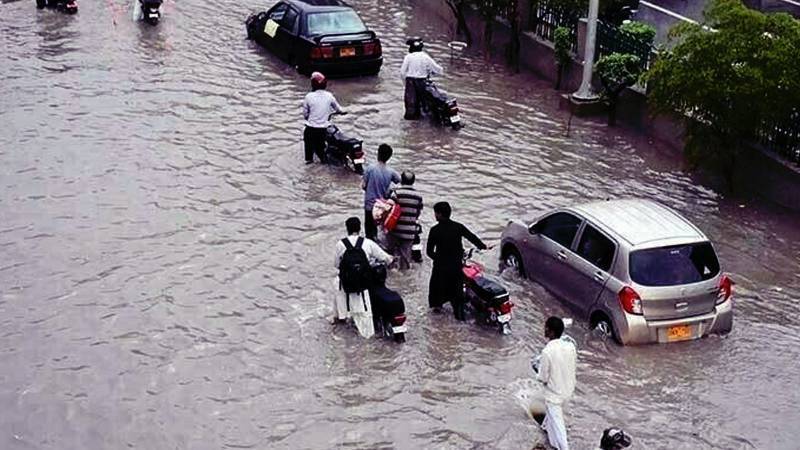
In 2022, vast stretches of Pakistan were submerged in torrential rains, and around the world, people saw images of villages underwater, families stranded on rooftops, and children struggling through murky floodwaters. What was far more enduring, yet less visible, was the economic fault line that widened beneath the surface.
Climate change is no longer an environmental crisis in Pakistan. It is an inequality crisis.
More than 33 million people were affected, and the 2022 floods caused over $30 billion in economic losses. Floodwaters covered nearly one-third of Pakistan. Agriculture, the backbone of rural livelihoods, suffered massive destruction, with millions of acres of crops ruined and livestock lost. For small farmers and daily wage labourers, the disaster was not just temporary displacement; it was total economic collapse. The shock was not evenly distributed to all.
Although flash floods in Buner district, Khyber Pakhtunkhwa, destroyed a whole village and damaged homes, agricultural land, and local infrastructure, heavy monsoon rains in 2025 caused severe flooding in parts of Punjab once again, which residents described as the worst floods in nearly three decades. The most severe consequences of climate change have been observed. These frequent occurrences indicate an alarming trend: recovery gaps are growing, and climate extremes are worsening.
Pakistan ranks among the most climate-vulnerable countries in the world, although it contributes less to carbon emissions. This global injustice is well documented. However, another injustice is taking place within Pakistan, dividing those who can endure climate shocks from those who cannot.
Nearly 40 per cent of the country’s labour force works in the agriculture sector and contributes roughly one-fifth of GDP. For rural households, land is not just an asset; it is survival. The poor lose their only source of income when floods wash everything away. Many fall into debt traps or are forced to sell productive assets at distress prices because they lack access to affordable credit, insurance, or savings.
However, while their livelihoods are adversely affected, wealthier landowners and urban elites often have assets such as diversified investments or financial buffers that help with recovery and compensation. They recover more quickly. Poorer people suffer longer hardships.
Climate change thus functions as an “inequality multiplier.”
Expanding social protection programmes is necessary to prevent disaster-affected households from falling into long-term poverty
The financial consequences of a decline in agricultural output, a tightening of food supply, and an increase in prices extend far beyond agriculture. Following the 2022 floods, food inflation skyrocketed, particularly affecting low-income households. Low-income families suffer on two levels: first, as producers who lose income, and second, as consumers who have to pay more for vegetables, rice, and wheat.
The inequality becomes even more alarming when viewed against Pakistan’s broader economic reality. In a country where 29 per cent of the population, around 70 million people, survive below the poverty line of Rs8,484 per month, according to the HIES, the ruling elite has no qualms about indulging in a life of luxury at taxpayers’ expense. This stark disparity between privilege and vulnerability highlights how persistent economic inequality and climate disasters interact.
Millions of people who are already on the edge of poverty are at risk of falling into it permanently due to minor climate shocks.
There are serious long-term consequences. Dropout rates from school increase among children living in flood-affected areas. Malnutrition rises due to high inflation. Women who work in agriculture in an informal capacity lose income due to a lack of social protection. Young people from rural areas move to cities in search of employment, and informal settlements frequently expand despite inadequate access to services.
Intergenerational inequality occurs due to an environmental shock.
Globally, we say that individuals who contribute the least to climate change suffer the most. At an internal level within Pakistan, this also remains true. Rural communities with lower carbon footprints suffer significant losses, while richer groups are relatively protected.
Climate change continues to pose the risk of expanding economic polarisation if this trend persists. A portion of the population will become more resilient as a result of mobility, wealth, and technology. Another segment of the population will continue to be caught in a vicious cycle of loss and fragile recovery. Therefore, addressing inequality and climate change are intrinsically linked.
In policy implementation, top priority must be given to climate-resilient agriculture, easily accessible crop insurance, better irrigation systems, and climate-adaptive seeds for smallholders. Expanding social protection programmes is necessary to prevent disaster-affected households from falling into long-term poverty. Transparent and accountable relief mechanisms are crucial to guarantee that aid reaches those who actually need it.
On a global level, climate finance declarations must be translated into actual assistance for vulnerable countries. Resilience must be developed inclusively, not selectively, through domestic governance reforms.
They might not discriminate when the waters rise. Recovery, however, does.
However, if Pakistan does not combine economic justice with climate adaptation, environmental shocks will continue to reinforce structural divides.
Not just rising temperatures, but rising inequality is the real threat posed by climate change.
And when the next flood occurs, the true question will be how many more lives are pushed to the edge rather than just how high the water rises.