

Freedom, Modernity, and Islam: Toward a Creative Synthesis
Richard Khuri
The Athlone Press (2001)
Rs9,987.90
Richard Khuri argues that current theories do not explain the global resurgence of fundamental religion and that without a new analysis of the idea of freedom, genuine liberty will not be attained in the Arab-Muslim world.
Ever since the first encounter between “the West” and “the Islamic societies” in the early eighteenth century, a new grand system incorporating these two entities as its constituent parts has been created. Explaining the behaviour of this ‘system’ and its constituent parts has been an ambitious undertaking of a number of scholars. Khuri’s work belongs to this genre and it attempts not only description and explanation but also prescription. The book’s main point is that Muslim societies are hostages to false ideals and ideas adopted from either a distorted version of ‘modernity’ or wrong-headed interpretations of the Islamic doctrines. As a result, inhabitants of these societies have lost their freedoms.
Dr. Richard K. Khuri teaches philosophy, religion, mythology and cultural studies full-time at LAU.
The Lebanese war inspired him to seek a vocation rather than a profession, and philosophy came naturally shortly thereafter. In his doctoral dissertation, he discussed a fundamental metaphysical theme (namely depth/transcendence) through combining insights that came by way of piano music, modern art and poetry, physics, and philosophers like Schopenhauer and Wittgenstein.
The Book and the Roses: Sufi Women, Visibility and Zikir in Contemporary Istanbul
Catharina Raudvere
I.B.Tauris (2003)
Rs2,450
Sufism is Islam’s principal mystical tradition, providing its followers with the inner, esoteric or purely spiritual dimension of their faith. This path to spirituality has developed over centuries throughout the Islamic world, fundamentally influencing the religion and its followers, and has been a domain perceived as largely occupied by men. This book reveals the place of women within Sufism: within its spiritual tradition and within its practice - looking particularly at the zikir prayer (the repetitive act of chanting “the most beautiful names of God”). Concentrating on Sufi women living in Istanbul, the book effectively examines Islam as a lived practice.
“An extremely well-researched study...a valuable contribution to our knowledge of the development of modern Turkish Muslim movement, and to Islamic studies and women’s studies in general”.
Catharina Raudvere is professor at the Section for History of Religions Department of Cross-Cultural and Regional Studies at University of Copenhagen.
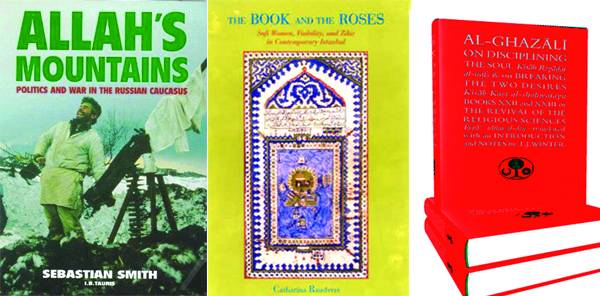
Allah’s Mountains: Politics and War in the Russian Caucasus
Sebastian Smith
IB Tauris (1998)
Rs1,974
This text explores the turmoil of the North Caucasus. Crisscrossed by billion-dollar oil pipelines and facing Iran and Turkey, this predominantly Muslim region is perhaps the most strategic in the Russian Federation. It is also the most unstable. Ferocious resistance meant that Russia took almost three centuries to conquer it and the declaration of independence by Chechnya, with the vicious war that ensued in 1994, laid bare enduring tensions between the indigenous peoples in Moscow. Beyond Chechnya, many other ethnic groups, like the Dagestanis, Adyegei and Balkars struggle to preserve their identities although none has so far taken up arms. The stakes are high: for the North Caucasians, ethnic pride and even survival as distinct people; for the Russians, control over the huge oil resources of the Caspian Sea and territorial integrity of the state.
Sebastian Smith has been a correspondent in Washington, Moscow and London.
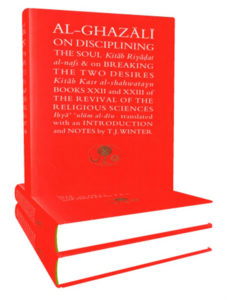
Al-Ghazali on Disciplining the Soul & Breaking the Two Desires
(Ihya’ ‘Ulum al-Din)
by Abu Hamid Muhammad al-Ghazali, T. J. Winter (Translator)
Islamic Texts Society (1997)
Rs6,914
The spiritual life in Islam begins with riyadat al-nafs, the inner warfare against the ego. Distracted and polluted by worldliness, the lower self has a tendency to drag the human creature down into arrogance and vice. Only by a powerful effort of will can the sincere worshipper achieve the purity of soul which enables him to attain God’s proximity.
This translation of two chapters from The Revival of the Religious Sciences details the sophisticated spiritual techniques adopted by classical Islam. In the first step, On Disciplining the Soul, which cites copious anecdotes from the Islamic scriptures and biographies of the saints, Ghazali explains how to acquire good character traits, and goes on to describe how the sickness of the heart may be cured.
In the second part, Breaking the Two Desires, he focusses on the question of gluttony and sexual desire, concluding, in the words of the Holy Prophet (PBUH), that ‘the best of all matters is the middle way’.
The translator has added an introduction and notes which explore Ghazali’s ability to make use of Greek as well as Islamic ethics. The work will prove of special interest to those interested in Sufi mysticism, comparative ethics, and the question of sexuality in Islam.
T. J. Winter is Shaykh Zayed Lecturer in Islamic Studies at the University of Cambridge.
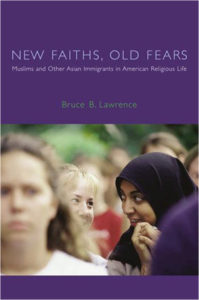
New Faiths, Old Fears: Muslims and Other Asian Immigrants in American Religious Life
Bruce B. Lawrence
Columbia University Press
Rs3,239.08
As a result of immigration from Asia in the wake of the passage of the 1965 Hart-Celler Immigration Act, the fastest-growing religions in America—faster than all Christian groups combined—are Islam, Hinduism, Buddhism, and Sikhism. In this remarkable book, a leading scholar of religion asks how these new faiths have changed or have been changed by the pluralist face of American civil society. How have these new religious minorities been affected by the deep-rooted American ambivalence toward foreign traditions?
Bruce Lawrence casts a comparativist eye on the American religious scene and explores the ways in which various groups of Asian immigrants have, and sometimes have not, been integrated into the American polity. In the process, he offers several important correctives. Too often, Lawrence argues, profiles of Asian American experience focus exclusively on immigrants from East Asia, to the exclusion of South Asian and West Asian voices.New Faiths, Old Fears seeks to make all Asians equally important and to break free of traditional geographic markers, most reflecting nineteenth-century imperial values, that artificially divide the people of the “Middle East” from the rest of Asia, with whom they share certain religious and cultural ties. Iranian Americans, in particular, emerge as a vital bridge group whose experience tells us much about how Asians of many different backgrounds have found their way in their new nation.
Beyond simply expanding and refining our conception of who Asian Americans are, Lawrence draws instructive comparisons between Asian Americans’ experience and those of Native, African, and Hispanic Americans, exposing undercurrents of racial and class antagonisms. He concludes that we cannot fully comprehend the contours and valences of culture and religion in America without understanding how this racialized class prejudice shapes the views of the dominant class toward immigrants and other marginal groups.
Bruce B. Lawrence is the Nancy and Jeffrey Marcus Professor of Religion and chair of the department of religion at Duke University. He is the author of many books, including Defenders of God: The Fundamentalist Revolt Against the Modern Age.