

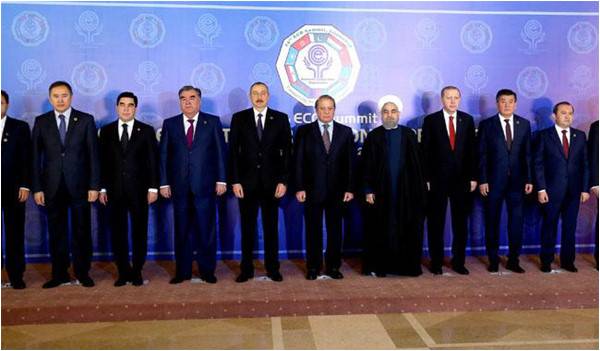
This week’s 13th Economic Cooperation Organization’s (ECO) summit, in Islamabad, has renewed hope of enhanced connectivity through revitalisation between the ten member states. Some see it as sort of coming of ECO 3.0 even though its two earlier phases—revival of the erstwhile Regional Cooperation for Development as ECO in 1985 and its expansion in 1992—do not have anything remarkable to celebrate.
The summit was able to rally political will for the vision of greater connectivity and trade linkages among the member states as manifested by the Islamabad Declaration and ECO Vision 2025, the two documents adopted by the leaders. The Declaration called for emphasis on trade, transport and energy linkages, whereas Vision 2025 is a strategic document that would steer the functioning of ECO as a regional grouping over the next few years.
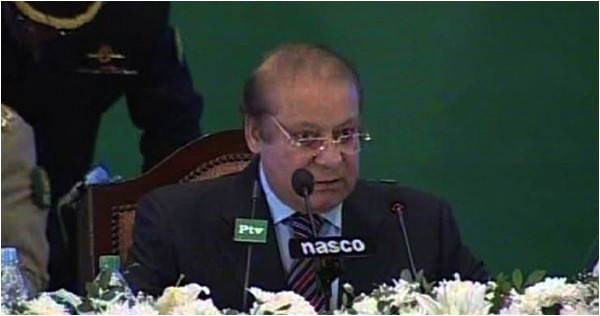
Prime Minister Nawaz Sharif addressed the summit. “The adoption of the Islamabad Declaration and ECO Vision 2025 during this summit reflects the consensus and resolve of ECO member states to collectively take on contemporary economic challenges.”
But a bigger question as the leaders prepared to leave at the conclusion of the summit was whether the commitments would translate into practical movement forward or if the grouping, one of the major regional blocs, would maintain its notoriety of being a forum for talk and no action. The earlier plan of action adopted in 1993, which is also known as the Quetta Plan, too had envisaged strong connectivity through rail, road, air and telecom links—but remained largely unimplemented. How one judges the Islamabad Summit’s outcome would depend on what expectations were being attached to the event.
From a very narrow Pakistani perspective, holding such a multinational event with high-level participation from nine of the 10 member states dispels the perception that Pakistan has been isolated, something increasingly felt after last year’s cancelled SAARC summit, when almost all members decided against taking part on India’s prodding. Furthermore, it provided Islamabad with an opportunity to market the China-Pakistan Economic Corridor (CPEC) to connect with Central Asian markets.
Problems with Afghanistan, which also caused Kabul to send lower representation to the summit, would be a major impediment towards achieving connectivity, but Pakistan is already planning for such contingencies. Foreign Secretary Aizaz Chaudhry says Pakistan can reach Central Asia through West China, which has road links with Tajikistan and Kyrgyzstan. In the broader scheme of things, it would not be wrong to assume that this revitalization of the ECO is being based on China’s involvement in connectivity and energy projects in Pakistan, Afghanistan and Central Asian states.
In the view of some analysts, Chinese involvement was in fact a guarantee that ECO3.0 would be a success as opposed to what has been happening in the past. In Adviser on Foreign Affairs Sartaj Aziz’s assessment, the ECO could not earlier make visible progress because there were no resources to pursue big projects. Things, he believe, could now change because of CPEC and other Chinese projects in the region, which are being undertaken with the help of massive Chinese investment. China is the leading investment partner for Central Asian states and the Chinese One-Belt One-Road (OBOR) initiative, a massive trade project that plans to link dozens of countries by road, rail and maritime routes. A number of corridors are, therefore, coming up in Central Asia.
The plan is to connect the transport corridors in Central Asia with CPEC. If that materializes, it could possibly be the best guarantee of ECO transforming into a successful regional bloc from one being held back by lack of political will, divergent priorities and interests, incompatible economic and banking systems and inadequate transport links despite its enormous potential and strong cultural linkages.
China, it should not be missed out, was invited to the summit as a special guest. Chinese Vice Foreign Minister Yesui Zhang attended the ECO meetings. PM Sharif noted that “the choice of our special guests has direct salience to the theme of this summit.”
Beyond the Chinese money and plans for connectivity, what could actually make the ECO success a reality would be the political will of the leaders to achieve it. They have expressed that in Islamabad, but need to sustain it. It should not be overlooked that divergent regional views, strategic and political interests, and economic potential have prevented earlier external efforts for integration from succeeding.
A lack of political commitment from ECO members to the organization is noticeable from the fact that most members don’t even make their annual financial contributions to the ECO secretariat, thereby impeding its activities. And lest we forget, the Islamabad summit was held after five years even though summits are supposed to take place every two years.
Mr Aziz appropriately diagnosed the problem as he stressed political will. “The long-term prospects of the ECO depend on renewing the necessary political will of all member states and to find common ground in promoting effective regional cooperation and on the establishment of efficient and effective institutions that can transfer actual benefits to all member states,” he emphasized.
The writer is a freelance journalist based in Islamabad and can be reached at mamoonarubab@gmail.com and @bokhari_mr
The summit was able to rally political will for the vision of greater connectivity and trade linkages among the member states as manifested by the Islamabad Declaration and ECO Vision 2025, the two documents adopted by the leaders. The Declaration called for emphasis on trade, transport and energy linkages, whereas Vision 2025 is a strategic document that would steer the functioning of ECO as a regional grouping over the next few years.
Prime Minister Nawaz Sharif addressed the summit. “The adoption of the Islamabad Declaration and ECO Vision 2025 during this summit reflects the consensus and resolve of ECO member states to collectively take on contemporary economic challenges.”
The plan is to connect the transport corridors in Central Asia with CPEC. If that materializes, it could possibly be the best guarantee of ECO transforming into a successful regional bloc from one being held back by lack of political will
But a bigger question as the leaders prepared to leave at the conclusion of the summit was whether the commitments would translate into practical movement forward or if the grouping, one of the major regional blocs, would maintain its notoriety of being a forum for talk and no action. The earlier plan of action adopted in 1993, which is also known as the Quetta Plan, too had envisaged strong connectivity through rail, road, air and telecom links—but remained largely unimplemented. How one judges the Islamabad Summit’s outcome would depend on what expectations were being attached to the event.
From a very narrow Pakistani perspective, holding such a multinational event with high-level participation from nine of the 10 member states dispels the perception that Pakistan has been isolated, something increasingly felt after last year’s cancelled SAARC summit, when almost all members decided against taking part on India’s prodding. Furthermore, it provided Islamabad with an opportunity to market the China-Pakistan Economic Corridor (CPEC) to connect with Central Asian markets.
Problems with Afghanistan, which also caused Kabul to send lower representation to the summit, would be a major impediment towards achieving connectivity, but Pakistan is already planning for such contingencies. Foreign Secretary Aizaz Chaudhry says Pakistan can reach Central Asia through West China, which has road links with Tajikistan and Kyrgyzstan. In the broader scheme of things, it would not be wrong to assume that this revitalization of the ECO is being based on China’s involvement in connectivity and energy projects in Pakistan, Afghanistan and Central Asian states.
In the view of some analysts, Chinese involvement was in fact a guarantee that ECO3.0 would be a success as opposed to what has been happening in the past. In Adviser on Foreign Affairs Sartaj Aziz’s assessment, the ECO could not earlier make visible progress because there were no resources to pursue big projects. Things, he believe, could now change because of CPEC and other Chinese projects in the region, which are being undertaken with the help of massive Chinese investment. China is the leading investment partner for Central Asian states and the Chinese One-Belt One-Road (OBOR) initiative, a massive trade project that plans to link dozens of countries by road, rail and maritime routes. A number of corridors are, therefore, coming up in Central Asia.
The plan is to connect the transport corridors in Central Asia with CPEC. If that materializes, it could possibly be the best guarantee of ECO transforming into a successful regional bloc from one being held back by lack of political will, divergent priorities and interests, incompatible economic and banking systems and inadequate transport links despite its enormous potential and strong cultural linkages.
China, it should not be missed out, was invited to the summit as a special guest. Chinese Vice Foreign Minister Yesui Zhang attended the ECO meetings. PM Sharif noted that “the choice of our special guests has direct salience to the theme of this summit.”
Beyond the Chinese money and plans for connectivity, what could actually make the ECO success a reality would be the political will of the leaders to achieve it. They have expressed that in Islamabad, but need to sustain it. It should not be overlooked that divergent regional views, strategic and political interests, and economic potential have prevented earlier external efforts for integration from succeeding.
A lack of political commitment from ECO members to the organization is noticeable from the fact that most members don’t even make their annual financial contributions to the ECO secretariat, thereby impeding its activities. And lest we forget, the Islamabad summit was held after five years even though summits are supposed to take place every two years.
Mr Aziz appropriately diagnosed the problem as he stressed political will. “The long-term prospects of the ECO depend on renewing the necessary political will of all member states and to find common ground in promoting effective regional cooperation and on the establishment of efficient and effective institutions that can transfer actual benefits to all member states,” he emphasized.
The writer is a freelance journalist based in Islamabad and can be reached at mamoonarubab@gmail.com and @bokhari_mr