

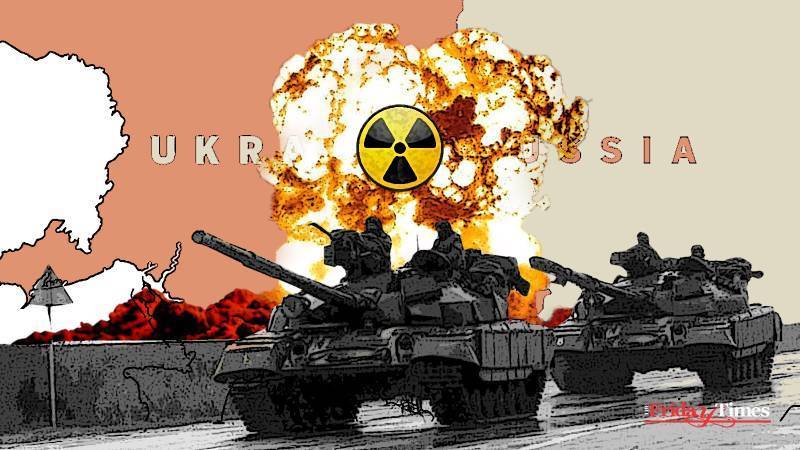
On June 1, 2025, Ukraine executed a bold drone strike deep inside Russian territory, hitting multiple airbases and reportedly destroying or severely damaging up to 41 Russian military aircraft. This operation, code-named “Spider’s Web,” marks one of the most significant breaches of Russian security since the start of the war, challenging long-held assumptions about Russia’s defensive capabilities.
According to Ukrainian sources, the attack targeted strategic bombers such as the Tu-95MS and Tu-160, along with an A-50 airborne early warning aircraft. These planes are crucial for Russia’s long-range strike abilities and battlefield command. The drones used were not launched from across the border but had been smuggled over an extended period, concealed in crates and mobile sheds, then deployed from trucks near the airbases. The result was a precise, coordinated strike that reportedly caused between two and seven billion dollars in damage.
The operation’s asymmetry is striking. The Ukrainian forces invested roughly five million dollars in drone technology to cripple assets worth five to seven billion dollars. This reflects a clear example of asymmetrical warfare, where a militarily weaker actor uses innovative and unconventional means to offset the power imbalance. Ukraine’s strategy challenges traditional understandings of warfare that prioritise numbers and firepower. Instead, it highlights how agility, innovation, and strategic patience can level the playing field.
Moscow’s response has been one of both shock and indignation. Pro-Kremlin commentators have called the attack “Russia’s Pearl Harbor,” drawing a direct parallel to the surprise Japanese attack on the US in 1941. That historical comparison carries weight beyond symbolic value. Pearl Harbor was a national humiliation that forced the United States into World War II. For Russia, the attack threatens to shake public confidence in the government’s ability to protect the homeland and project strength.
The drone strike alters the balance of power on the battlefield and in the broader geopolitical landscape. It exposes cracks in Russia’s war economy and military strategy, while highlighting Ukraine’s resilience and capacity for innovation
The political implications for President Vladimir Putin are significant. For years, the Kremlin maintained that the war was being fought mostly on Ukrainian soil and that Russian territory was secure. This strike undermines that narrative, revealing vulnerabilities inside Russia’s borders. It places pressure on Putin to respond decisively, risking escalation, or face perceptions of weakness.
From an International Relations perspective, this attack and the likely Russian response fit within the framework of the security dilemma. Both sides’ efforts to increase their own security provoke fear and countermeasures from the other. Russia’s invasion and military buildup to secure its western frontier incited Ukraine to develop and deploy such deep strikes, which in turn may prompt Russia to increase defensive and offensive measures, escalating the conflict further. The cycle makes peaceful resolution increasingly difficult.
The timing of the strike is also critical. It came on the day before the planned peace talks in Turkey between Moscow and Kyiv. Whether those talks will proceed remains uncertain, especially with Russia’s security shaken and Ukraine emboldened by its success. The attack may be seen as Ukraine asserting leverage, signaling it is still capable of offensive operations that can disrupt Russian strategic assets far from the front lines.
Washington’s reaction has been cautious but attentive. US President Donald Trump on last Tuesday, warned on social media that Vladimir Putin was “playing with fire.” Trump claimed that under his previous administration, Russia would have faced worse consequences, though he did not elaborate. Reports suggest the White House was not informed in advance of the Ukrainian operation but is now considering new sanctions against Russia. This episode underscores the complexities of alliance politics and intelligence sharing during conflict. Ukraine’s ability to strike so deeply without prior notice to Washington may reflect both operational security and evolving autonomy in Ukraine’s war strategy.
The drone strike also calls into question the viability of Russia’s deterrence strategy. Deterrence relies on convincing the adversary that the costs of aggression will outweigh any potential gains. By striking critical military infrastructure far from the front, Ukraine may be attempting a form of deterrence by punishment, signaling that Russian attacks on Ukrainian cities will provoke costly counterstrikes. Yet, deterrence theory also warns that miscalculations can lead to dangerous escalations, especially when nuclear-armed states are involved.
Within Russia, reactions vary. Hardliners advocate for swift and forceful retaliation, with some alluding to the possible use of nuclear rhetoric to regain strategic credibility. Others caution against escalation, fearing that dramatic responses could further isolate Russia diplomatically and economically. Public morale, already strained by the ongoing conflict, may be affected by news of the strike and the Kremlin’s response.
The strike’s success also reshapes the perception of Ukraine’s military capabilities. Western analysts and retired US commanders alike have praised the operation’s planning and execution. Retired U.S. Navy Admiral James Stavridis, who served as NATO Supreme Allied Commander Europe, took jabs at Putin, describe it as a “Trojan Horse,” likening the concealed drones to the mythological wooden horse that brought Greek soldiers inside Troy’s walls. This metaphor underscores how Ukraine combined patience, deception, and low-cost technology to undermine a much larger military force. It challenges the narrative that Ukraine is only reactive or defensive, showing it can take initiative and impose costs deep within enemy territory.
The strategic ramifications extend beyond the Russia-Ukraine conflict. Militaries worldwide are reassessing the security of their bases and assets. The idea that trucks or storage sheds could conceal lethal drones capable of penetrating defenses calls for new approaches to base security, surveillance, and counter-drone tactics. This shift reflects a broader trend in modern warfare, where traditional frontlines blur and new technologies empower smaller forces to threaten major powers.
Ultimately, the drone strike alters the balance of power on the battlefield and in the broader geopolitical landscape. It exposes cracks in Russia’s war economy and military strategy, while highlighting Ukraine’s resilience and capacity for innovation. The operation may not end the war, but it certainly marks a turning point in how the conflict is fought and perceived.
Russia’s next moves will be crucial. Retaliation is expected, but how it unfolds will affect the prospects for escalation or de-escalation. The international community watches closely, aware that each action risks triggering unpredictable consequences. What is clear is that the war is far from over, and Ukraine’s ability to strike at the heart of Russia signals a new chapter in this brutal conflict.