

Guman tum ko Kay manzil mil rahi hay
Yaqin mujh ko, raasta kho rahay ho
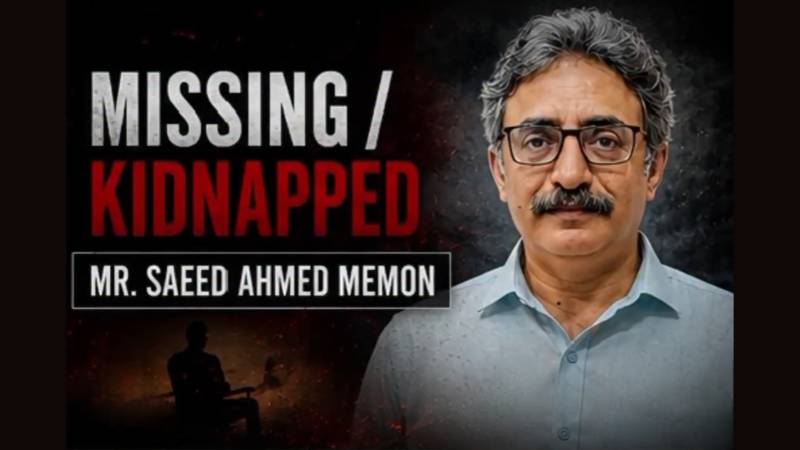
There are moments in the life of a nation when the fate of one individual becomes a test of the conscience of all. The abduction of Saeed Ahmed Memon—a retired Sindh government officer, distinguished writer, poet, social activist, and compassionate humanist—is one such moment. Kidnapped by unknown armed men on the 17th of May near Sorab, Balochistan, while travelling from Quetta to Karachi, he has remained in captivity for more than forty-five agonising days, leaving behind a grieving family and an anxious society that continues to pray for his safe return.
Saeed Ahmed Memon is not a man of violence, power, or privilege. His lifelong companion has been the pen, not the gun. Through his writings, he has consistently articulated the hopes, hardships, and silent sufferings of ordinary people. He built bridges among communities, reminding society of the pain and agonies of the weak, vulnerable, and the voiceless, and promoted harmony. His writings lay stress on humanity, compassion, justice, and the highest ideals of civilisation. A man whose words healed wounded hearts cannot reasonably be regarded as an enemy by anyone.
His prolonged captivity has, therefore, become not only a personal tragedy but also an assault on the values he represented. The ordeal is particularly alarming because he is a heart patient dependent on regular medication. Every passing day deepens concern for his health and intensifies the unbearable anguish of his wife, children, relatives, and countless admirers who wait in hope for the moment he walks safely back into their lives.
Across Sindh, lawyers, doctors, engineers, journalists, students, writers, political and human rights activists, and members of civil society have risen above political and ideological differences to demand one simple humanitarian objective: the immediate and safe recovery of Saeed Ahmed Memon. Their collective voice reflects the conscience of the people. Yet, despite repeated appeals and peaceful demonstrations, the silence surrounding his fate continues to deepen the nation's anxiety.
Whoever holds him captive—whether affiliated with the BLA, the BLF, or any other armed group—should pause and reflect. Kidnapping an elderly writer who devoted his life to peace, dialogue, and human dignity serves no political, ideological, or national purpose. It neither strengthens a movement nor wins public sympathy. It merely weakens its moral standing and distances it from the people in whose name it claims to struggle. Every moment of innocent suffering diminishes the legitimacy of violence.
The state, meanwhile, bears an equally solemn constitutional and moral obligation. Protecting the life and liberty of citizens is among its foremost responsibilities. It cannot allow innocent people to remain at the mercy of armed groups or become bargaining chips in prolonged conflicts. Every lawful resource available to the state should be mobilised with urgency and determination to secure the safe recovery of Mr Memon and bring relief to his distressed family.
At the same time, the tragedy should remind policymakers that peace in Balochistan cannot rest on security measures alone. Balochistan's story is one of prolonged neglect—denial of rights, broken promises, deprivation, extreme poverty, and underdevelopment so deep it has hollowed out trust. This situation has too often been exploited by misguided elements and hostile external actors seeking to fuel instability. Lasting peace demands more than force; it requires justice, inclusion, and sustained development.
Balochistan is richly endowed with gas, coal, copper, gold, minerals, and fertile lands. These immense blessings should become the foundation of prosperity for its people. Greater investment in quality education, healthcare, roads, agriculture, industries, tourism, clean water, and employment opportunities can help restore confidence, reduce alienation, and strengthen the bond between the people and the state. Balochistan's breathtaking landscapes and pristine coastline should be developed into thriving centres of tourism, creating jobs and hope for its youth. Prosperity, justice, and equal opportunities are the most effective antidotes to extremism. Development that reaches ordinary citizens is the strongest answer to those who preach hatred and separation.
Equally important is the recognition that the overwhelming majority of the people of Balochistan are peaceful, patriotic, and desirous of progress. They should never be judged by the actions of a violent minority. Their aspirations deserve respect, their voices deserve to be heard, and their children deserve the same opportunities available to every Pakistani. National unity is strengthened not through fear, but through fairness, dignity, and equality.
The recent killing of Karachi trader Ali Murtaza Jamil in Dasht, along with attacks on passenger buses, trains, and public places, further demonstrate that violence ultimately turns against innocent people. Such acts neither liberate communities nor advance legitimate grievances. They spread fear, deepen suffering, and isolate those who resort to them. History bears witness that no enduring cause has ever flourished upon the blood of innocents.
Those holding Saeed should release him immediately as a humanitarian gesture worthy of respect and Baloch traditions. The state must intensify every lawful effort to bring him home safely. His children long to embrace their father, his friends await his reassuring smile, and society needs once again the compassionate voice of a writer who chose the language of love over hatred.
Bringing Saeed Memon home will not simply reunite one family. It will reaffirm the sanctity of human life, strengthen public confidence in the state's responsibility to protect its citizens, and send a powerful message that compassion is stronger than coercion, dialogue is nobler than violence, and the pen will always outlive the gun.
Let this nightmare end and let the smiles stolen on the 17th of May be restored.