There are two obvious ways to look back at Pakistan’s performance in New Zealand – the ODIs and the T20s. In fact, after losing the first T20, Pakistan actually lost six matches on the bounce, with fears that the second series might go the way of the first as well. But on that particular occasion, it was the substandard pitch at Wellington that hit Pakistan more than the continuum of batting mediocrity that the team displayed up till that moment.
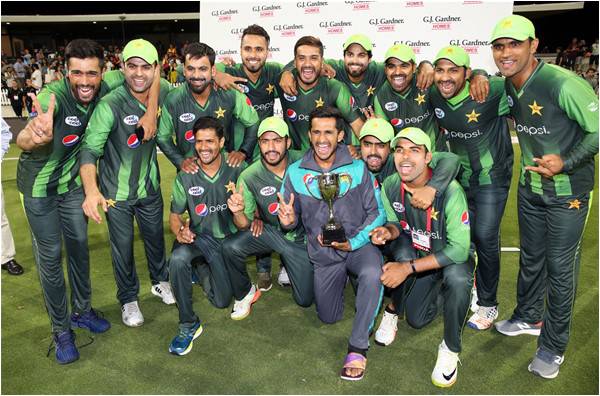
After what was a masterful turnaround, Pakistan outplayed New Zealand in all departments to win the last two T20s, in turn taking home the series and along with it the Number 1 T20 ranking. Pakistan finished 2017 as the top ranked T20 side, but were replaced by New Zealand.However, the T20 series win means that Pakistan have regained the top spot, by defeating the top-ranked side on their own turf.
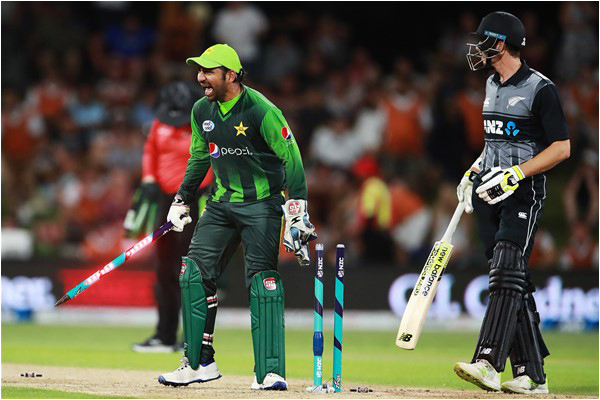
Sarfraz Ahmed
Rankings in any sport are never a fluke. They depict the long-term performance of the individual or the team. And so, Pakistan completely merit the slot, and are perhaps the most dangerous T20 side in the world right now – something they have ably demonstrated in New Zealand.
As far as rankings are concerned, Babar Azam is now the number one T20 batsman in the world, becoming the second Pakistani to hold that spot after Misbah-ul-Haq. Babar is often criticised for lacking the fourth or fifth gear that is needed in modern day limited-overs cricket, but he did show it in the second T20 win at Auckland.
But it wasn’t just Babar Azam. Pakistan’s batting collectively fired in the final two T20s – in contrasting fashions. The win at Auckland was founded upon all of the top four – Fakhar Zaman, Ahmed Shehzad, Babar Azam and Sarfraz Ahmed – firing, which took the total to 201. And the Mount Maunganui triumph saw little cameos throughout the lineup, resulting in a total of 181.
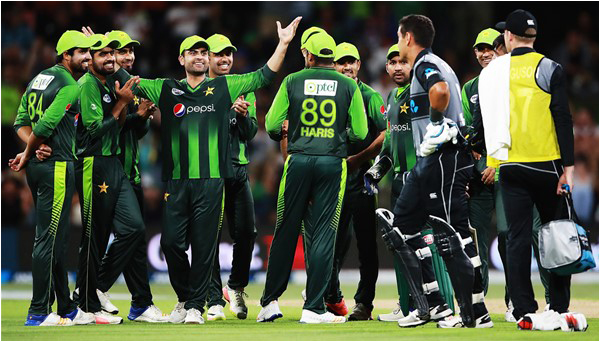
Pakistan celebrate the wicket of Ross Taylor in the final T20
After a lackluster ODI series, the bowling showed up in the T20s as well. And they had to, because even a score around 200 might not have been enough considering the decks and New Zealand’s batting lineup.
In this regard, Mohammed Amir deservedly won the Man of the Series award, after his typically economic spells in the final two T20s, punctuated with crucial wickets as well. This was particularly crucial in the decider, for 181 is very much a par score – and that Amir took Ross Taylor’s wicket, who was threatening to turn back the clock, was also significant.
The T20 series saw a complete contrast in the body language depicted by the team, and this was most important in Sarfraz Ahmed, with his energy and aggression underlining how much he wanted to win the series.
Of course, it was a completely different ball game in the ODIs, as has been dissected in this space before.
While the bowling was below average throughout the five ODIs, the batting remains the main culprit. Pakistan’s problem remains getting scores in access of 300, which is owing to a combination of players who might score runs but do not press the accelerator, and those that can use the long handle, but do not stay on the crease long enough to make a lasting impact.
This lack of an aggressive but reliable batting lineup has hurt Pakistan throughout this decade, and while the Champions Trophy win suggested that the team had turned the corner, the problem is very much there.
The biggest winners from the tour from Pakistan’s perspective were Shadab Khan and Fakhar Zaman. The former has now firmly established himself as a world class spinner and a budding all-rounder, who is now the most dangerous feature of Pakistan’s bowling lineup in the limited-overs format, especially T20s. Meanwhile, the lattershrugged off a series of low scores – which had sparked fears that the Champions Trophy run might have been a temporary patch – to perform well in both the series.
Of course the T20 win has meant that Pakistan ended the tour on a high, but worries shroud the ODI format. Pakistan do not play international cricket for a few months now, and all eyes would turn to PSL 3, but in the long run – especially with the World Cup next year – the team should start preparing batsmen who can fulfill the requirements of modern-day ODI cricket.
As far as the T20s are concerned, more of the same is all one can ask for, when the team sits at the summit of world cricket.